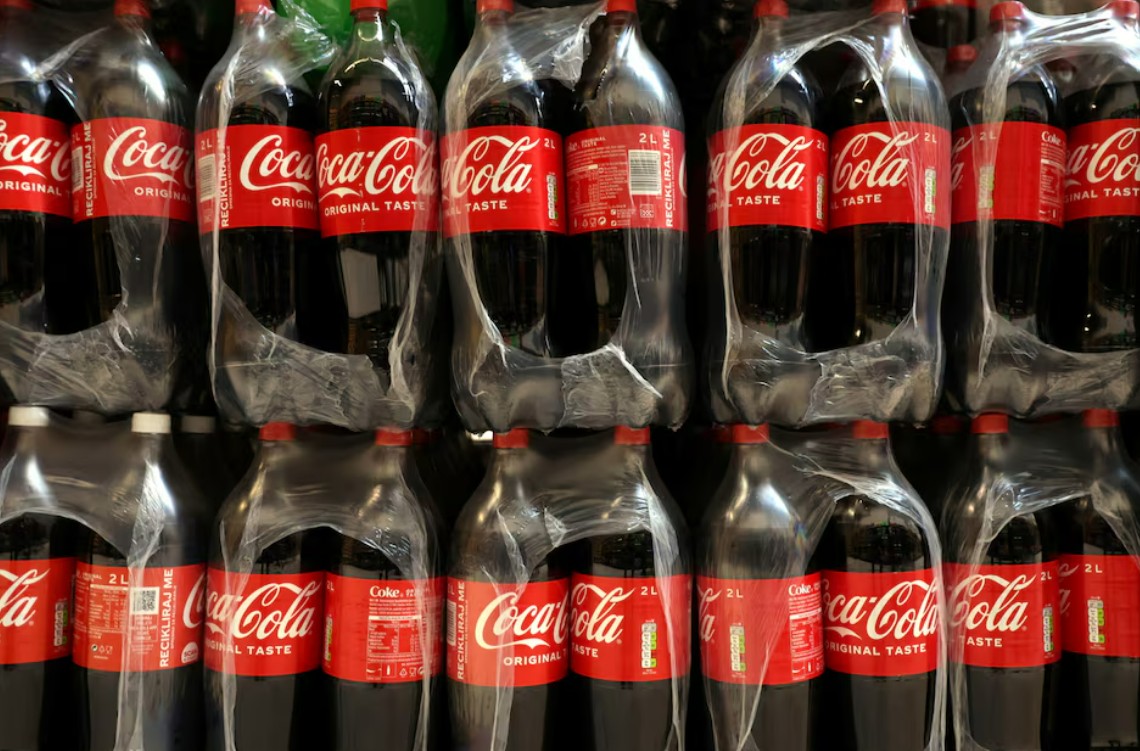
ATLANTA (Realist English). The Coca-Cola Company reported third-quarter 2026 results, beating analyst expectations for revenue and profit and raising its full-year forecast. The results demonstrate resilient demand for the company’s beverages amid pressure on consumer spending.
Key financial indicators
Revenue reached $13.4 billion, up 7% year-on-year. The figure exceeded the consensus forecast of $12.93 billion. Organic revenue grew 7%, above market expectations of +4.3%. Drivers were a 7% increase in concentrate sales and a positive price/product mix (+1%).
Adjusted EPS (non-GAAP) rose 11% to $0.91, beating the forecast of $0.88. Reported EPS was $0.93 (+8%). Operating margin rose to 33.4% from 32.0% a year earlier. Comparable margin (non-GAAP) was 32.9% versus 31.9%.
Growth drivers and regional dynamics
Global unit case volume grew 5%. Growth was observed in all geographic segments, led by India, China, Mexico, and Brazil. Trademark Coca-Cola sales rose 5%, while Coca-Cola Zero Sugar grew 16%. Latin America showed strong growth: revenue +25%, operating profit +29%. North America revenue grew 3% with flat sales volume. Asia-Pacific revenue grew 4% with volume up 6%.
Forecast and capital
The company expects organic revenue growth of at least 5% and comparable EPS growth of at least 11% (versus the previous forecast of 9–10%). The free cash flow forecast was raised to at least $13.0 billion from ~$12.4 billion. Coca-Cola shares rose about 0.4–1.1% in premarket trading. Since the start of the year, the company’s stock has gained about 33% and may post growth for the third consecutive year.
The Coca-Cola report shows the company is successfully managing pressure on consumer spending. The strategy of offering smaller packages and cheaper alternatives alongside premium innovations helps maintain sales volumes. The full-year forecast upgrade is a strong signal of management confidence.
However, it is worth noting that part of the revenue growth was due to a favorable currency factor (2 percentage points), and organic growth of 7%, while above expectations, slowed compared to previous quarters. The key question is whether the company can maintain momentum amid further tightening of consumer demand and geopolitical uncertainty.