LONDON (Realist English). The price of natural gas in Europe on October 26 exceeded €97 per megawatt-hour for the first time since 2022. Benchmark futures on the Dutch TTF hub rose 3.5% during morning trading, extending the previous week’s rally. By 9:45 CET, the contract was trading near €97.50 per MWh, and by 08:20 GMT — at €97.15, which is 3.3% above Friday’s close. This is the highest level since December 2022.
Three reasons for the growth
The first factor is weather. Colder temperatures in Europe have already driven up heating demand, and traders are pricing in further consumption increases in the coming days. Forecasts suggest Europe will see colder weather next week, while Northern Europe is expected to have milder conditions.
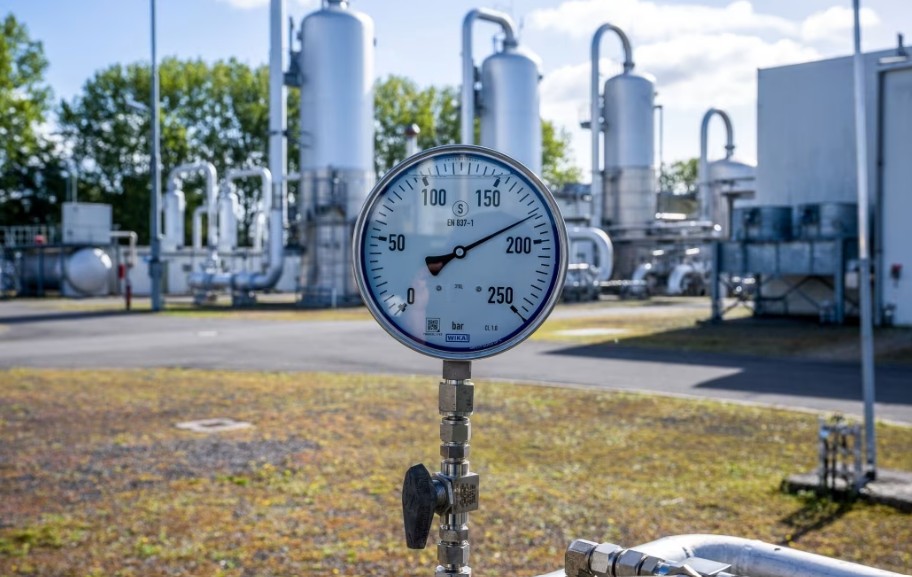
The second factor is depleted storage. According to Gas Infrastructure Europe (GIE), as of October 20, European storage facilities were 74.58% full, compared with 82.8% a year earlier.
In Germany, Europe’s largest gas consumer, underground storage facilities were about 61.5% full. Net withdrawal from European storage turned positive for the first time this autumn, indicating the start of seasonal drawdown. ENTSOG warned in early October that with limited LNG availability, storage levels could fall below 30% by the end of winter.
The third factor is geopolitics. The Middle East conflict, which began in late February with US and Israeli strikes on Iran, has disrupted shipping through the Strait of Hormuz. About one-fifth of global LNG supplies typically pass through this route, and flows from the Persian Gulf have now fallen by roughly 80% year-on-year. Expectations for a swift resolution are fading amid reports of possible new strikes on Iran after the US midterm elections.
Competition with Asia
Shrinking supply amid rising demand is creating preconditions for a price war between Europe and Asia over remaining LNG cargoes. As Bloomberg notes, traders are preparing for “bidding wars” with Asian buyers. European buyers will be forced to offer higher prices to redirect cargoes from the US and other regions.
Forecasts
Analysts expect prices to rise further. Igor Yushkov, an expert at the Financial University under the Government of the Russian Federation, does not rule out an increase to $1,200–1,500 per thousand cubic meters this winter. Oxford Economics forecasts an average price of about $29 per MMBtu (€85 per MWh) during the winter of 2026–2027, which is 140% higher than last year’s level. If there is no diplomatic progress and LNG supplies from the Middle East are not restored before winter, European futures could exceed $30 per MMBtu by March 2027.
The current price increase is not a one-off spike but a reflection of structural vulnerability: Europe is entering winter with the lowest storage levels in a decade, amid disrupted LNG supplies and growing competition with Asia. Unlike the 2022 crisis, caused by the rejection of Russian pipeline gas, the current shock has a different nature — the maritime corridor through which liquefied gas from Qatar and the UAE flows has been blocked.
If the winter turns out cold, Europe will have to either buy gas at premium prices on the spot market or further reduce industrial consumption. Restoring storage for the next season will require large-scale purchases in the summer of 2027 — and will likely keep prices high next year as well. For consumers, this means higher bills: in Germany, tariffs for new customers have already risen from 8 to 12.4 eurocents per kWh.