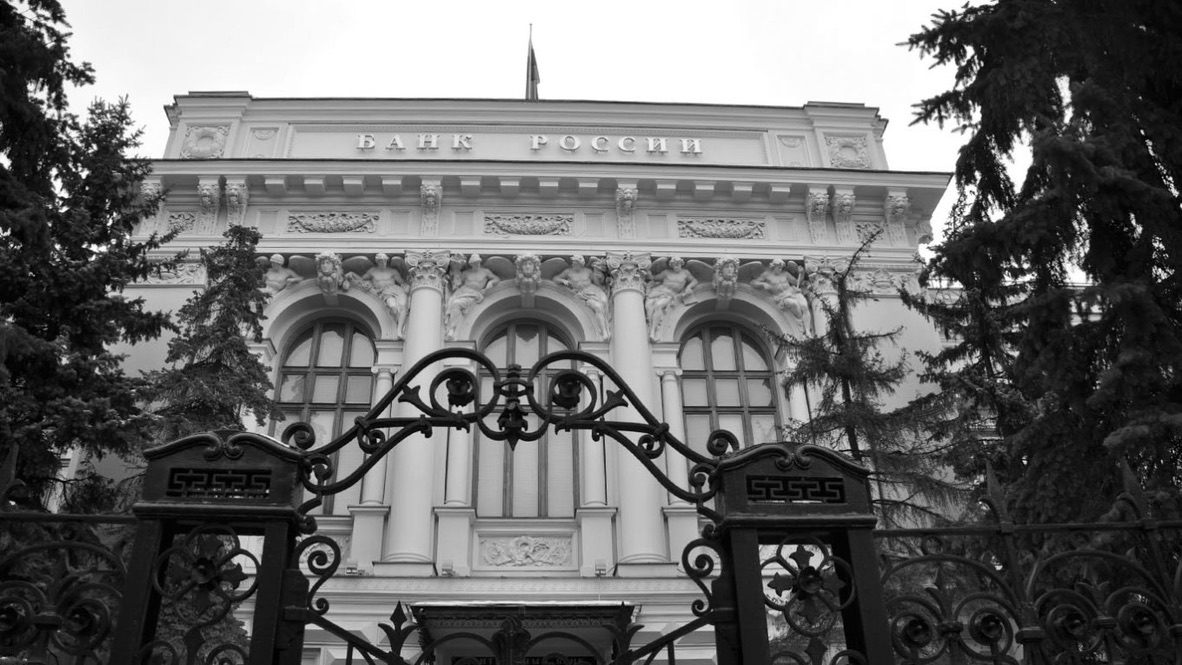
MOSCOW (Realist English). August 2026 has become a month of watchful pause for Russia’s monetary policy. After a series of key rate cuts in the spring — from a peak of 21% to 14.25% — the Bank of Russia on July 24 took a symbolic 0.25 percentage‑point cut to 14% annualised. Since then, the rate has remained fixed at this level: according to the Central Bank, on August 11, 12, 13, 14, 17 and 18 the key rate stood at 14.00%.
Central Bank Governor Elvira Nabiullina stressed at a post‑meeting press conference that the scope for further cuts is severely limited. “The period of rapid cuts is over,” she said, warning that inflation expectations remain the regulator’s main marker. Should they rise, the Central Bank is ready to immediately halt the easing cycle. As noted in the Summary of Key Rate Discussion published on August 5, the main subject of debate was the acceleration of price growth in recent months, driven by higher fuel prices and their impact on inflation expectations.
Inflation: Forecasts Revised Sharply Upward
The July macroeconomic survey of analysts conducted by the Central Bank recorded a significant deterioration in inflation expectations. The inflation forecast for 2026 was raised to 6.2% — 0.9 percentage points above the June estimate.
In the Bank of Russia’s official baseline scenario, updated after the July meeting, inflation at the end of 2026 is expected at 6–7%, compared with the previous 4.5–5.5%.
In 2027, inflation is projected to decline to 4.6%, and in 2028–2029 to return to the 4% target. However, as the Central Bank acknowledges, the realised pro‑inflationary risks leave the regulator with “less room for further key rate cuts.”
Ruble Exchange Rate: Dollar Breaches 85 Rubles
August has been a month of notable ruble weakening. On August 1, the official dollar exchange rate stood at 79.46 rubles, but by August 4 the Central Bank had set it at 80.07. By August 18, the dollar had exceeded 85 rubles for the first time since September 2025.
The monthly exchange rate dynamics are as follows:
| Date | Official Dollar Exchange Rate, RUB |
| August 1 | 79.46 |
| August 4 | 80.07 |
| August 18 | 85.01 |
| August 21 | 83.36 |
| August 25 | 83.29 |
| August 26 | 84.46 |
| August 27 | 84.28 |
| August 28 | 85.95 |
On the over‑the‑counter market, the dollar briefly exceeded 81 rubles as early as the first week of August. Nabiullina noted that “a strong ruble is good, but in moderation,” and the current moderate weakening of the exchange rate is seen as a “natural process of economic rebalancing.”
Rate to Remain High, Ruble to Continue Weakening
Analysts surveyed by the Central Bank have substantially revised their forecasts for the key rate over the coming years:
| Year | Key Rate (annual average), % | Dollar Exchange Rate, RUB | Inflation, % |
| 2026 | 14.5 | 78.4 | 6.2 |
| 2027 | 12.2 | 86.6 | 4.6 |
| 2028 | 10.0 | 92.7 | 4.1 |
| 2029 | 8.6 | 95.8 | 4.0 |
In the Central Bank’s official medium‑term forecast, the average key rate range for 2026 has been narrowed to 14.0–14.5%, while for 2027 it has been raised to 8.0–10.0%. As the regulator notes, “increased uncertainty and pro‑inflationary risks from external conditions and fiscal policy parameters suggest a more cautious trajectory for key rate cuts.”
Some analysts expect that at the upcoming September 11 meeting, the Bank of Russia’s board of directors will choose between keeping the rate at its current level and a symbolic cut, with the probability of a hold estimated at about 55%. Expert RA rating agency had previously forecast a rate cut to 12% by year‑end, but BCS World of Investments has revised its forecast from 12% to 13%.
“Expensive Money” Policy Continues
August 2026 has confirmed that the era of cheap money in Russia will not arrive quickly. By fixing the rate at 14%, the Bank of Russia has signalled that fighting inflation remains a priority. Analysts’ forecasts indicate that a return to neutral monetary policy (7.5–8.5%) is not expected before 2028.
Yet open questions remain. Can the Central Bank keep inflation within its new, higher forecast, or will external shocks — from fuel prices to geopolitical tensions — again alter the trajectory? Will the ruble withstand the pressure of depreciation if rates start falling faster than projected? And most importantly — are Russian authorities prepared for the fact that the “expensive money” policy will persist for years, restraining economic growth and investment activity?
For now, the Central Bank prefers to speak of “cautious easing” and “dependence on macroeconomic data.” But it is precisely this caution that defines August’s main trend: the rate has frozen, inflation has accelerated, the ruble has weakened, and the regulator’s room for manoeuvre is rapidly shrinking. The question is how many more pauses the Bank of Russia will need before it can once again move downward — and whether the next move will be down at all.