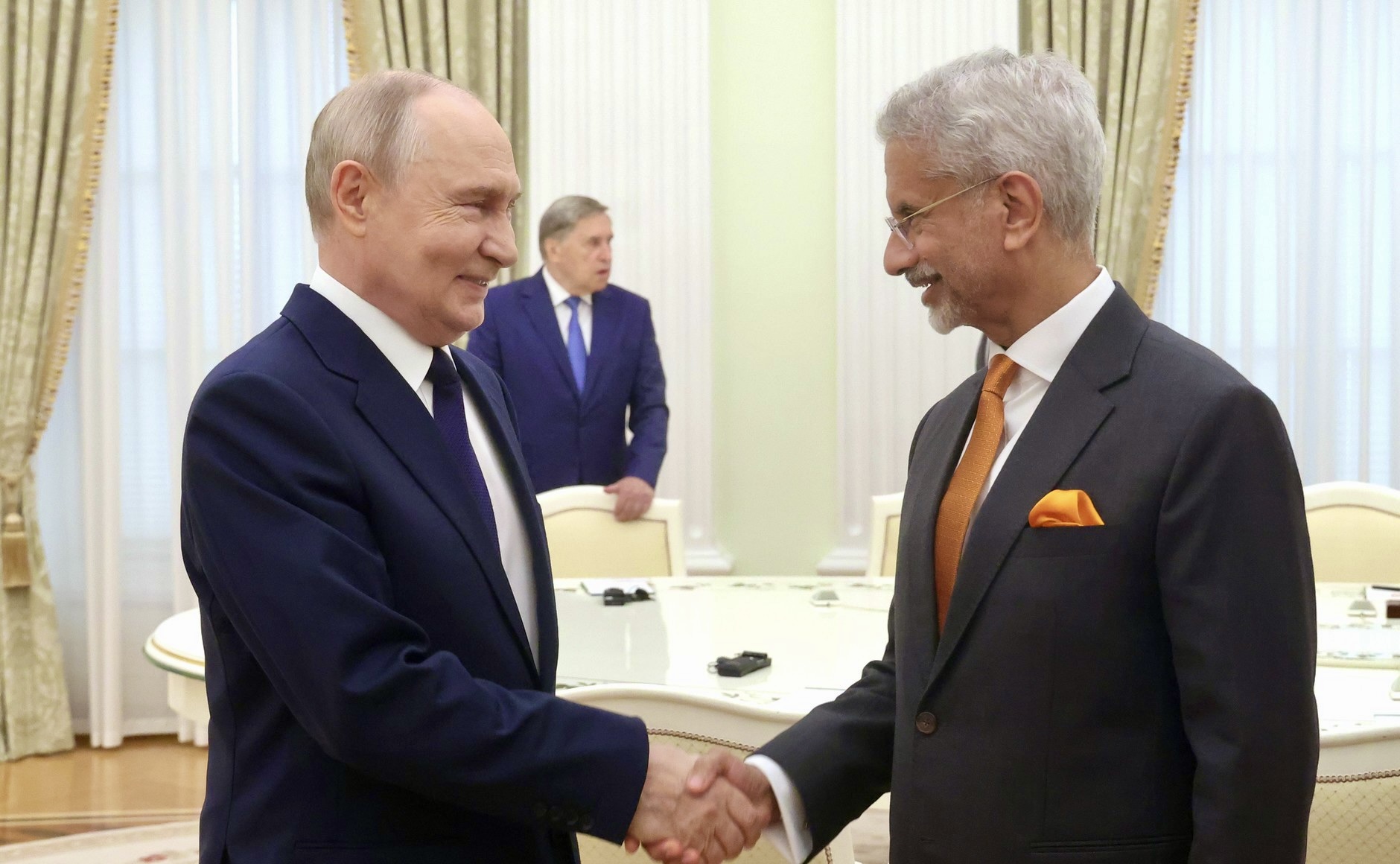
MOSCOW (Realist English). On August 24, Vladimir Putin received Indian Minister of External Affairs Subrahmanyam Jaishankar in the Kremlin. Jaishankar arrived in Russia on an official visit on August 23–24 at the invitation of First Deputy Prime Minister Denis Manturov.
The meeting became the concluding chord of the 27th session of the Russian‑Indian Intergovernmental Commission on Trade, Economic, Scientific, Technical and Cultural Cooperation, of which Jaishankar serves as co‑chairman from the Indian side.
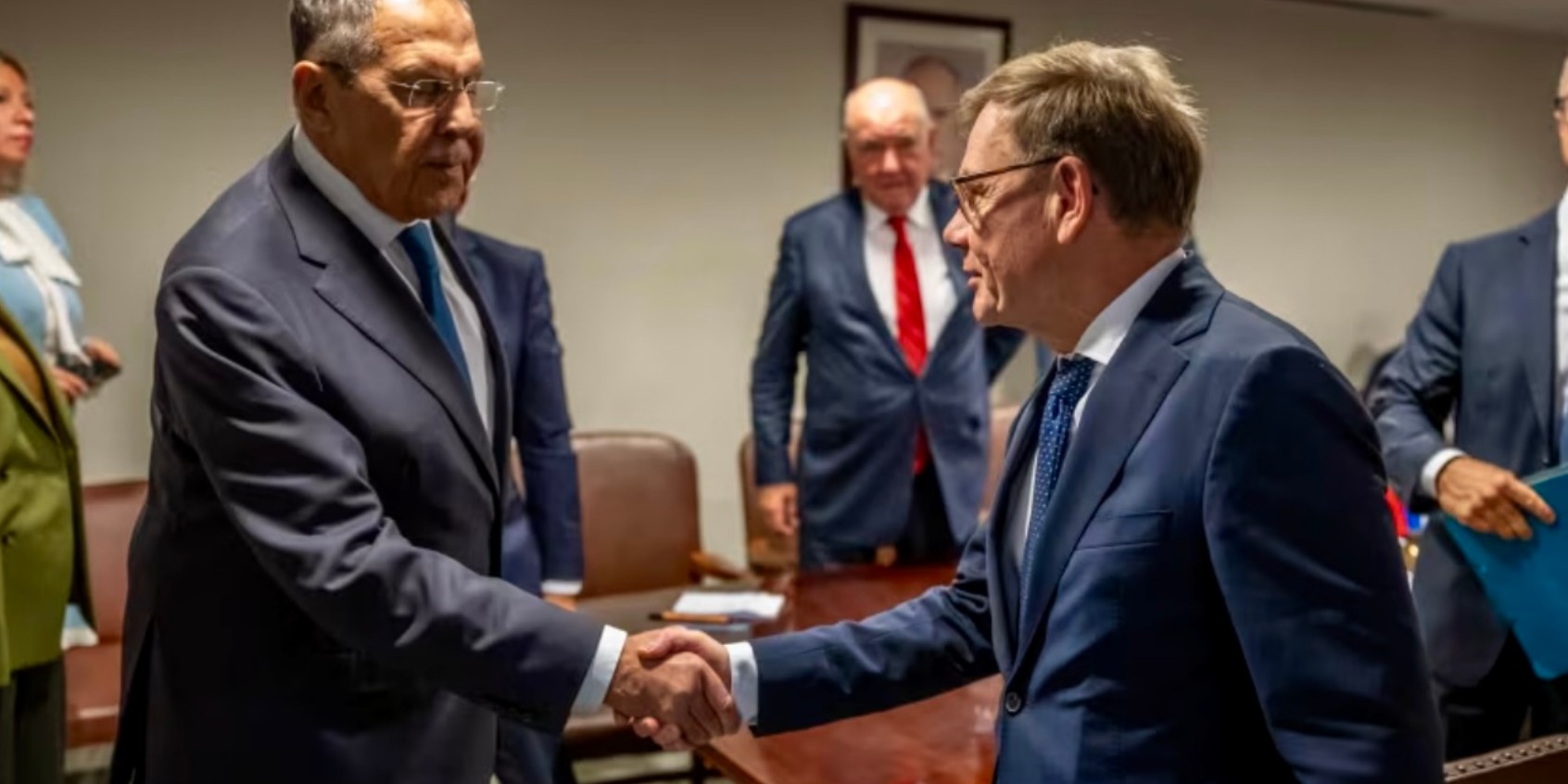
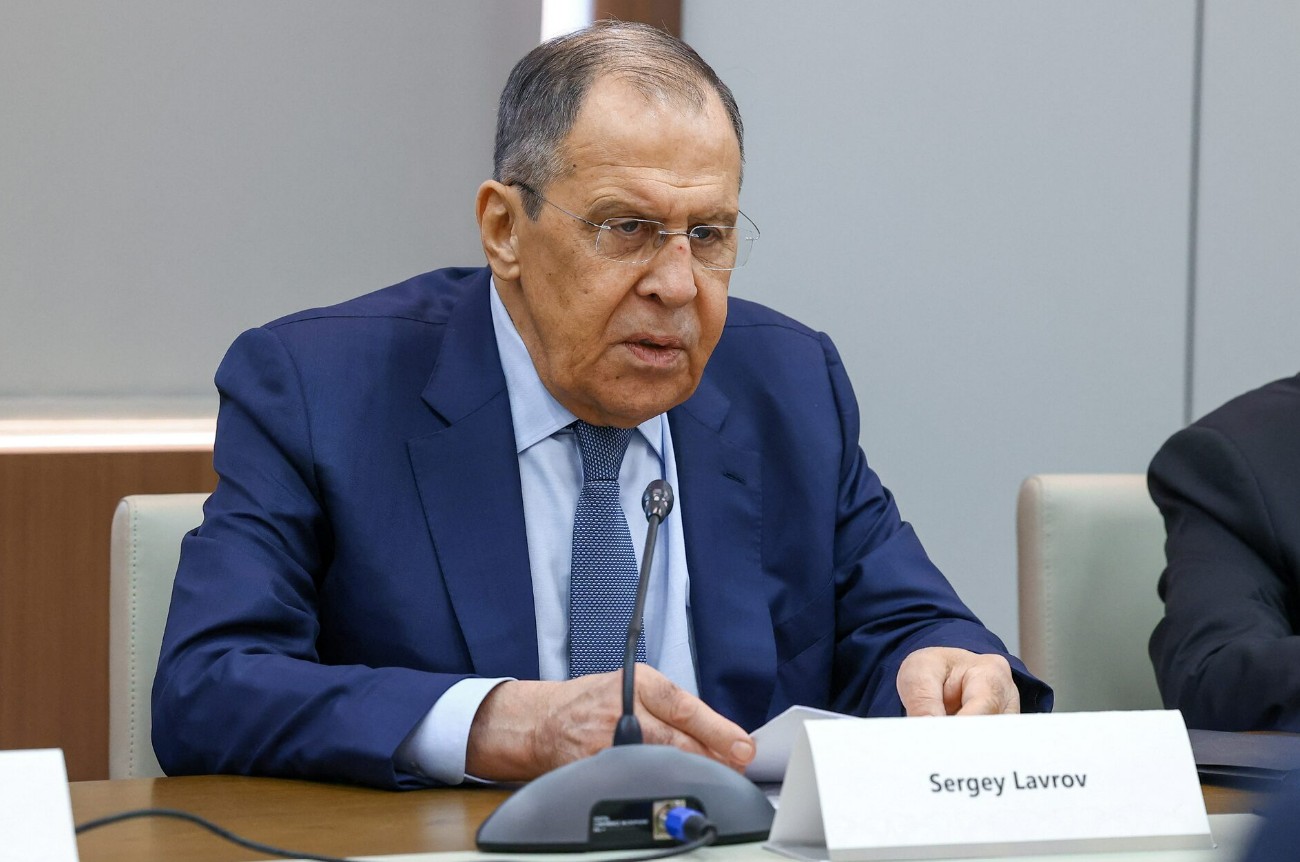
The Russian side at the meeting also included Foreign Minister Sergey Lavrov, First Deputy Prime Minister Denis Manturov, Presidential Aide Yuri Ushakov, and Deputy Head of the Presidential Administration Maxim Oreshkin. The Indian side was represented by Ambassador Vinay Kumar and Director of the Ministry of External Affairs’ Eurasia Department Mayank Singh.
Who said what: a strategic partnership without illusions
Opening the meeting, Putin stressed that Jaishankar’s visit “underscores the level of relations that has long, over decades, developed between Russia and India.” The Russian leader noted the growth in trade turnover: “If last year it declined a little, this year it is growing.”
Putin paid special attention to fertiliser supplies: “We are doing everything to resolve this issue for Indian farmers, for agriculture; we are increasing these supplies and are ready to continue doing so.” He also confirmed that cooperation in nuclear energy and high‑tech areas “is advancing quite confidently.”
Putin asked Jaishankar to convey “his best wishes” to Prime Minister Narendra Modi and expressed hope to meet him at the SCO summit in Bishkek on August 30–31. He also did not rule out another meeting with Modi by the end of the year, if work schedules permit.
Jaishankar conveyed a message from Modi to Putin and confirmed that the prime minister “is looking forward to the meeting at the SCO summit.” The Indian foreign minister also expressed hope that Putin would be able to attend the BRICS summit in New Delhi on September 12–13.
“We have a truly strong, robust bilateral cooperation,” Jaishankar summarised. “Our economic cooperation has grown significantly.”
Thirty days of Russia–India partnership: a chronology of events
The past month has been a period of intensive diplomatic and economic activity between Moscow and New Delhi.
| Date | Event | Essence |
| July 3 | 9th meeting of the Russian‑Indian Working Group on Priority Investment Projects | A list of promising projects in metallurgy, engineering, pharmaceuticals was formed; a new investment protection agreement was discussed |
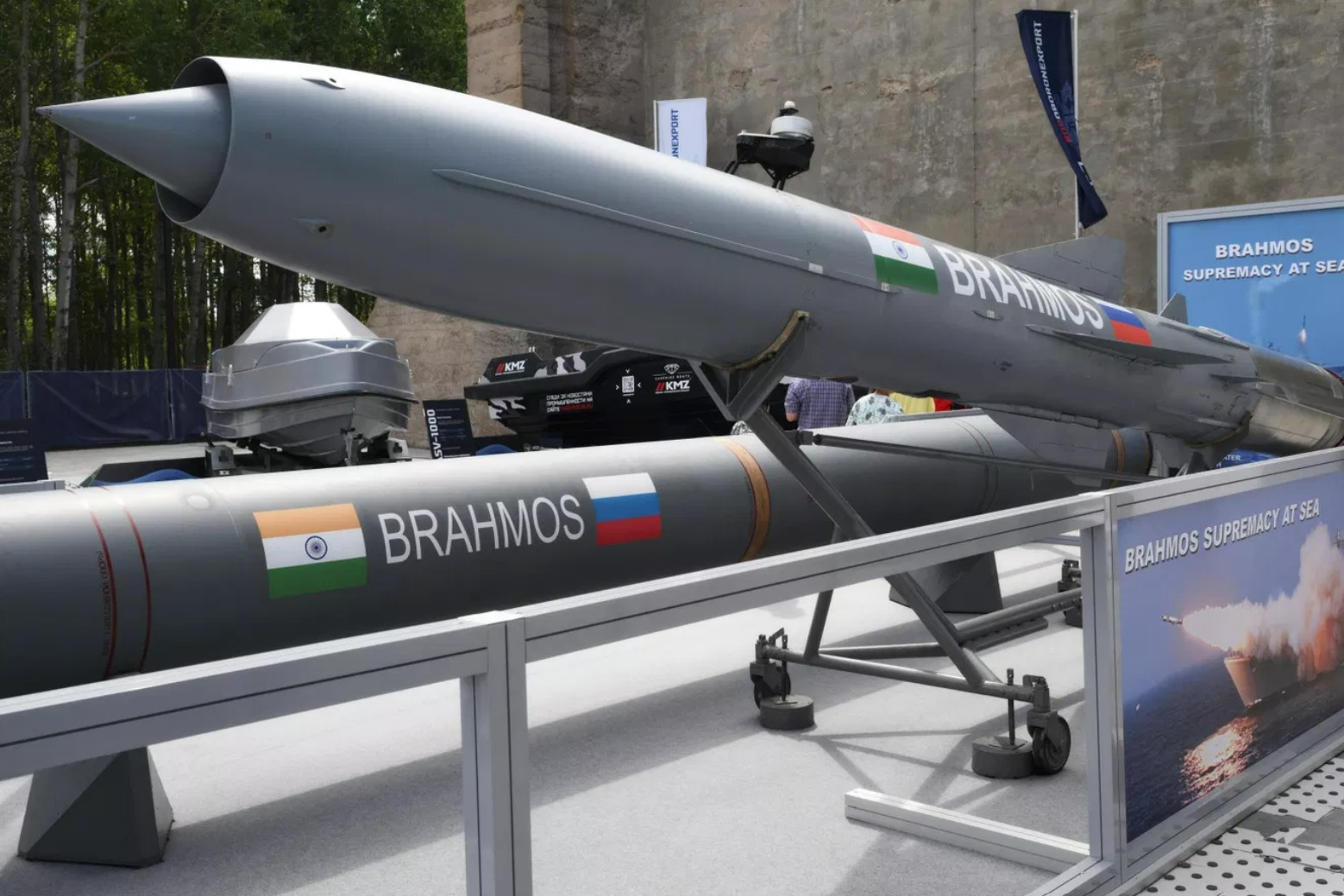
| July 8 | 5th meeting of the Russian‑Indian Working Group on Defence Cooperation | Commitments to deepen defence‑industrial and technological cooperation were reaffirmed |
| July 22 | Lavrov–Jaishankar meeting in Manila (on the sidelines of ASEAN) | Coordination of political contact schedules, coordination within the SCO and other formats |
| July 28 | Reaffirmation of commitment to counter‑terrorism | Joint statement on cooperation at UN, BRICS, SCO and EAG platforms |
| July 31 | India sent Russia an invitation to the BRICS summit | The 18th BRICS summit will be held in New Delhi on September 12–13 |
| August 15 | Putin congratulated India on Independence Day | India’s economic achievements and high international standing were noted |
| August 23–24 | Jaishankar’s visit to Moscow | 27th session of the Intergovernmental Commission + meeting with Putin |
Economic result: +8% and a $100 billion outlook
In the first half of 2026, bilateral trade between Russia and India grew by 8%. As Manturov noted, the task is not limited to quantitative growth — the priority is to diversify the structure of trade.
Alongside traditional supplies of fuel and mineral fertilisers, trade in agricultural products, machinery, metallurgy and timber is expanding. Imports from India include pharmaceuticals, agricultural products, industrial raw materials, equipment and light industrial goods.
A new growth driver should be a free trade agreement between the EAEU and India, which is currently being actively prepared. In June, Putin stated that in the coming years Moscow and New Delhi aim to bring bilateral trade turnover to $100 billion.
Nuclear track and the Northern Sea Route
Particular attention at the Intergovernmental Commission meeting was paid to nuclear energy — the flagship area of Russian‑Indian partnership. The successful experience of building the Kudankulam NPP creates a foundation for new projects: construction of generation facilities in India, including small stations, as well as localisation of equipment and nuclear fuel production.
In addition, Rosatom is discussing with Indian partners formats for cooperation in the development of the Northern Sea Route.
Balancing between Moscow and Washington
As Kommersant notes, Jaishankar’s current trip to Moscow became “an attempt to find a balance between pragmatic relations with Russia and the preservation of trade‑economic cooperation and political engagement with the United States, which is threatening to increase pressure on Delhi over purchases of Russian oil.”
The synchronisation of watches between Moscow and New Delhi took place against the backdrop of an expected meeting of the two leaders at the SCO summit in Bishkek on August 30–31 and the likely trip of Putin to India for the BRICS summit in mid‑September. The Kremlin expressed hope that Putin’s visit to India for the BRICS summit would take place.
A partnership without illusions
Jaishankar’s visit and the work of the Intergovernmental Commission confirmed that Russia and India intend to consistently deepen their strategic partnership, relying on mutual economic interests and a long history of trusted relations.
Yet open questions remain: can the free trade agreement with the EAEU overcome bureaucratic and protectionist barriers? How long will New Delhi be able to withstand Western pressure if sanctions risks escalate into real restrictions for Indian business? And most importantly – will the upcoming BRICS summit become a platform where Moscow and Delhi will have to make a choice that both would prefer to avoid?
For now, both sides prefer to speak of “progressive development,” leaving sharp corners behind the scenes. But it is precisely these corners that will determine whether the current dialogue becomes the foundation for a new stage of cooperation or merely a tactical pause before an inevitable choice.