TALLINN (Realist English). The Estonian government has decided to close all road checkpoints on the border with Russia from 1 December. According to Reuters, the restrictions are being introduced on security grounds and will initially remain in force for at least six months, after which the authorities will assess whether to extend the measure.
The reason: sabotage allegations
The trigger for closing the border was an attempted arson attack on the defence industry enterprise Threod Systems on 14 November. Estonia’s Internal Security Service said the attack was carried out by Russian military intelligence (GRU). According to Interior Minister Igor Taro, this is already the second such incident this year.
“Russian special services intimidate and try to recruit our citizens who travel through our border checkpoints. We can no longer tolerate this,” Taro said at a press conference.
The Kremlin rejected the accusations. Russian presidential spokesman Dmitry Peskov called Tallinn’s claims “completely unfounded” and unsupported by evidence.
Moscow’s reaction: “a new Iron Curtain”
Russian Foreign Ministry spokeswoman Maria Zakharova said at a briefing on 20 November that Estonia’s decision was “effectively tantamount to attempts to erect a new Iron Curtain under the false pretext of some threat from the East.”
“Throughout 2026, Estonia has taken confrontational anti-Russian steps, systematically restricting the operation of checkpoints,” the diplomat added. She warned that if the plans are implemented, Moscow will take “the necessary retaliatory political and diplomatic measures to protect national interests.”
Scale and consequences
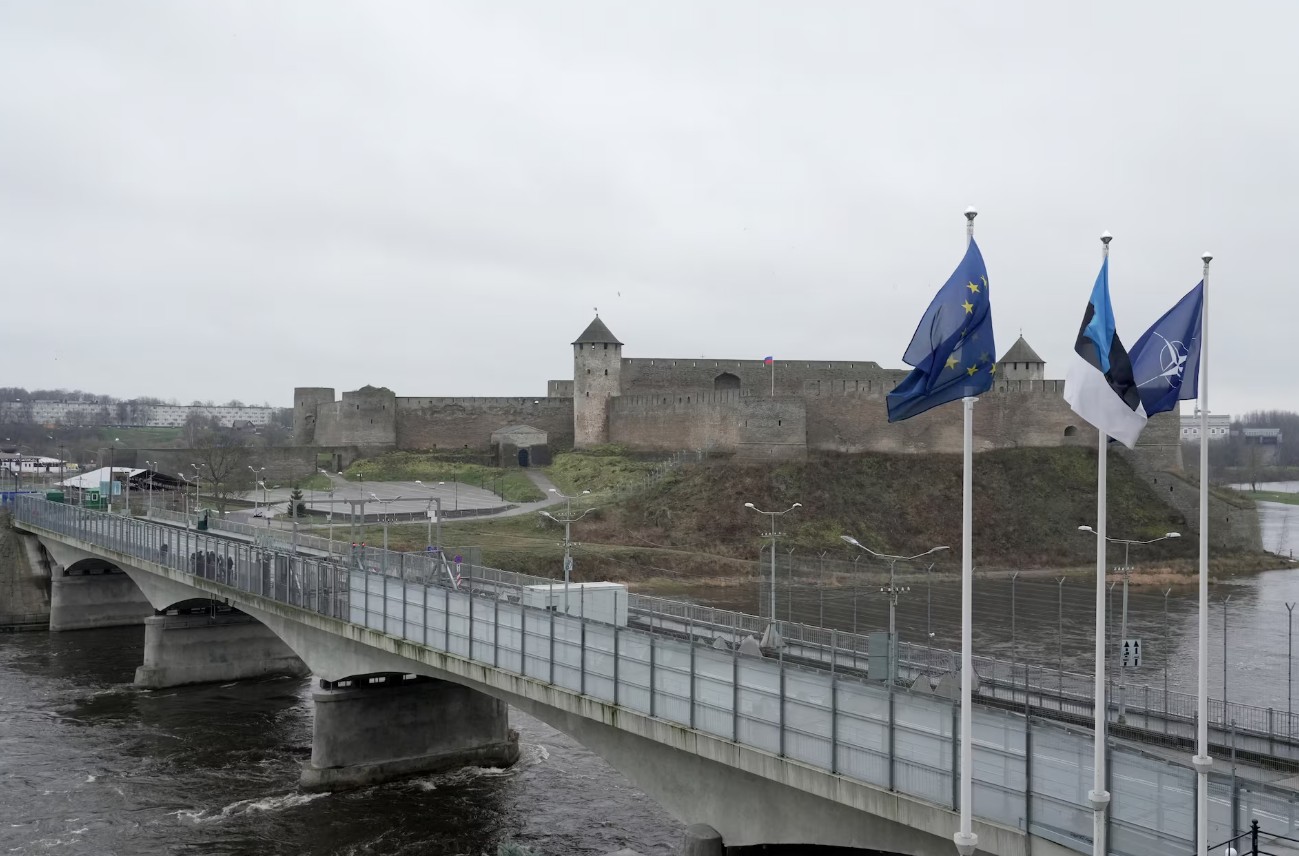
Estonia has five road checkpoints on the border with Russia, including the Narva–Ivangorod crossing, which has operated for pedestrians only since February 2024. Rail freight traffic is not affected by the closure but remains under strict customs control.
According to Estonian police, about 760,000 people crossed the border this year, of whom 307,000 were Russian citizens, 175,000 Estonian and 54,000 Finnish. Many Estonian residents have relatives in Russia, and the Narva crossing is used by travellers from other European countries for trips to St Petersburg.
Finland closed its checkpoints on the border with Russia back in 2023 and has not reopened them since. Latvia and Lithuania keep their crossings open.
As observers note, the key feature of the situation is the combination of a specific security incident with a broader policy of isolation. Formally, the border closure is justified by the attempted sabotage, but it fits into a series of restrictions introduced by Tallinn over the year and into a regional trend: Finland has already closed its border, while Latvia and Lithuania have not.
For residents of border areas, the immediate effect will be most noticeable primarily in the severing of family and transport ties, and in the need to use the remaining routes through Latvia — and that is precisely where it is most sensitive for the daily lives of thousands of people on both sides of the border.