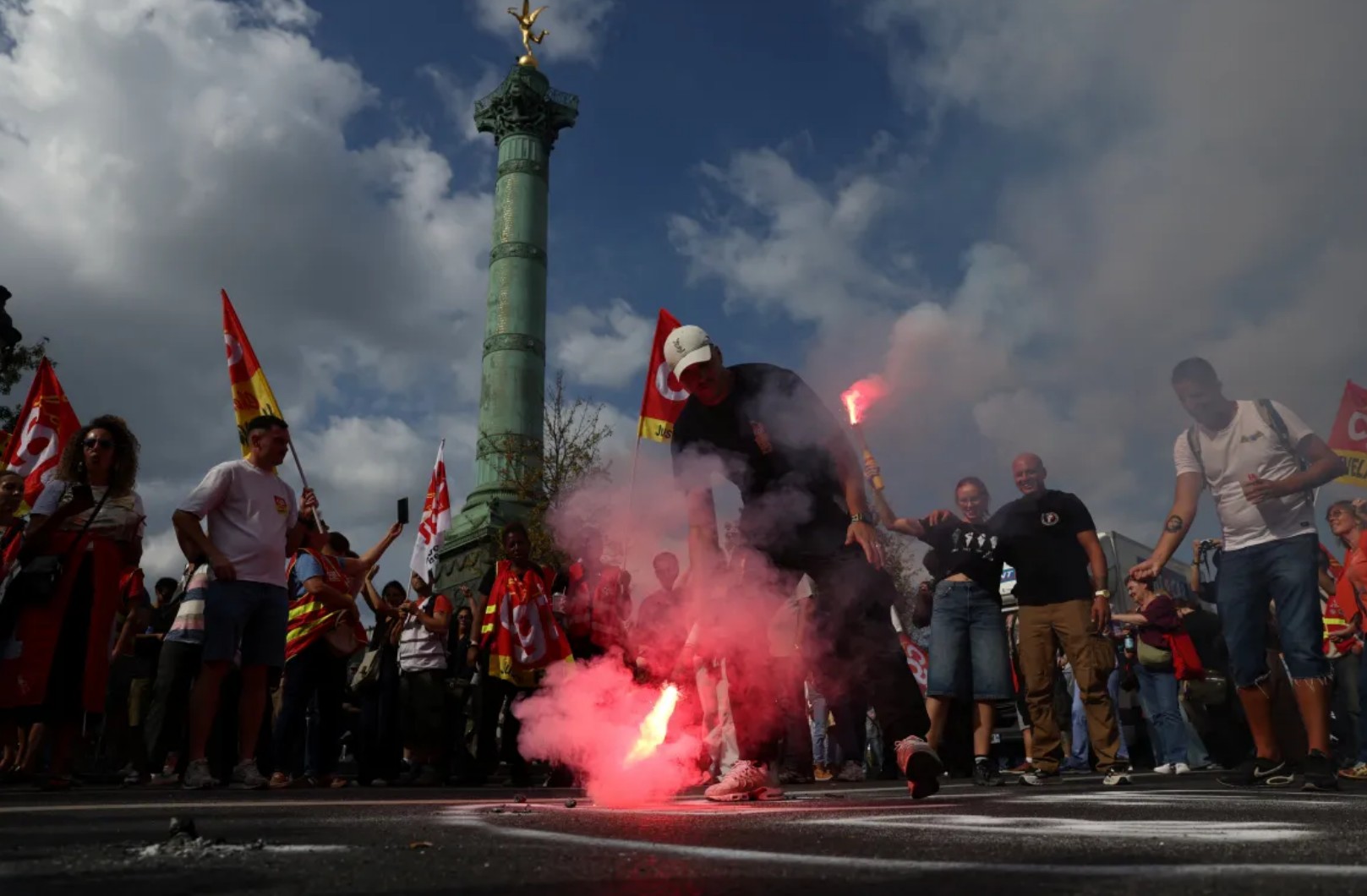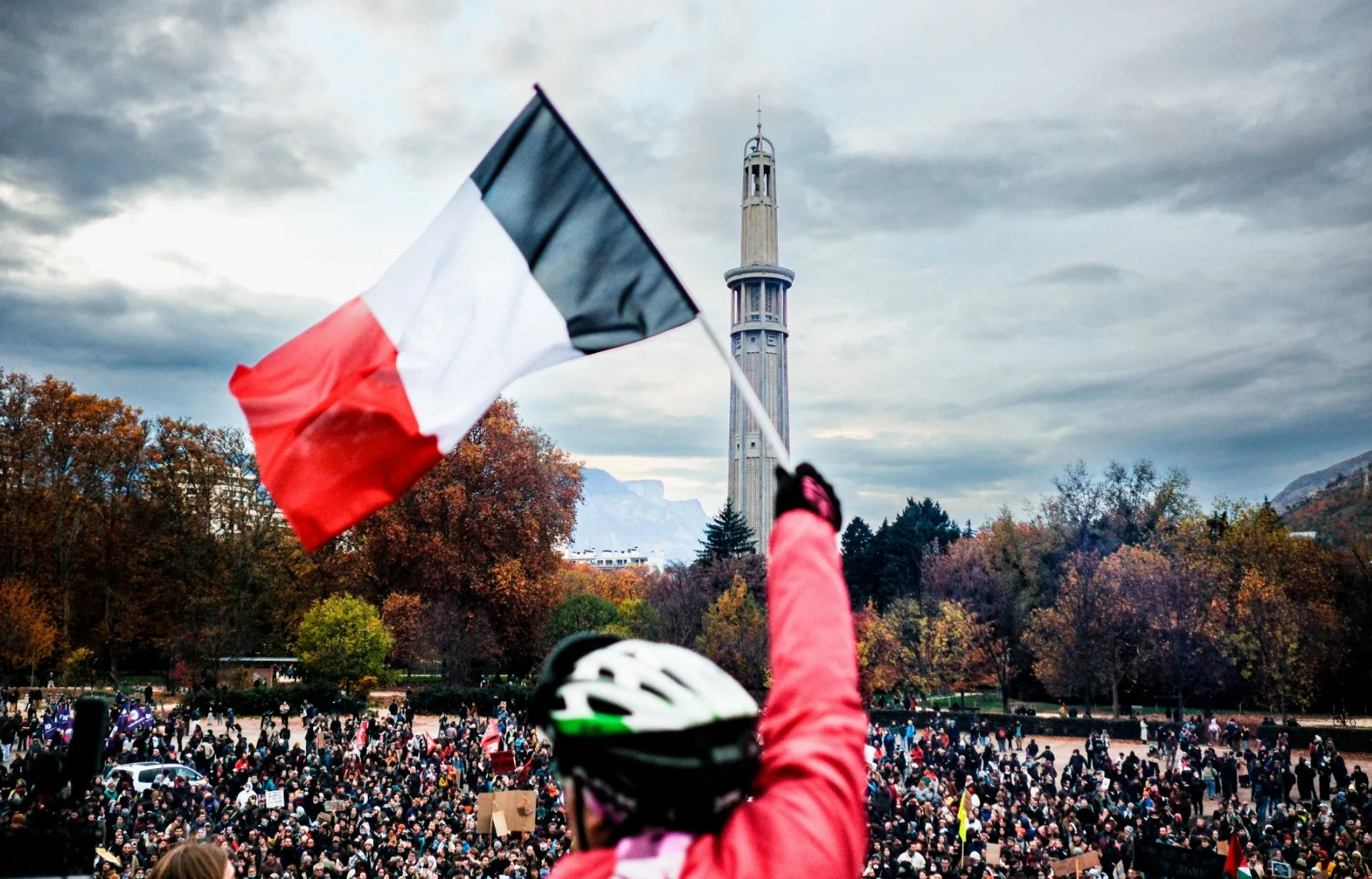
PARIS (Realist English). France is enduring its sixth consecutive weekend of mass protests against the rising cost of living. The current mobilisation coincides with two symbolic dates: the eighth anniversary of the “yellow vests” movement, which began on 17 November 2018 with demands against fuel tax hikes, and a Europe-wide call by trade unions and housing rights associations for coordinated action from 20 to 22 November.
Scale and geography: 349 demonstrations
According to the mobilisation map, 349 demonstrations are planned across France on 21 November. In Paris, the Île-de-France inter-union coalition (CGT, CFDT, FO, FSU, Solidaires, as well as the youth organisations FAGE, UNEF, Union étudiante and Union syndicale lycéenne) has announced a route from Place de la République to Place de la Nation, starting at 14:00.
The “yellow vests” coordination will also join this march after the police prefecture rejected its originally announced route from Bastille to Concorde.
Beyond Paris, actions are planned in Lyon, Nantes, Marseille, Montpellier and other cities. By Friday evening, 167 actions had been registered on the “yellow vests” website. The movement is calling for a “mass return to roundabouts and toll booths across France.”
Protesters are demanding lower energy and food prices, higher wages and pensions, access to housing and increased funding for public services.
Demands: purchasing power and public services
A separate demand remains higher taxes for the wealthiest citizens — the slogan “Taxez les riches.” Students and high-school pupils who have joined the movement are demanding the abolition of the Parcoursup platform, additional funding for education, building repairs and more teachers.
The authorities’ position: “zero tolerance” and 70,000 security personnel
Interior Minister Laurent Nunez said the police deployment would be “exactly the same as in previous Saturdays”: about 70,000 police officers and gendarmes across the country. In a telegram to prefects, he called for “particular vigilance” regarding “groups most hostile to law enforcement,” especially after the Senate definitively passed a bill enshrining a “presumption of lawful use of weapons” by police officers.
Nunez also pointed to the radicalisation of protests in high schools and universities, accompanied by “serious acts of violence.” Since 17 October, according to France Assureurs, damage from urban violence has exceeded €200 million, and about 6,000 pyrotechnic projectiles have been fired at law enforcement officers. The sale of certain types of fireworks has been banned until 27 November.
Social crisis amid the budget and elections
The current wave of protests began on 17 October and has become one of the longest in recent years. According to Justice Minister Gérald Darmanin, since 17 October, 7,184 people have been detained or taken into custody during protests against the rising cost of living, of whom 3,053 appeared in court and 466 received prison sentences; another 8,000 were detained during high-school blockades.
The previous major action on 17 November drew, according to the Interior Ministry, 146,000 people nationwide (unions claimed more than 500,000), including 28,000 in Paris. A week earlier, on 14 November, 106,000 people took to the streets according to the Interior Ministry and about 200,000 according to union estimates.
The protests are unfolding as the government seeks to adopt the 2027 budget with deficit reduction, with less than six months until the first round of the presidential election. Emmanuel Macron’s approval rating is at its lowest level since 2017, and polls show the far right in the lead. For the French economy, the immediate effect will be most noticeable primarily in disruptions to transport and public services, as well as in losses for small businesses: according to shop owners along march routes, revenue has fallen by 20–30%.
As observers note, the key feature of the sixth week is the merging of the “yellow vests” anniversary symbolism with the Europe-wide agenda and the radicalisation of the protest’s youth wing. The movement’s eighth anniversary gives the mobilisation additional momentum, but the simultaneous hardening of the authorities’ rhetoric and the adoption of the “presumption of lawful use of weapons” law increase the risk of clashes.
For the Lecornu government, the immediate effect will be most noticeable primarily in its ability to keep protests within bounds and pass the budget before the end of the year — and that is precisely where it is most sensitive for the cabinet’s stability ahead of the elections.