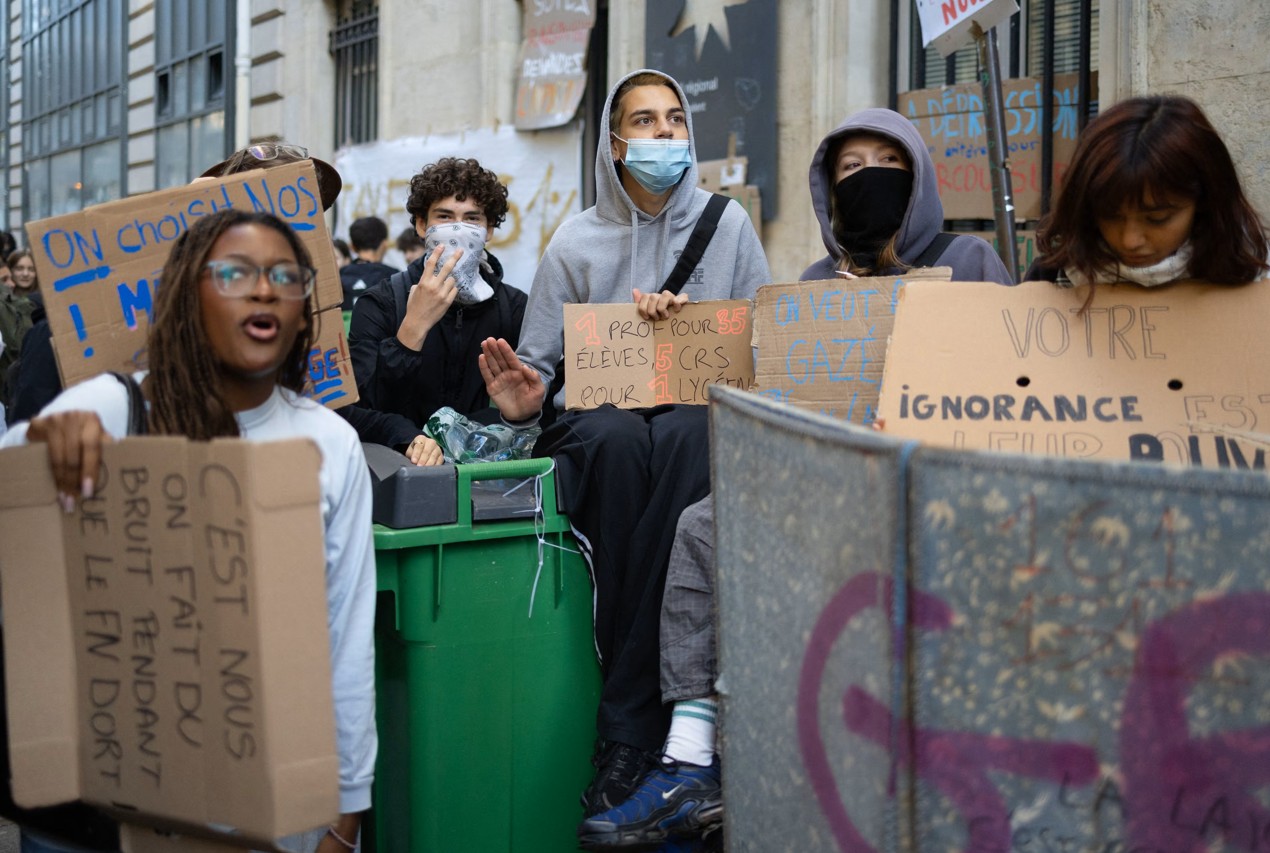
PARIS (Realist English). On October 13, France is holding its fifth nationwide day of mobilization by schoolchildren and students (“Act V”) against teacher shortages, overcrowded classrooms, crumbling buildings, and insufficient education funding. Teacher unions and unions from several other sectors have joined the movement, turning a local school protest into a nationwide social crisis amid debates over the 2027 budget.
What the movement demands
The main demands have not changed since late September: cancellation of the Parcoursup platform, allocation of €10 billion for secondary education, abandonment of the planned cut of 1,588 teaching positions, salary increases “without counterconditions,” and the creation of a status for assistants supporting children with disabilities (AESH).
According to LFI, the 2027 education budget is shrinking by about €650 million in real terms when adjusted for inflation; the Ministry of Economy disputes this figure, insisting on an increase of €1.2 billion. Economists point out that even nominal growth “is zero in real terms.”
Scale and geography of the protest
Demonstrations are planned in Paris (from Place d’Italie), Rennes, Toulouse, Poitiers, and dozens of other cities. In Normandy alone, eight routes have been announced. According to police, 130,000 to 200,000 participants are expected nationwide. The day before, on October 12, 130 of 3,700 lycées were closed (a 25% decrease compared to Friday), but violence intensified: eight education staff members were injured, including by firecrackers. In total, about 6,800 people have been detained since mid-September; police are reviewing 24 cases of alleged excessive force during dispersals.
Government response
President Emmanuel Macron, whose public activity since the start of the movement has been minimal, called on protesters for “calm, order, and respect.” Education Minister Édouard Geffray announced the deployment of 3,000 reserve teachers to the most affected lycées.
The High School Students’ Union (USL) called these measures “crumbs” and reiterated its demand for the full cancellation of Parcoursup. The government also retreated on one budget item — canceling the introduction of tuition fees for BTS and preparatory classes (€178 and €270 respectively) after the threat of escalation.
What this means
The school protest in France has ceased to be narrowly professional. It coincided with the start of budget debates in the National Assembly and the threat of merging with a broader “anti-cost-of-living” movement scheduled for October 17 — with the potential return of the “Yellow Vests.”
So far, the government is limiting itself to tactical concessions (reserve teachers, cancellation of BTS fees) but is not responding to structural demands for €10 billion and the cancellation of Parcoursup. If “Act V” gathers the stated 130,000–200,000 people, pressure on Sébastien Lecornu’s cabinet before the budget vote will sharply increase. The French education system, already experiencing a teacher shortage, risks becoming a rallying point for broader social discontent.