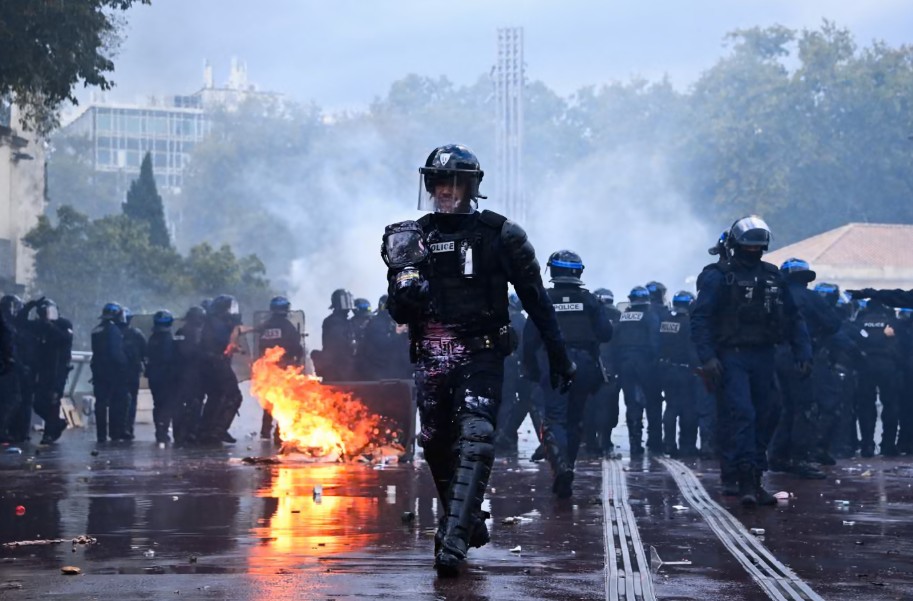
PARIS (Realist English). France is counting the consequences of Saturday’s protests, which descended into some of the most serious unrest in recent years. According to government data, more than 1,200 people were detained during clashes and pogroms across the country, and another 150 police officers and gendarmes were injured.
What happened
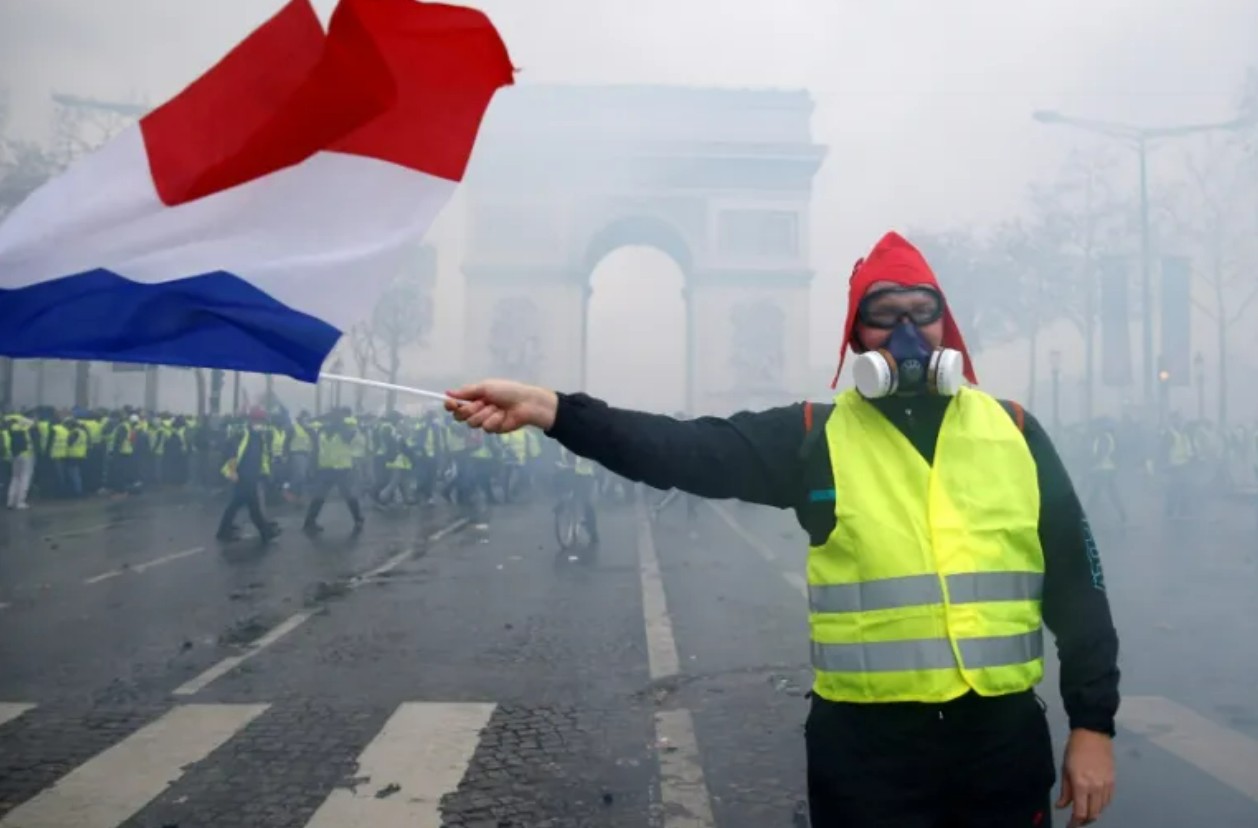
On October 17, according to various estimates, between 550,000 (Interior Ministry data) and 800,000 (union data) people took to the streets of French cities. Students and schoolchildren, who have been protesting since mid-September against teacher shortages and overcrowded classrooms, were joined by the “Yellow Vests,” farmers, unions, and climate activists.
During the day, most of the marches were peaceful, but toward evening the situation spiraled out of control. In Paris, on Place de la République and in the Champs-Élysées area, masked groups burned cars, smashed shop windows, and looted stores. Police used tear gas and water cannon.
The most serious damage was recorded in the regions. In Limoges, a crowd set fire to the historic city hall built in 1883 — the fire collapsed the roof and destroyed a significant part of the building. The mayor called it a “disaster for cultural heritage.” In Lyon, a tourism office burned down; in Marseille, demonstrators briefly stormed the city hall; in Lille, an Apple store was smashed.
Government response
Prime Minister Sébastien Lecornu, after visiting police officers in Paris, said: “That the count is not higher is a miracle.” He accused “ultra-left groups” of organizing the violence and called for “choosing a side” — the Republic or the rioters.
President Emmanuel Macron wrote on X: “Those who destroy and attack state institutions and shops, who loot our city halls, will be held accountable and punished.”
Casualties and detentions
In addition to 1,200 detainees and 150 injured security officers, at least one death was recorded in Paris — a person died of cardiac arrest during the unrest. In Saint-Étienne, a young man lost a hand in a grenade explosion. The exact number of injured among protesters has not yet been released.
Saturday’s events became a turning point in the confrontation between the government and the street. The merger of the student movement with the “Yellow Vests” created the worst-case scenario for the Lecornu cabinet: students’ demands for education spending contradict budget austerity, while the “Yellow Vests” brought experience of mass blockades and street confrontation.
The destruction of the historic city hall in Limoges and the pogroms in central Paris give the authorities grounds for a tough response, but simultaneously strengthen accusations of excessive use of force and that the government has lost control of the situation.
Six months before the presidential elections, these protests become a test of the outgoing administration’s ability to maintain order — and for Macron, who will not be able to run, this could become the most serious challenge of his presidency.