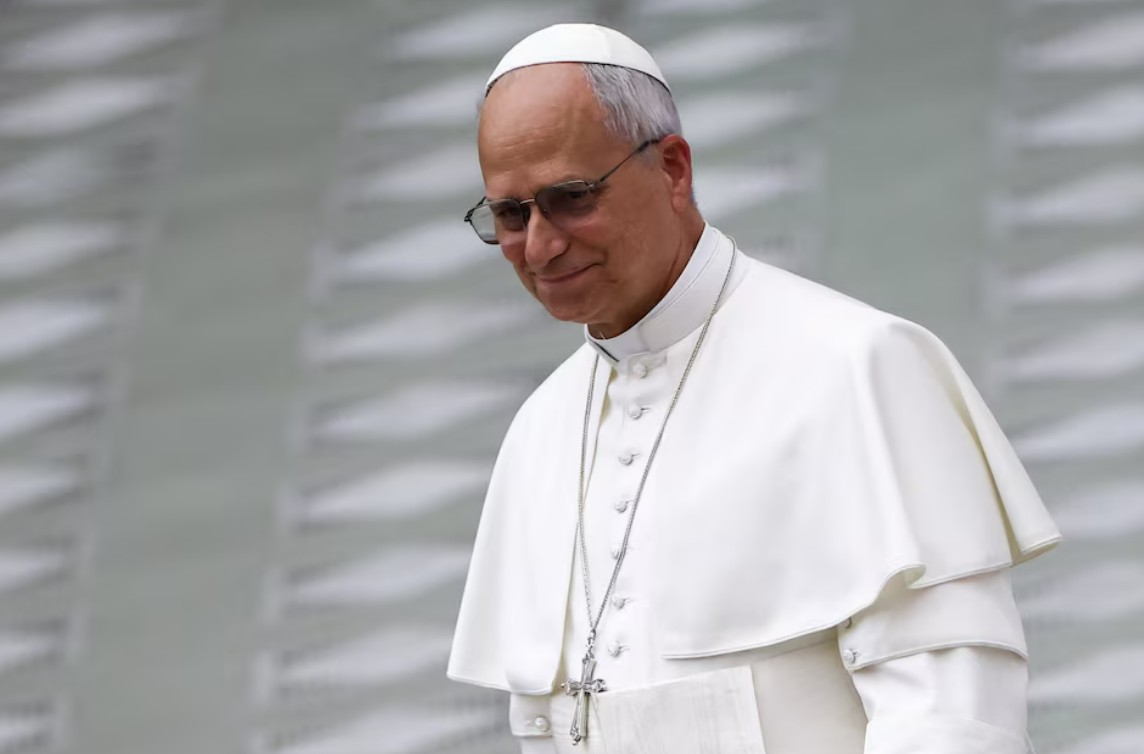
PARIS (Realist English). The Holy See has officially confirmed the programme of the apostolic visit of Pope Leo XIV to France. This is the first state visit of a pontiff to the country since 2008, when Benedict XVI visited France, and the first official trip to Paris since the time of John Paul II.
Visit Programme
The visit will last four days — from 25 to 28 September. The Pope will visit three cities: Paris, Lourdes, and Metz.
Paris (25–26 September)
On 25 September, the Pope will arrive in Paris at 10:00. A protocol meeting with President Emmanuel Macron will take place at the Élysée Palace, after which the pontiff will address authorities, civil society, and the diplomatic corps.
In the afternoon, the Pope will visit UNESCO headquarters, where he will deliver a speech on art, education, and their role in building peace. This is the first papal visit to UNESCO since 1980.
In the evening, at Notre-Dame Cathedral, the Pope will celebrate vespers with bishops, priests, and seminarians. The day will end with a prayer vigil with young people at the Stade de France in Saint-Denis, which is expected to gather 80,000 people.
On 26 September, the Pope will visit the Maison Bakhita social support centre, where he will meet with those in need. Then, at the Catholic Institute of Paris, he will speak with catechumens and newly converted — in 2026, 13,000 adults were baptised in France.
The culmination of the day will be a mass on Place de la Concorde, expected to draw around 600,000 people. After the mass, the Pope will depart for Lourdes.
Lourdes (26–28 September)
On the evening of 26 September, the Pope will pray at the Massabielle Grotto — the site of the apparitions of the Virgin Mary. On 27 September, he will meet with the bishops of France, celebrate mass on the sanctuary meadow, and deliver the traditional Sunday Angelus prayer. Meetings with the sick and staff of Accueil Notre-Dame are also planned, as well as an evening torchlight procession with the Rosary prayer.
Metz (28 September)
On the final day of the visit, the Pope will visit Metz — a city on the border with Germany, where he will take part in an interreligious meeting and the conference “To the Roots of Europe for Peace and Unity” at the Robert Schuman Centre. This part of the visit is dedicated to the future of Europe, peace, and the unity of the continent. The Pope’s speech in Metz will be delivered in English.
Key Themes of the Visit
According to the head of the Holy See Press Office, Matteo Bruni, the visit will address several key themes:
- Faith and spiritual revival. Despite secularisation, France is seeing a rise in the number of those wishing to be baptised. The Pope will meet with catechumens and newly converted.
- Culture and education. The central theme of the UNESCO speech. The Holy See and UNESCO will mark the 75th anniversary of diplomatic relations in 2027.
- Artificial intelligence and technology. The Pope is expected to address the place of man in the era of technological progress, referring to his encyclical Magnifica humanitas.
- Peace and conflicts. The speeches will reference conflict situations in the world, as well as France’s solidarity with affected regions, especially Christians in the Middle East.
- Europe. In Metz, the Pope will address the theme of European unity, peace, and openness to other cultures.
Reaction and Preparation
French President Emmanuel Macron called the upcoming visit “an honour for the nation” and a source of “hope for the whole country.” Apostolic Nuncio to France Archbishop Celestino Migliore noted the “enormous interest” in the visit and growing enthusiasm both among Catholics and the wider public. 17,000 volunteers have registered to support the visit.
The visit takes place against the backdrop of several sensitive issues for France. In August, the Vatican announced that the Pope would meet with victims of sexual abuse by the clergy. In 2021, an investigation revealed that over 70 years, about 330,000 minors had suffered abuse by priests and laypeople in France.
In addition, in June, the French parliament passed a law granting terminally ill adults the right to assisted dying. The Catholic Church of France sharply criticised this law, calling it a “rupture.”
The visit also takes place less than seven months before the first round of the French presidential elections. Analysts note that although the Pope is unlikely to name specific politicians, his emphasis on protecting European integration and the dignity of life will carry political overtones.