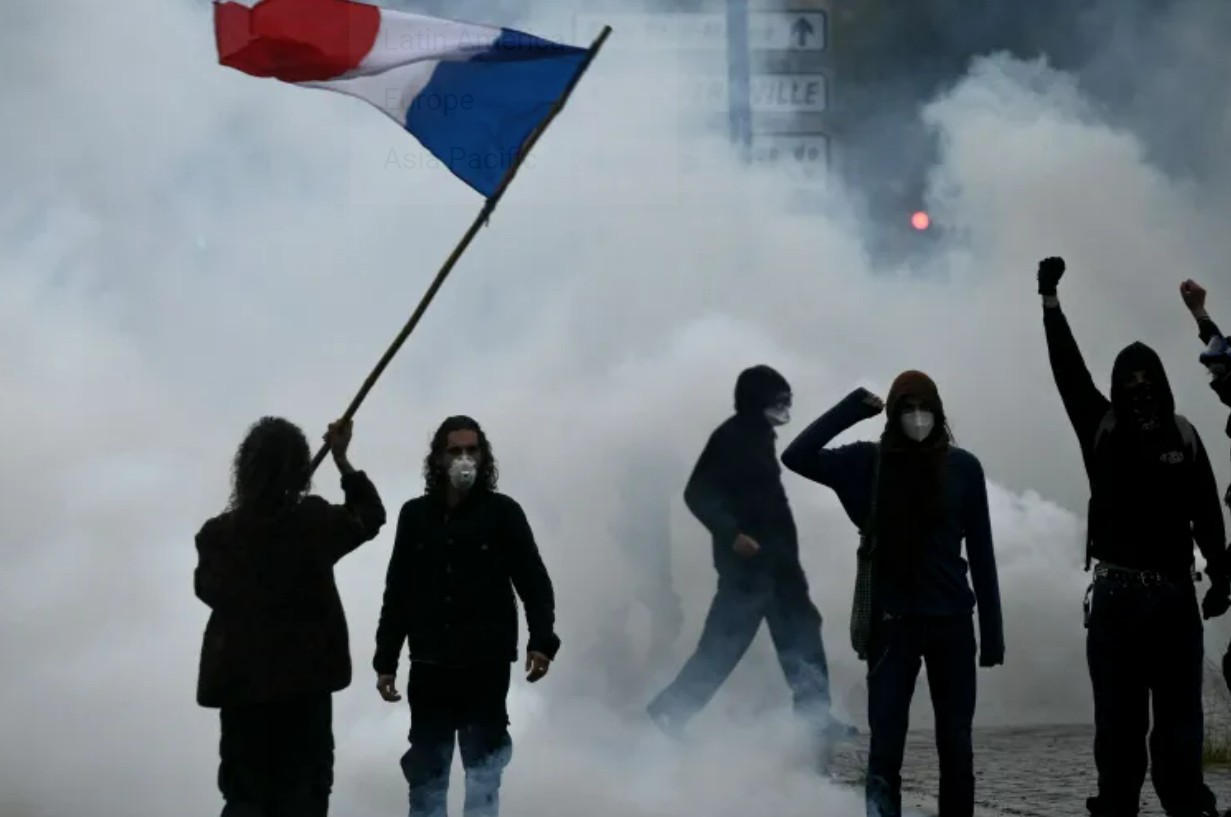
PARIS (Realist English). France’s highest administrative court upheld the Interior Ministry’s appeal and ruled lawful the ban on holding a march in central Paris. Organizers — the CGT union and the Yellow Vests movement — had insisted on the Bastille—Nation route, which police had banned on 30 October, citing “risks of violence” exacerbated by Halloween celebrations.
The essence of the legal dispute
The Paris Administrative Court on the evening of 30 October suspended the prefecture’s ban, giving organizers the opportunity to hold the march along the declared route.
However, Interior Minister Laurent Nuñez immediately announced an appeal, and the Council of State, reviewing the case on an urgent basis, overturned that decision. The court’s ruling stated that the ban on the central route and the proposal of an alternative “are neither inadequate nor disproportionate,” since they allow “full freedom of demonstration to be preserved” while simultaneously “limiting the risks of excesses.”
Third wave of protests and fear of a “new 17 October”
The action on 31 October is already the third major mobilisation in three weeks. It was prompted by the rising cost of living, insufficient funding for education, and dissatisfaction with police actions against lycée students. Authorities estimate the number of participants nationwide at between 350,000 and 450,000 people, with 350 actions planned.
The government’s main fear is a repeat of the unrest on 17 October, when, according to various estimates, between 550,000 and 800,000 people took to the streets, accompanied by pogroms, arson and clashes with police. This time, about 70,000 police officers and gendarmes have been mobilised nationwide to maintain order. Authorities cite Halloween as an additional risk factor: there are concerns that participants in unrest might try to hide their faces under masks.
The Council of State’s decision illustrates the French authorities’ attempt to find a balance between the constitutional right to protest and ensuring public order amid growing social tension.
The ban on the symbolically important central route is perceived by organizers as a restriction on freedom of assembly, but the court considered the alternative route a sufficient guarantee of the right to demonstrate. The key question remains whether the police will keep the situation under control and whether this third wave of protests will become a point of escalation leading to even tougher measures by the state.