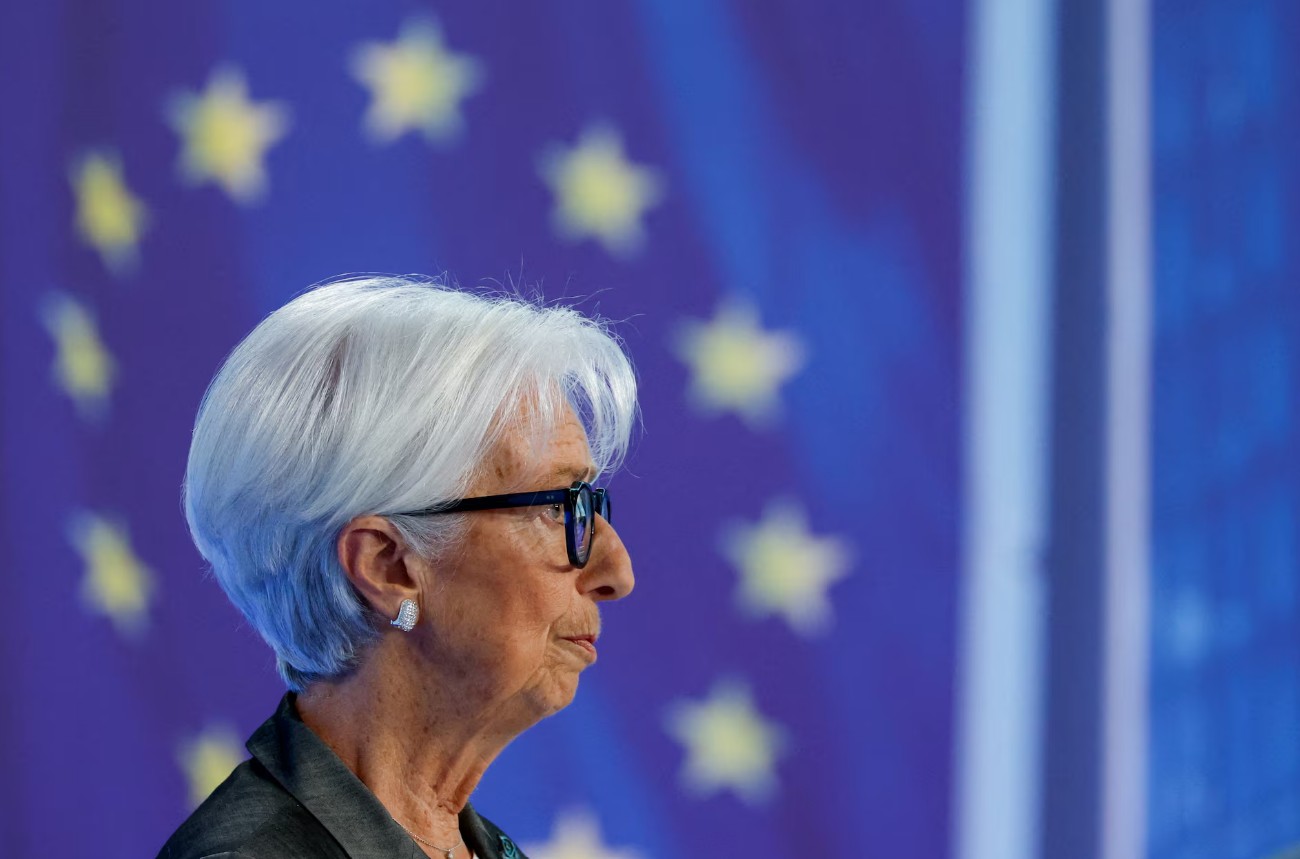
FRANKFURT (Realist English). The European Central Bank on 29 October officially confirmed Christine Lagarde’s resignation as president. According to the regulator’s statement, Lagarde notified the Governing Council and European Council President António Costa of her decision to leave the post on 7 February 2027. Her full mandate was due to expire only at the end of October 2027, but rumours of an early departure had circulated since February, and the final confirmation ended months of uncertainty.
Who is leaving and why now
Lagarde has headed the ECB since November 2019, steering the institution through the COVID-19 pandemic, the energy crisis and record inflation that reached double-digit levels in 2022. The official reason for the resignation has not been disclosed, but according to Reuters and other outlets, the World Economic Forum (WEF) in Davos is named as a likely future workplace. Bloomberg reported back in August that the WEF was trying to recruit Lagarde as its president, and she was “ready to serve.”
The key political context is timing. The early departure allows European leaders to choose a successor before the French presidential elections in spring 2027, in which, according to polls, the far-right candidate Marine Le Pen is the favourite. Thus, Lagarde’s decision deprives a potential Le Pen administration of the opportunity to influence personnel appointments at the ECB. Critics point out that such a move “politicises” the central bank and calls its independence into question.
Race of successors
The European Council has launched the procedure for appointing a successor under Article 283(2) of the Treaty on the Functioning of the EU and intends to decide “without delay.” The main contenders are former Bank of Spain Governor Pablo Hernández de Cos, now General Manager of the Bank for International Settlements (BIS), and former Dutch central bank President Klaas Knot.
According to a Bloomberg survey of economists in late October, de Cos is the favourite: the majority of respondents backed him, while nine experts supported Knot. German Chancellor Friedrich Merz has already met with both candidates. Earlier, ECB Executive Board member Isabel Schnabel was also mentioned as a possible successor, but she announced her departure from the regulator, triggering a chain of personnel changes.
What it means for ECB policy
The resignation comes at a difficult moment for monetary policy. The ECB is in a rate-hiking cycle, trying to prevent the oil price shock linked to the war against Iran from spilling over into other prices and wages. At the same time, the regulator faces a sharp rise in government bond yields, especially in France, which increases borrowing costs for households and businesses. On 29 October, the ECB is expected to keep the deposit rate at 2.5% but may signal the possibility of another hike as early as December.
Financial markets reacted to the confirmation of the resignation with gains: European government bonds and stock indices rose, although the single currency declined slightly. Analysts note that Lagarde’s early departure, if accompanied by a rapid and predictable choice of successor, is more likely to strengthen investor confidence in the euro area than to undermine it.
Analytical conclusion
Lagarde’s resignation is not merely a personnel decision but a political manoeuvre designed to shield the ECB leadership from possible influence by eurosceptics after the French elections. However, the same logic creates a risk: if the appointment of a successor is perceived as a collusion of elites against the will of voters, it could intensify criticism of the central bank’s independence.
Whoever heads the ECB — de Cos, Knot or another figure — will have to balance fighting inflation, debt pressure on the euro area periphery and political expectations that are becoming increasingly fragile. The coming weeks will show how smoothly the transfer of power proceeds and whether the Governing Council maintains a unified position on rates.