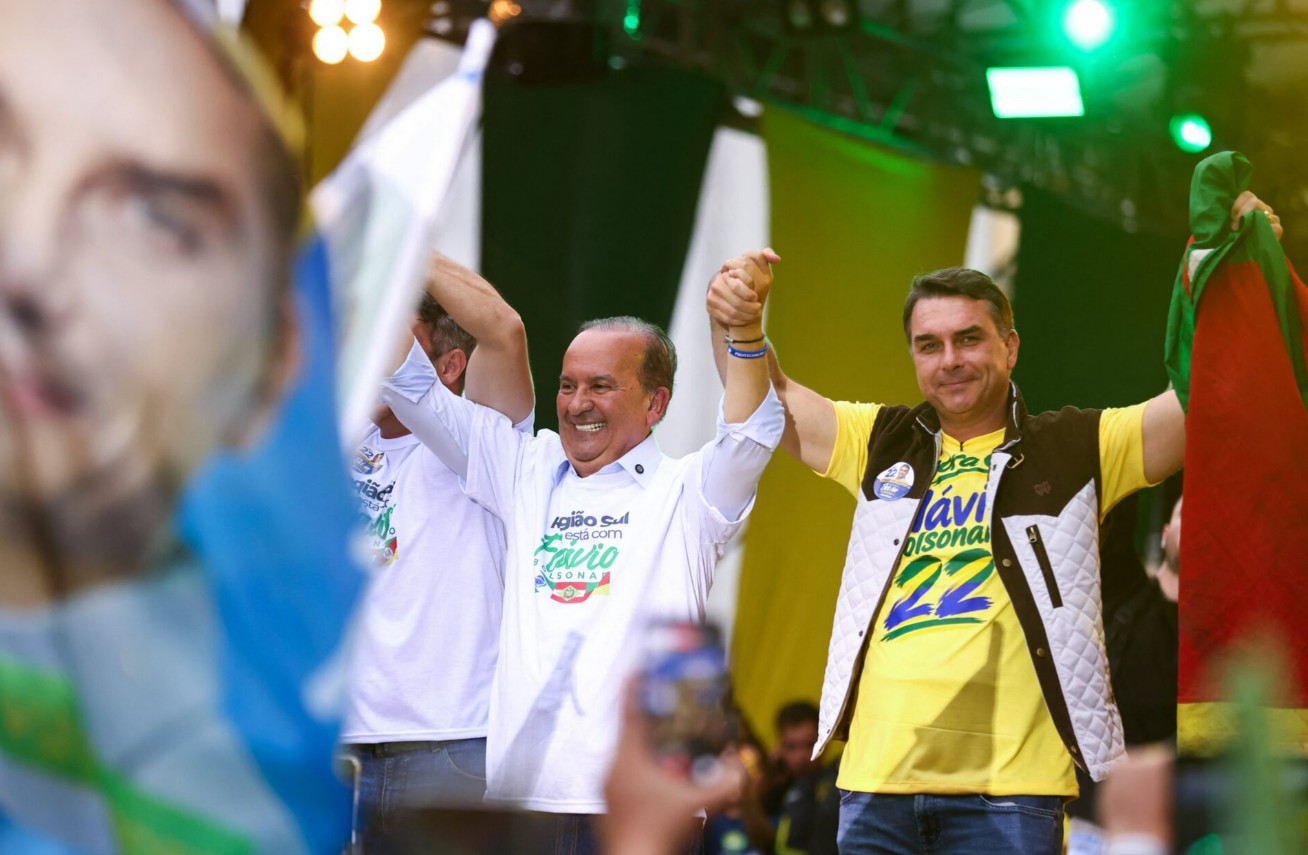
SÃO PAULO (Realist English). Brazil is entering the final week before the presidential runoff, scheduled for October 25, with the candidates in a virtual dead heat. According to a BTG Pactual/Nexus poll published on October 19, Senator Flávio Bolsonaro receives 50.3% of valid votes, while incumbent President Luiz Inácio Lula da Silva gets 49.7%. The gap is within the 2 percentage point margin of error, meaning statistical parity.
Poll dynamics
A week earlier, the same BTG/Nexus poll showed Bolsonaro ahead 52% to 48%. The narrowing from 4 to 0.6 percentage points reflects a turning point in the campaign after the first round on October 4, where Bolsonaro unexpectedly took first place with 47.03% against Lula’s 45.16%.
Other polls confirm the trend. Datafolha recorded a reduction in Bolsonaro’s lead from 4 to 2 percentage points: 51% to 49% by valid votes. CNT/MDA gives Bolsonaro 50.5% against 49.5%. All results are within the margin of error, and experts continue to call the race “unpredictable.”
Who is Flávio Bolsonaro
Flávio Bolsonaro is a 45-year-old senator from the Liberal Party, the eldest son of former President Jair Bolsonaro, who is serving a sentence. His father was ruled ineligible to run, and Flávio inherited the conservative base while trying to expand electoral support among moderate voters. He advocates preserving Lula’s government social programs and promises to create a “Ministry of Prosperity.”
Lula’s strategy
The 80-year-old Lula, seeking a fourth non-consecutive term, after a disappointing first round refocused his campaign on the 33.4 million voters who did not turn out on October 4 — more than one in five of those eligible to vote.
His left-wing Workers’ Party held mass rallies, restructured its social media campaign, and pushed through the Senate a constitutional amendment to reduce the workweek from 44 to 40 hours — a populist measure even Bolsonaro supported.
Electoral geography
Polls reveal stable patterns. Lula leads in the country’s northeast and among Bolsa Família recipients, and enjoys support among women and voters with basic education. Bolsonaro is strong in the south, southeast, center-west, and north, among men, evangelicals, and voters with secondary and higher education.
Rejection levels for both candidates are virtually identical: 46% say they would never vote for Bolsonaro, 44% for Lula. Assessment of Lula’s government: 41% negative, 35% positive.
Statistical parity a week before the vote means turnout will decide the outcome. If the 33 million who did not vote in the first round turn out — and Lula’s campaign is deliberately working on this — Bolsonaro’s advantage could evaporate. If turnout remains low, the conservative electorate, more disciplined in voting, will give Bolsonaro the edge.
The second factor is debates. The first face-to-face debate took place on October 19 on the Band television channel. Given the minimal gap, any mistake or successful blow could shift the balance.
For Brazil and the region, the stakes are high. Bolsonaro is an ally of Donald Trump, and his victory could change the country’s foreign policy course. Lula, whose fiscal policy worries markets, is trying to hold onto power amid economic challenges. So far, neither scenario has the upper hand — and this makes October 25 one of the most unpredictable elections in Brazil’s history.