WASHINGTON (Realist English). The war of the US and Israel against Iran, which began in late February 2026, has triggered not only an energy crisis but also a food crisis. According to international organizations, the blockade of the Strait of Hormuz has disrupted fertilizer supplies and agricultural logistics, already leading to rising prices and the threat of famine in dozens of countries.
Fertilizers: the hidden lever of hunger
Before the war, the Strait of Hormuz accounted for about a third of global seaborne supplies of urea — the most common nitrogen fertilizer — and nearly half of the maritime trade in sulfur, a key raw material for phosphate fertilizer production. After the conflict began, vessel traffic through the strait fell by more than 90%.
Prices reacted instantly. Sulfur has risen in price nearly 10-fold compared with pre-war levels. Urea in New Orleans rose 37% in the first weeks of the conflict. According to the World Bank, fertilizer prices will rise 31% in 2026, the worst affordability indicator since 2022.
The International Fund for Agricultural Development recorded a 13% rise in global agricultural prices in the third quarter of 2026. “Over the next six to nine months, we will see continued food price increases,” said IFAD head Álvaro Lario. “This will hit those who are already barely making ends meet.”
Transmission chain: from fuel to plate
Rising fertilizer prices are not the only channel. The energy shock raised the cost of diesel for transport and agricultural machinery. Maritime shipping has become more expensive: war risk insurance premiums rose from 0.25% to 10% of vessel value. The rerouting of routes around the Cape of Good Hope increased delivery time and costs.
According to Bloomberg, the shortage of plastics — another petrochemical byproduct — has driven up packaging costs, which are also passed on to consumers. A Wiley Online Library study describes the current crisis as “structural,” unlike the temporary shocks of 2008 and 2022: it is driven by rising production costs, not just supply disruptions.
Who will suffer most
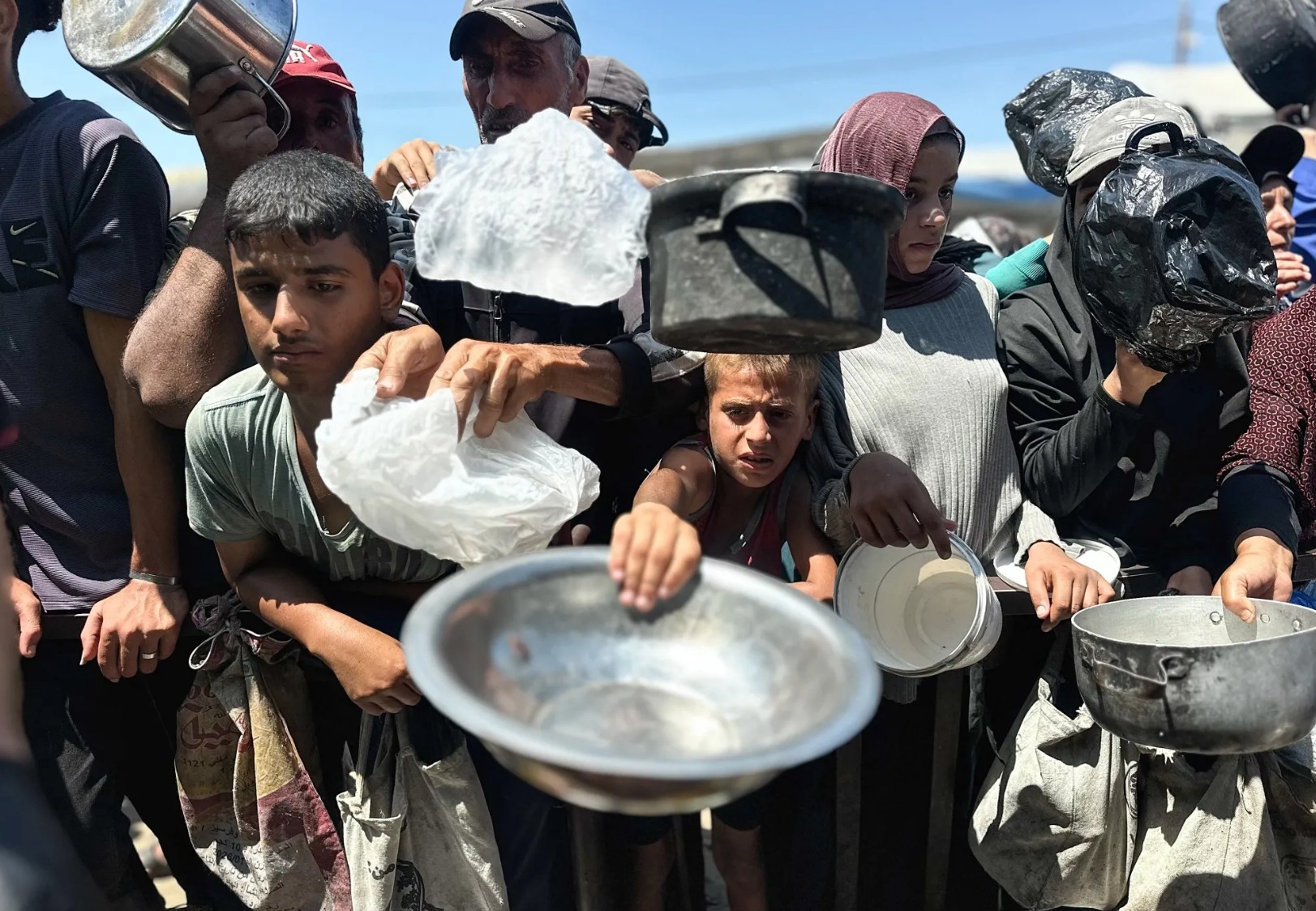
The UN World Food Programme estimates that if the conflict continues, the number of people facing acute hunger could rise by 45 million — from the current 318 million to 363 million. For comparison: in 2022, after the war in Ukraine began, this figure reached 349 million.
The largest increase is projected in Asia (+24%), West and Central Africa (+21%), and East and Southern Africa (+17%). Countries dependent on food and fertilizer imports are most vulnerable. Sudan imports about 80% of its wheat; in Somalia, prices for basic goods have risen by at least 20% since the conflict began.
Five countries are already in a state of catastrophic hunger: Sudan, Yemen, South Sudan, Nigeria, and the Gaza Strip.
Political deadlock
In March, the UN created a working group to facilitate the passage of fertilizer vessels through the Strait of Hormuz. According to UN Deputy Secretary-General Jorge Moreira da Silva, the mechanism could be launched within 7–10 days after an agreement between the US and Iran. “Reaching an agreement in the coming weeks is critically important, otherwise we will miss the planting season.”
However, there is no agreement yet. Meanwhile, according to the UN Food and Agriculture Organization, farmers in importing countries are already reducing fertilizer use or switching to less demanding crops, which will inevitably lower yields.
The war with Iran has shown that food security depends not only on harvests but also on the maritime corridors through which fertilizers and fuel are transported. The Strait of Hormuz is not a “breadbasket,” but its blockade strikes at the world’s ability to produce food. The chain is simple: no fertilizers — lower harvest; more expensive fuel — more expensive transport; more expensive transport — more expensive food. Each link reinforces the next.
For Russia, which is itself a major fertilizer exporter, this crisis creates a dual situation: on the one hand, rising fertilizer prices increase export revenue; on the other, global food inflation and logistical constraints also affect Russian producers.
For the poorest countries of Africa and Asia, the situation is critical: they have neither financial reserves nor alternative routes. If the Strait of Hormuz does not open in the coming weeks, the consequences for global hunger will be felt for years.