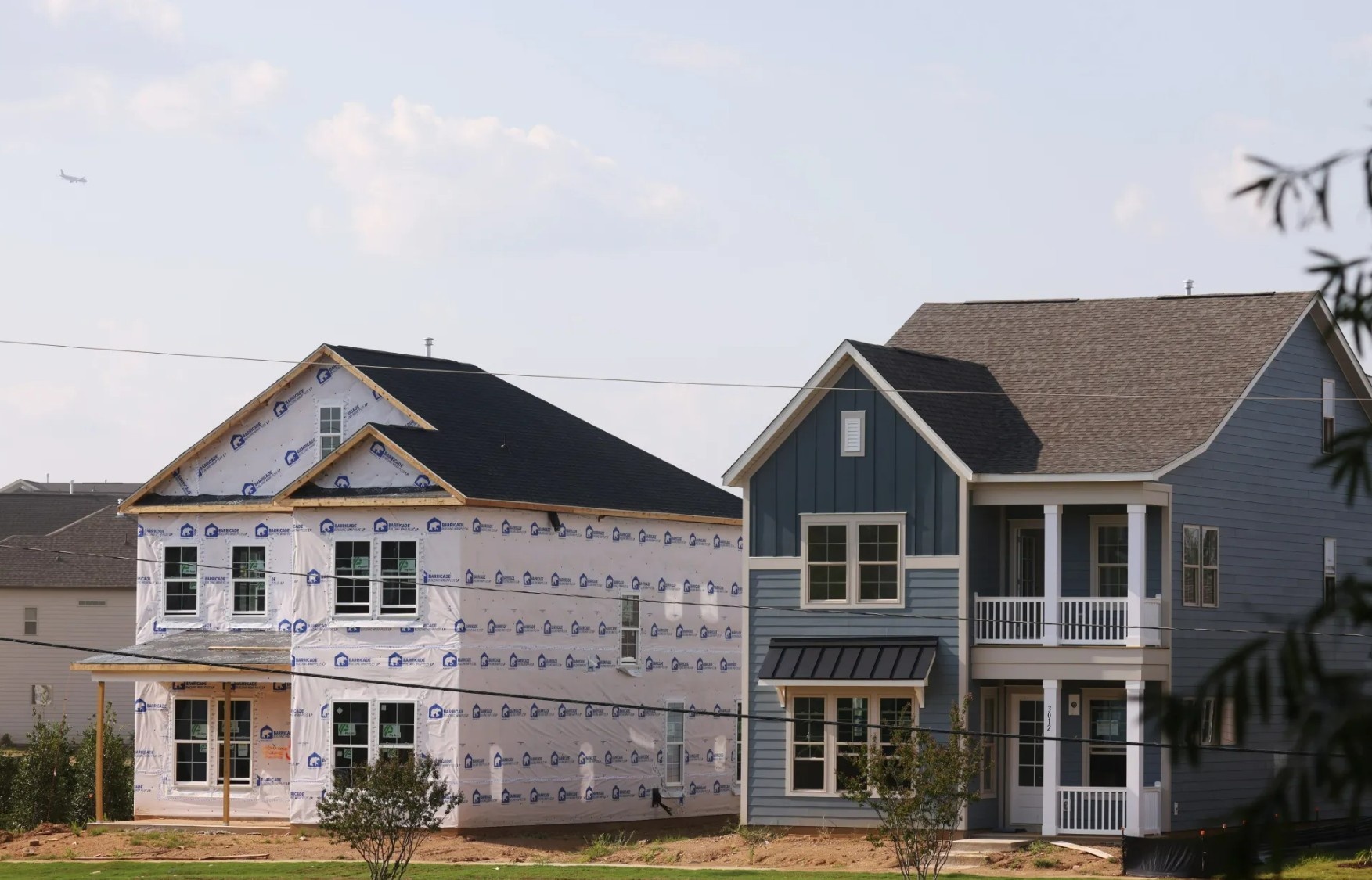
WASHINGTON (Realist English). Sales of new single-family homes in the US fell 0.6% in September 2026 compared with August to 676,000 at an annual rate, according to federal government data published on October 27. The figure was above the median economist forecast of 651,000 but confirmed that builders’ efforts to cut prices and stimulate sales could not offset the sharp rise in borrowing costs.
Mortgage rates and housing affordability
Mortgage rates remain the key pressure factor. According to Freddie Mac, the average 30-year fixed mortgage rate in October is 7.37%, versus 6.95% in September and 6.68% in August.
In September, the rate exceeded 7% for most of the month and reached about 7.6% by the end of the month. Rising borrowing costs are constraining household purchasing power, especially for first-time buyers. According to MBA estimates, mortgage applications to purchase a new home fell 8.3% year-on-year in September, and the estimate of new home sales was the lowest since April 2020.
Regional dynamics and inventories
Sales fell in the South (-6.6% to 413,000) and Midwest (-7.3% to 89,000), while the West (+21.4% to 142,000) and Northeast (+28.0% to 32,000) saw growth. The inventory of new homes for sale fell to 476,000 units, equivalent to 8.4 months of sales at the current pace. The median price of a new home in September was $400,400, rising to a three-month high, although in annual terms prices are declining: in seven of the nine months of 2026, the median price of new homes was lower than a year earlier.
Builder confidence and forecasts
The NAHB/Wells Fargo builder confidence index fell in October for the second consecutive month to 29 points, the lowest level since June 2012. The current sales component remained at 33, while expected sales and buyer traffic fell to 32 and 18 respectively, indicating builders’ reluctance to start construction without a signed contract with a buyer.
The National Association of Realtors (NAR) forecasts a 5% decline in new home sales for 2026. Goldman Sachs expects further weakening of the market: the bank estimates that housing investment will contract by 2.5%, 4%, and 1% over the next three quarters, respectively, and in 2027 the number of new single-family housing starts will be only 875,000 — roughly at the current year’s level.
The current decline in new home sales is not a one-off drop but a reflection of the structural problem of housing affordability. High mortgage rates, which are expected to remain elevated due to the budget deficit and Fed policy, are constraining demand, while builders cannot indefinitely cut prices without hurting margins.
The lock-in effect exacerbates the situation: homeowners with low rates are reluctant to sell, which reduces supply on the secondary market and redirects some demand to new construction, but does not offset the overall cooling. If rates do not begin to decline sustainably, the US housing market risks remaining in a state of “deep freeze” — with weak construction, low mobility, and continued pressure on prices.