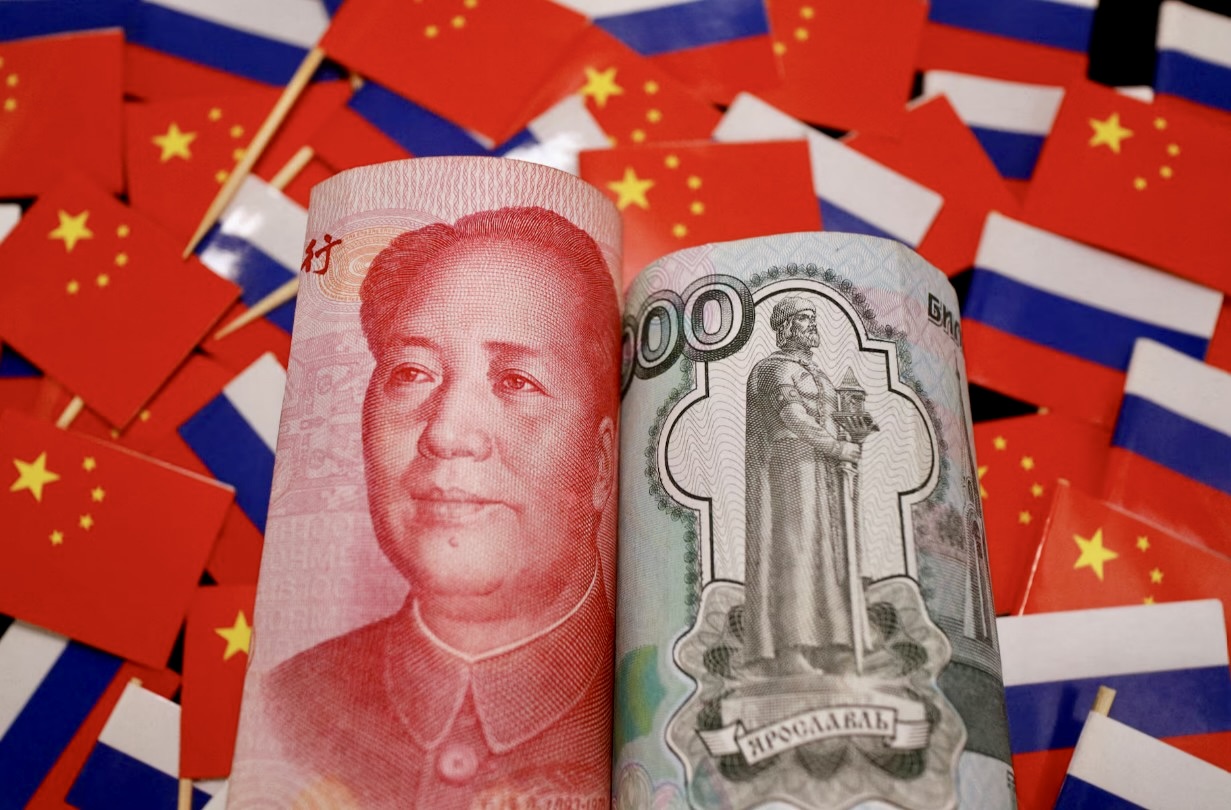
MOSCOW (Realist English). On September 8, the Chinese yuan strengthened against the ruble at the opening of trading on the Moscow Exchange, while the ruble weakened despite rising oil prices.
At the first minute of trading, the yuan exchange rate stood at 12.96 roubles (+6.75 kopecks from the previous close), exceeding the Central Bank’s official rate by 10.63 kopecks. Brent crude rose to $97.49 per barrel (+0.5%), while Urals climbed to $85.95 (+1.7%).
Analysts attribute the ruble’s weakness despite rising commodity prices to shrinking export revenues, high imports and the Finance Ministry’s currency purchases under the budget rule.
“Ruble Weakens Despite Rising Oil”: How Trading Opened
On the Moscow Exchange, the Chinese yuan continued to strengthen against the ruble. At the first minute of trading, the yuan stood at 12.96 roubles, 6.75 kopecks above the previous close.
The official yuan rate set by the Bank of Russia for September 8 is 12.8537 roubles, 3.12 kopecks below the previous value. The exchange rate has already exceeded the official rate by more than 10 kopecks.
Meanwhile, oil prices continued to rise. Brent futures gained 49 cents, or 0.5%, to $97.49 per barrel. US WTI crude stood at $92.92 per barrel, up 1.6%. Urals rose 1.7% to $85.95 per barrel.
The Market Paradox: Oil Rises, Ruble Weakens
The ruble’s weakening against a backdrop of rising oil prices appears paradoxical, but analysts cite several factors explaining the dynamics.
As Delovoy Peterburg notes, the ruble’s devaluation in August alone amounted to a significant 10%. The yuan’s exchange rate on the Moscow Exchange rose 10.8% in August and the first two days of September, and 24.2% from its May low.
Marina Tsutskiridze, head of analytical support at TKB Investment Partners, cites reduced foreign currency sales by exporters, seasonal household demand for foreign currency, and the Finance Ministry’s budget‑rule currency purchases as reasons for the ruble’s weakness.
Denis Degtyar, personal financial adviser at GBIG Holdings, lists the main reasons: shrinking export revenues, recovering imports, a geopolitical risk premium, and the reversal of the budget rule — as the Central Bank reduced currency sales while the Finance Ministry buys it.
The Budget Rule: What Changed on September 7
From September 7 to October 6, 2026, the Finance Ministry reduced its daily currency purchases under the budget rule to 2.5 billion roubles/day from the current 6.5 billion roubles/day.
Taking into account the Bank of Russia’s operations to mirror investments from the National Welfare Fund (in the second half of 2026, these are currency sales of 0.58 billion roubles/day), net purchases will amount to less than 2 billion roubles/day — three times less than during the period from August 7 to September 4.
Analysts at Gazprombank note that net currency purchases by the Central Bank currently account for about 3.5% of daily exchange turnover; from September 7, this figure fell to 1%, which could provide limited support for the ruble exchange rate.
Forecasts: What Next for the Ruble and the Yuan?
Analysts at Bank St Petersburg note that oil prices rose substantially last week — the market was pricing in renewed strikes in the Middle East and more hawkish rhetoric from both sides.
At the same time, OPEC+ decided over the weekend not to increase output further. Prices have potential for further growth toward $100 per barrel.
The ruble, in turn, managed to strengthen at the end of last week. According to analysts, the impetus came from the Finance Ministry’s announcement of plans to reduce net currency purchases in September.
The Russian currency was also supported by rising oil prices and certain geopolitical news. On September 7, the CNY/RUB rate was around 12.81 roubles/yuan.
According to experts, against this backdrop the rate may attempt to settle near 12.70–12.90 roubles/yuan, but pressure from high imports is likely to persist in the near term. Gazprombank analysts believe the yuan/rouble pair could stabilise in the range of 12.7–13 roubles per yuan this month.
A Currency Caught Between Oil and Policy
Two key questions will determine the ruble’s near‑term prospects: can the reduction in currency interventions offset the pressure from export revenues and imports, and will $100 oil help, given the time lag?
A third question: how long will the ruble’s weakness persist if even rising oil fails to provide support? The answers will become clear in the coming weeks, as the market adjusts to the new intervention regime and geopolitical signals.
For now, the ruble remains caught between high oil prices — which should, in theory, strengthen it — and structural factors that continue to weigh it down. The outcome of this tug‑of‑war will define the currency’s trajectory for the remainder of the year.