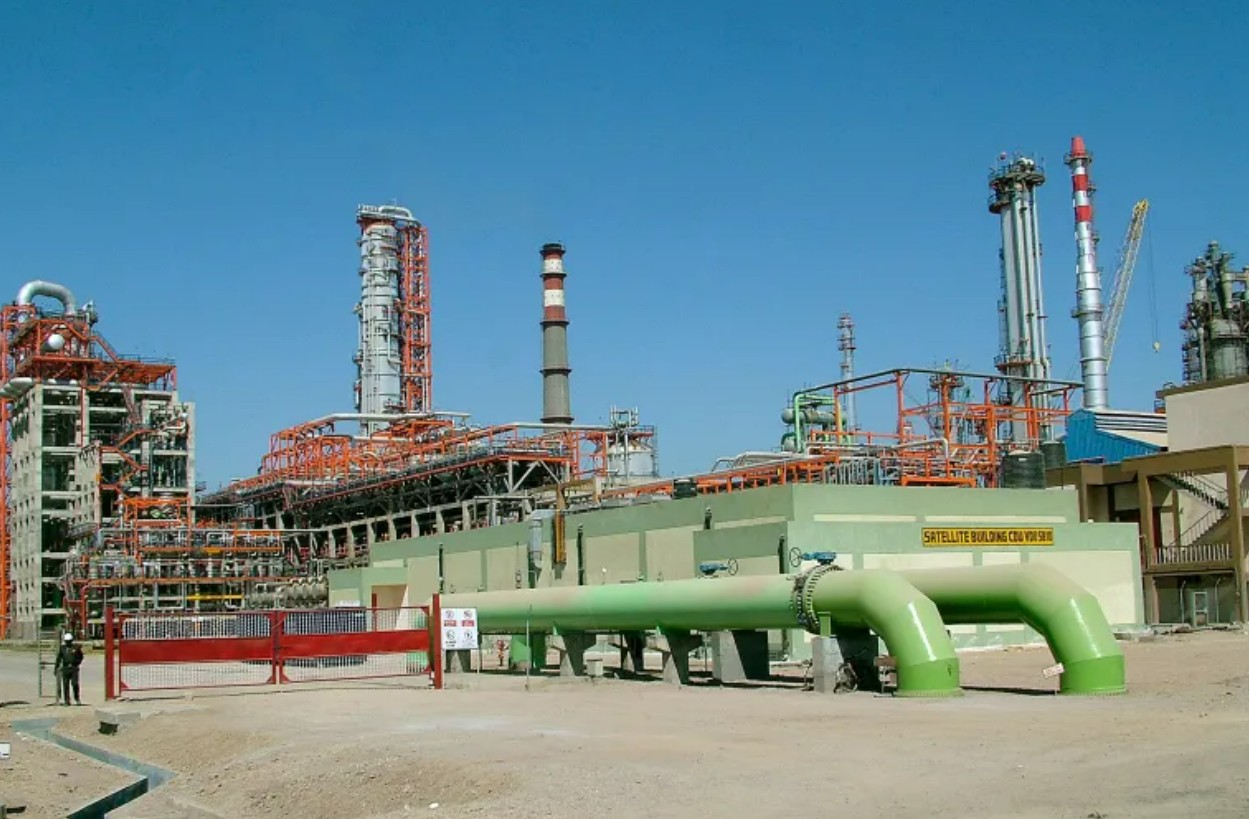
NEW DELHI (Realist English). On October 20, US Secretary of State Marco Rubio arrived in India on a three-day visit, the key point of which was a tour of Reliance Industries’ refinery complex in Jamnagar — the world’s largest single-site refinery with a capacity of 1.4 million barrels per day. The visit takes place against the backdrop of several intersecting storylines: rising diesel prices in the US, stalled trade talks, and uncertainty around Russian energy supplies.
Venezuelan oil as an alternative
The main practical topic was discussion of expanding the processing of Venezuelan oil at Reliance’s facilities. Rubio stated directly that the US is interested in diversifying global energy supplies and sees the Indian refinery as a key partner.
“They have done this in the past and have the capability to process heavy oil. As Venezuelan oil comes onto the market, this is something they could do,” the Secretary of State said.
Jamnagar is indeed capable of processing extra-heavy Venezuelan grades, which have an almost shale-like consistency. After the rise in Venezuelan production in 2026, Reliance has already become a significant importer of its crude, although it does not produce within the country. Rubio also mentioned that Indian companies hold concessions in Venezuela that could be used to increase production.
The Russian factor and the trade deal
The visit comes days after President Donald Trump suspended sanction tariffs on the largest buyers of Russian oil — a decision that directly affects India. Rubio linked this step to progress toward a trade deal, which he said is almost complete and could be signed during the visit.
At the same time, the Secretary of State acknowledged the complexity of the Russian crude issue: “Every country has a complex set of factors to consider.” India imports more than 85% of the oil it needs, and discounted Russian barrels remain a cornerstone of its energy strategy despite Western pressure.
Diesel and the midterm elections
US interest in Jamnagar also has a domestic dimension. Amid rising diesel prices ahead of the November midterm elections, the Trump administration is looking for ways to increase supply on the global market. Jamnagar, as one of the largest exporters of diesel fuel, can influence the balance. Analysts note that the trip is built around business contracts rather than political statements.
Ties with Ambani
Reliance Industries is actively building relations with the Trump administration: the company is investing in the construction of the first new US refinery in 50 years, worth $300 billion, and is increasing purchases of Venezuelan oil. Rubio met with Reliance head Mukesh Ambani, underscoring Washington’s bet on the private sector as an instrument of foreign economic policy.
Rubio’s visit to Jamnagar is not just a protocol event. It is an attempt to combine three tasks: find an alternative to Russian crude for Indian refineries, ease pressure on the US fuel market before the elections, and speed up a trade deal with Delhi.
However, Venezuelan oil cannot fully replace Russian volumes — Rubio himself acknowledged this, noting that it could “provide some relief” in the short term. The key question is whether Reliance will agree to redirect part of its capacity to more expensive and logistically complex Venezuelan oil in exchange for political dividends from Washington — or will prefer to maintain a balance between the Russian discount and American pressure.