TEHRAN (Realist English). On September 23, a new round of US sanctions against Iran’s aviation industry came into force, forcing Iranian airlines to cancel some international flights.
An employee of a Tehran travel agency told Agence France-Presse that flights to Baghdad, Muscat, Qatar, Georgia, and Azerbaijan have been suspended, but flights to a number of destinations, including China, remain available.
Content of the Sanctions: Cut Off from the Dollar System
US Treasury Secretary Scott Bessent announced these measures on September 21 in an interview with CNBC as part of the previously announced “economic D-Day” operation against Iran.
Bessent stated directly: “On September 23, all Iranian airlines will cease operations worldwide. If they land, you cannot provide fuel, you cannot provide landing services, you cannot sell tickets — otherwise you will be excluded from the dollar system.”
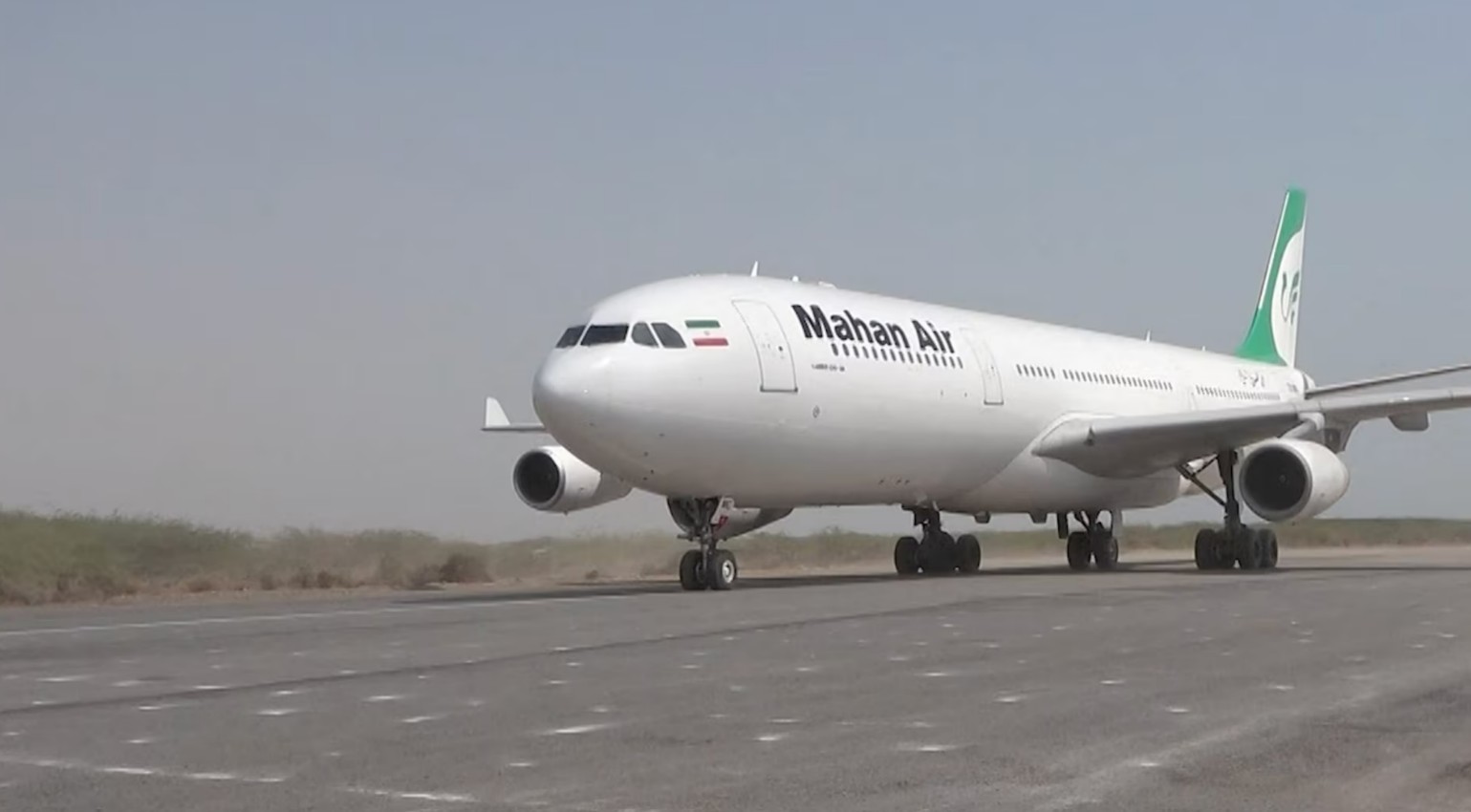
The US Treasury Department included agents of Mahan Air — Iran’s largest private air carrier — in the sanctions list and added 27 more smaller airlines. This “secondary sanctions” mechanism means that any foreign airport, fuel supplier, or service company with business ties to sanctioned Iranian airlines may face the risk of losing access to dollar settlement channels.
Multilateral Coordination: Georgia and Azerbaijan Officially Confirmed
Georgia and Azerbaijan have officially confirmed the suspension of air links with Iran. Azerbaijan announced a ban on all Iranian airlines using its airports from September 22, while Georgia announced a ban on Iranian flights entering its airspace from September 21.
As for Iraq, although the government has not publicly announced a ban, several sources, including a senior government official, told Agence France-Presse that Baghdad will comply with the American sanctions.
Baghdad and Muscat airports no longer accept Iranian flights. Iranian aviation authorities are negotiating with Iraq to redirect Baghdad flights to Najaf — the main destination for Iranian pilgrims.
Mahan Air has notified customers of the suspension of flights to Turkey and Oman at the request of the authorities of those countries.
China Against Sanctions: Flights to Guangzhou Operate on Schedule
Despite the sanctions coming into force, data from the flight tracking website FlightRadar24 shows that a Mahan Air flight from Tehran landed in Guangzhou on September 23. Information from Tehran International Airport indicates that a flight to Shanghai was planned for September 23.
China clearly stated on September 22 its rejection of the American sanctions, calling them “illegal.” Chinese Foreign Ministry spokesperson Guo Jiakun stated: “China opposes unilateral sanctions that have no basis in international law or UN Security Council sanctions.”
The official representative of Iran’s Civil Aviation Organization, Majid Akhavan, in turn, claims that as of September 23, international flights of Iranian airlines “have not been cancelled and are operating on schedule,” and stated that he has not received official instructions from the aviation authorities of Turkey, Azerbaijan, or Iraq to suspend flights to Istanbul, Baku, or Najaf.
Situation of Passengers: Only Ground Route Remains
The sanctions have created immediate difficulties for Iranian passengers. BBC Russian Service reported the case of a passenger under the pseudonym “Sara”: she and her family were stranded after the cancellation of a Mahan Air flight upon returning from London, and her eighty-year-old mother cannot walk or sit for long periods.
The travel agency recommended they wait, since Mahan Air has not officially cancelled the tickets — if passengers cancel them on their own, they will not be able to get a refund.
Previously, one of the alternative routes was a transfer through Istanbul, but passengers had to prepare for at least one night at the airport and face high hotel costs. Now this route is also blocked — the “only option” for returning to Iran remains the ground border.
A Tehran travel agency employee told Agence France-Presse: “The situation is unstable, we have temporarily stopped selling tickets, fearing that flights may be cancelled at any moment.”
Assessment: Risk of Isolation and Strategic Game
Analysts note that the US is trying to turn financial instruments into a direct blow to Iran’s ability to maintain international connections. If more airports and companies choose to avoid the risks of American sanctions, Iran’s international route network may continue to shrink, increasing the costs of travel, trade, and logistics.
Matthew Levitt, a senior fellow at the Washington Institute for Near East Policy, told The Wall Street Journal that if the world coordinates sanctions compliance, “Iranian airlines will turn into companies operating only domestic flights.”
However, the probability of a complete “closure” of Iranian aviation in the short term is low, since China, Russia, and a number of other countries continue to oppose the mechanism of unilateral sanctions.
This aviation blockade is an escalation of the American “economic fury” operation against Iran and is taking place as the US-Iranian war enters its seventh month. Previously, the US had already imposed a naval blockade on Iran, forcing Iran to redirect most of its cargo flows to ground routes, but bottlenecks on the ground are also serious.
Further expansion of sanctions may increase US-Iranian tensions, narrow the space for dialogue, and make efforts to diplomatically resolve the current crisis even more difficult.