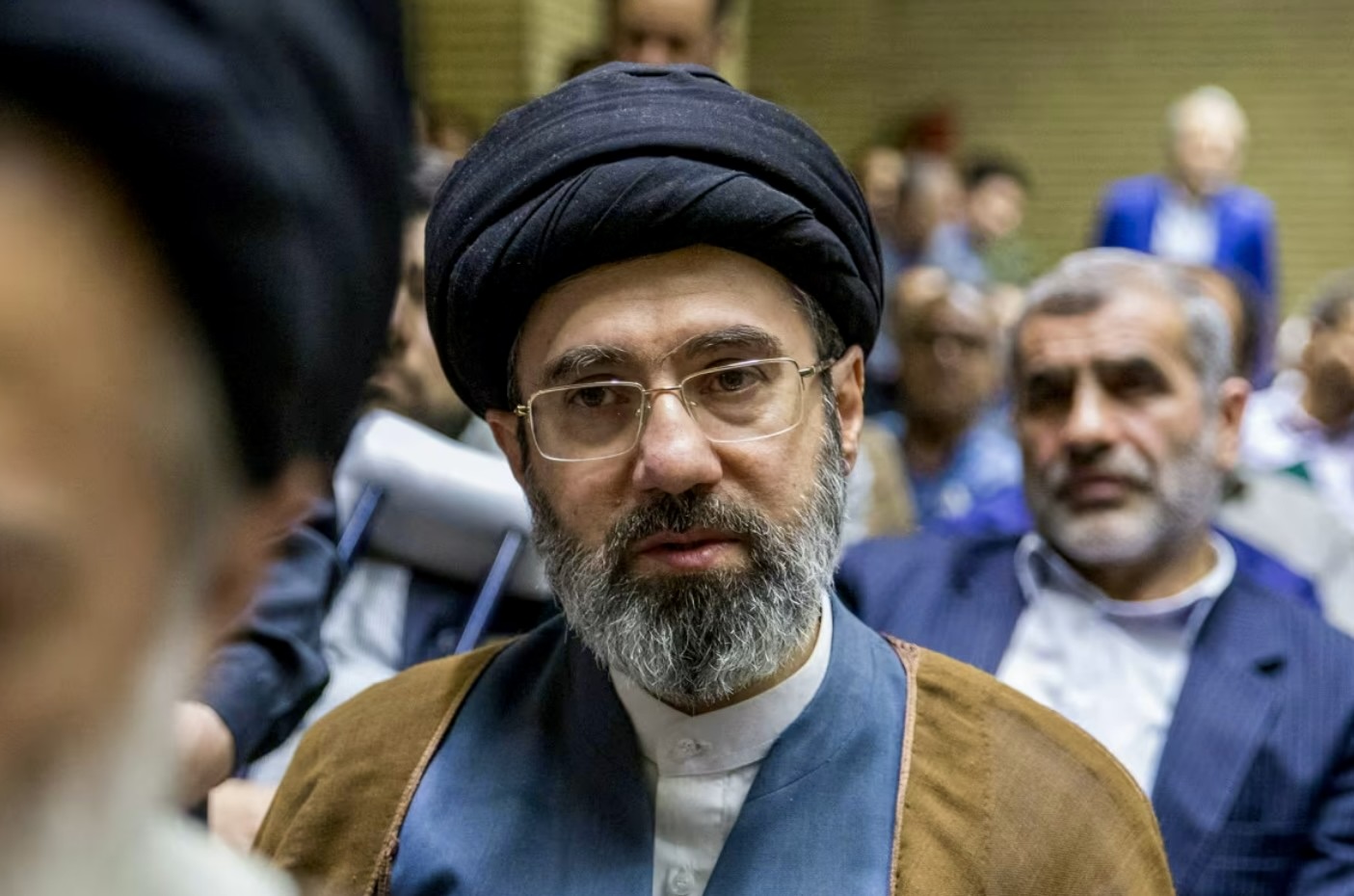
TEHRAN (Realist English). On 10 August, Iran’s Supreme Leader Mojtaba Khamenei carried out a major reshuffle of the country’s top military leadership, appointing new commanders to six key positions. The personnel decisions were published on the supreme leader’s website.
The changes are Khamenei’s first major appointments since he came to power in March 2026, following the death of his father – Ayatollah Ali Khamenei – in US‑Israeli strikes.
They are intended to fill vacancies created by the deaths of several senior officers during the conflict with the US and Israel.
Key appointments
| Position | Appointee | Predecessor |
| Chief of Staff of the Armed Forces | Major General Ali Abdollahi | Lieutenant General Abdolrahim Mousavi (killed 28 February) |
| Commander of the IRGC | Major General Ahmad Vahidi | Major General Mohammad Pakpour (killed 28 February) |
| Deputy Commander of the IRGC | Major General Mostafa Izadi | — |
| Deputy Chief of Staff | Brigadier General Qayoumars Heydari | — |
| Commander of the IRGC Navy | Rear Admiral Ali Azamai | Rear Admiral Alireza Tangsiri (killed) |
| Commander of the Basij Forces | Hossein Taeb | — |
Who is who
Ali Abdollahi – the new Chief of Staff of Iran’s Armed Forces. He previously headed the Khatam al‑Anbia central command, an inter‑service body coordinating operations across all branches of the military.
During the war, Abdollahi became one of Iran’s most prominent military commanders, overseeing missile operations and the use of the Strait of Hormuz as a military lever.
Earlier in August, he warned neighbouring countries that “any state serving as a protective shield for criminal and aggressive America will be engulfed in the flames of war.”
Ahmad Vahidi – the new IRGC Commander‑in‑Chief. A 67‑year‑old veteran of the Corps, he has served as Minister of the Interior and Minister of Defence.
Vahidi has been a member of the IRGC since the 1979 Islamic Revolution. He had already been acting IRGC commander following Pakpour’s death, but his appointment was only now formalised.
Hossein Taeb – returned to the post of commander of the Basij forces, the mass militia that has played a key role in suppressing domestic protests.
Taeb previously led the IRGC’s intelligence organisation for more than a decade but was removed in 2022 after a series of leaks and Israeli operations on Iranian territory. His return to an operational post is one of the most politically significant decisions.
Context: war, losses and command restructuring
The reshuffle is a consequence of the heavy losses suffered by Iran’s military leadership since the start of the war against the US and Israel on 28 February. On the very first day of the conflict, IRGC Commander Mohammad Pakpour, Chief of Staff Abdolrahim Mousavi and Defence Minister Aziz Nasirzadeh were killed.
In the following months, IRGC Navy Commander Alireza Tangsiri and IRGC intelligence chief Majid Khademi were also killed.
As Iran International notes, some of the appointments formalise the status quo: Vahidi and Azamai had already been publicly referred to as commanders, but without official decrees from the supreme leader. However, a number of key posts in the IRGC’s intelligence structures and police remain vacant.
Political backdrop
The appointments come amid a complex diplomatic situation. On 8 August, US Vice President JD Vance spoke of progress in negotiations with Iran.
However, on 10 August, Iranian Foreign Ministry spokesman Esmaeil Baghaei confirmed that the Strait of Hormuz will not be opened until the US fulfils all of Tehran’s conditions – including the lifting of the blockade, payment of compensation, sanctions removal and the unfreezing of assets.
The strait, through which about a fifth of global oil trade passes, has remained closed since the start of the conflict.
Earlier, on 9 August, Khamenei appointed former IRGC commander Mohsen Rezaei as secretary of the Supreme National Security Council. Rezaei, who held the post in the 1980s, is known for his hardline stance: last week he threatened US forces with “serious risks and losses” if the blockade of Iranian ports is not lifted.
Strengths and pressure points
The military command reshuffle is a logical step by Tehran to restore the army’s manageability after heavy losses.
The appointment of IRGC veterans to key posts indicates a consolidation of power around the Corps, which remains the regime’s main pillar.
At the same time, the continued vacancies in intelligence structures suggest ongoing staffing problems following Israeli strikes on Iranian security services.
Taeb’s return, after his removal in 2022 following counter‑intelligence failures, may indicate a shortage of experienced personnel.
For international observers, the key question is whether the new appointments will affect Iran’s position in negotiations with the US over the Strait of Hormuz. The tough statements by Abdollahi and Rezaei leave no doubt that Tehran intends to maintain maximum pressure until Washington meets its conditions.