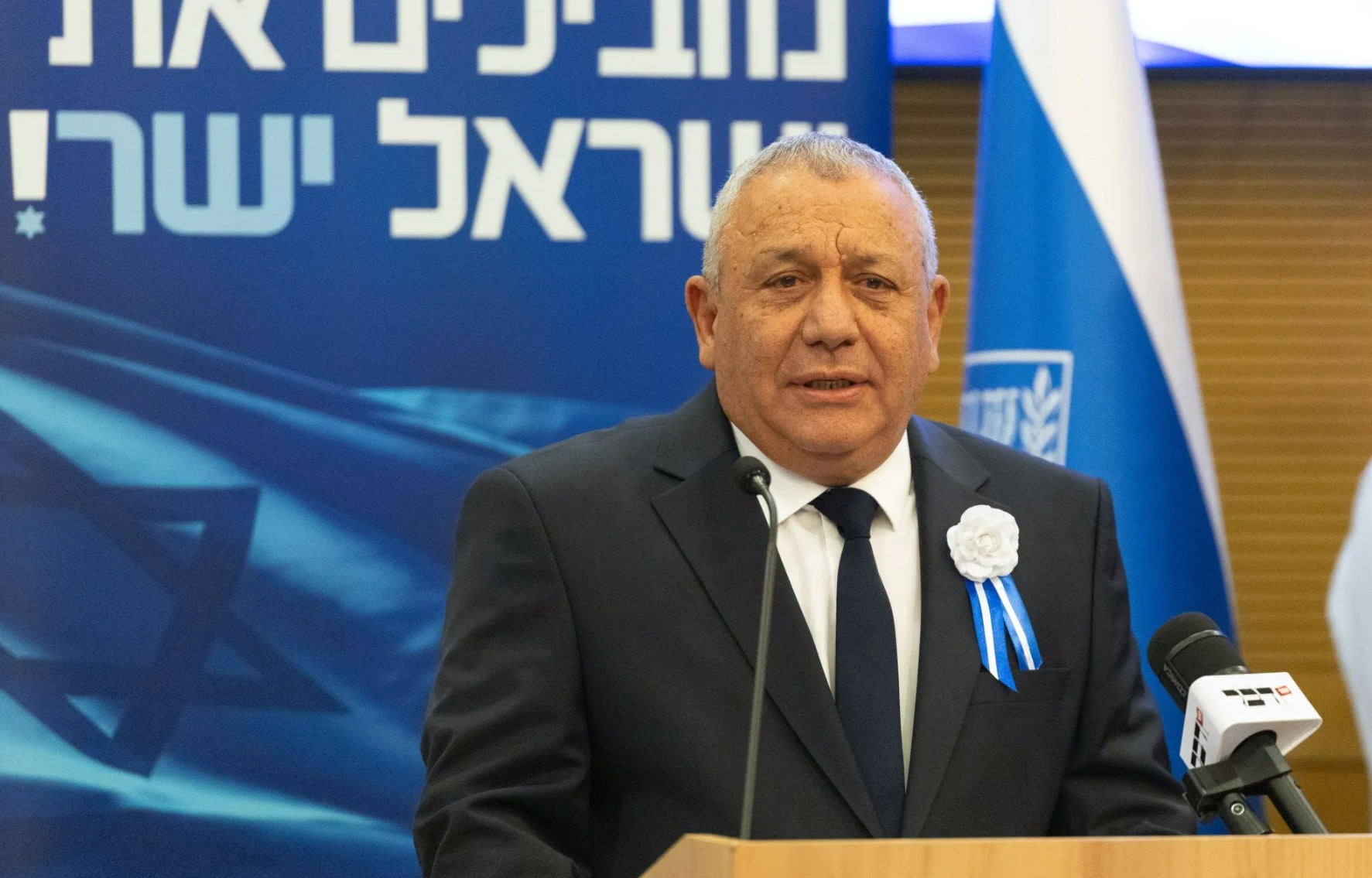

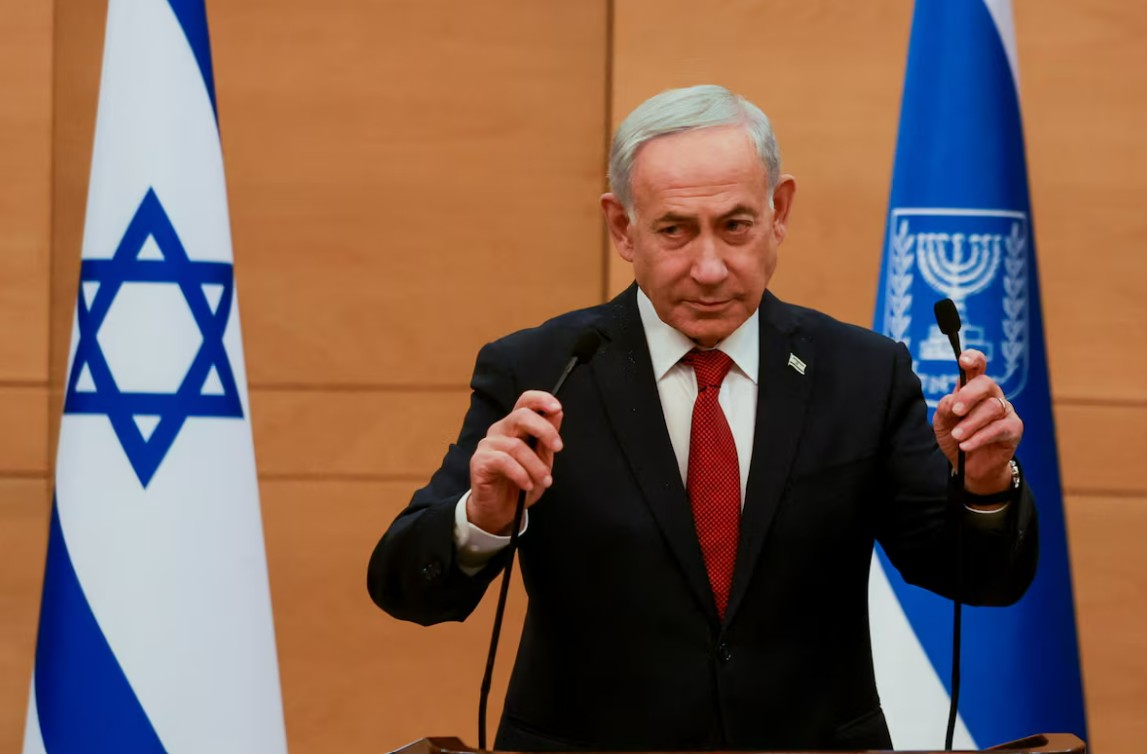
JERUSALEM (Realist English). Israeli Prime Minister Benjamin Netanyahu on 28 November publicly proposed to opposition leader Gadi Eisenkot a rotational premiership in a national unity government, under which Eisenkot would be the first to serve as head of government and Netanyahu would become “alternate prime minister” at the start of the term.
Terms of the proposal: abandoning the largest-party principle
In a statement circulated on the social network X, Netanyahu stressed that he was ready to “cast aside” the principle that the government should be headed by a representative of the winning party, despite the fact that Likud received roughly 250,000 more votes than Yashar.
“My duty as a leader requires casting everything aside, including this principle. I agree that Gadi Eisenkot should be the first to hold the post,” the statement said.
Netanyahu also spoke of “immediate dangers threatening the very existence” of Israel and called for immediate “true, sincere and accelerated” talks, expressing hope for “a similar readiness for compromise” from Eisenkot. He named military conscription as one of the issues requiring agreement.
Eisenkot’s response: an invitation to talks and a test of seriousness
Eisenkot responded the same evening, inviting Netanyahu and his team to the Dan Accadia hotel in Herzliya for “real and accelerated negotiations” on guiding principles and key policy issues. “If Likud is ready for genuine unity, I am ready to assess the seriousness of its intentions within the next 24 hours,” the Yashar leader said.
He also said that as early as the previous Sunday he had passed Netanyahu, through a “secret channel” created at the prime minister’s request, a detailed coalition proposal, but had still received no answer. According to Eisenkot, over three weeks of talks Likud “did not present a single concrete proposal” and repeatedly refused meetings. The sides agreed to meet on the morning of 29 November for direct talks.
The hidden condition: a delay in transferring power
Netanyahu’s public proposal did not mention any possible timeframe for transferring power. However, according to Israeli media, at the talks on Sunday Netanyahu may demand to remain prime minister for another three to four months before handing over authority to Eisenkot, citing a potential escalation with Iran.
The newspaper Maariv reported that this condition did not appear in Saturday’s statement. Eisenkot, according to Yedioth Ahronoth, is strongly opposed to such a delay.
Knesset arithmetic and the mandate deadline
In the 27 October elections, Netanyahu’s bloc won 53 seats, Eisenkot’s bloc 48, and the Arab parties 19; neither side has the 61 seats needed for a majority.
President Isaac Herzog tasked Eisenkot with forming a government on 8 November; Eisenkot had previously signed coalition agreements with Yisrael Beiteinu and the Democrats. Eisenkot’s mandate expires on 6 December with the possibility of a single 14-day extension; he promised to announce the formation of a government by that deadline without an extension.
As observers note, the key feature of the situation is the combination of Netanyahu’s public concession with hidden conditions that could derail the agreement.
The rotation proposal looks like an acknowledgement of pressure, but the demand to delay the transfer of power for several months effectively preserves Netanyahu’s control over key decisions, including Iran policy. For Eisenkot, accepting such a condition would mean abandoning the immediate change of power for which he campaigned.
In addition, disagreements persist within Eisenkot’s bloc: the Democrats oppose an alliance with Likud, while Liberman insists on a coalition with religious parties. For Israeli politics, the immediate effect will be most noticeable primarily in the outcome of the 29 November meeting and in whether Eisenkot agrees to a delay — and that is precisely where it is most sensitive for the prospects of a change of power before the mandate expires.