

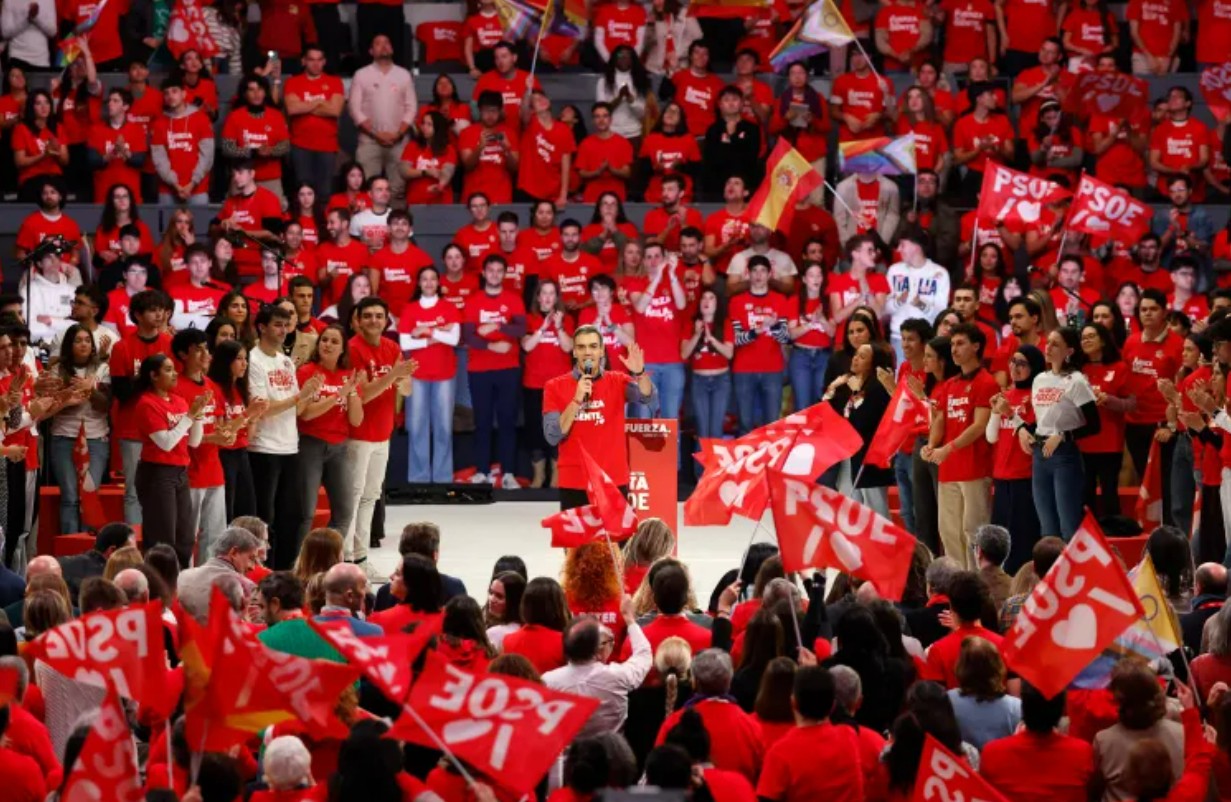
MADRID (Realist English). Polling stations opened in Spain on 29 November for snap parliamentary elections that could produce a historic shift to the right. Citizens are choosing between keeping Socialist Pedro Sánchez in power and bringing the conservative opposition to power, which will likely have to govern in coalition with the far-right Vox party.
Electoral context: snap elections amid a housing crisis
Sánchez called snap elections after parliament rejected two government decrees on measures to tackle the housing crisis. This came amid daily protests against evictions and rising rental costs. The current term was due to end in July 2027.
The campaign was dominated by debate over how to solve the housing problem. Sánchez, whose economic policies delivered one of the EU’s highest growth rates and pushed unemployment down to a nearly two-decade low, insisted on continuing the current course. However, according to Reuters, some voters do not feel the improvements because of rising prices for housing, energy and consumer goods.
Forecasts: PP leads, Vox doubles its representation
Almost all polls point to a victory for the People’s Party (PP) with support of around 31% of the vote. Vox, led by Santiago Abascal, is in third place with about 18% support, but is the only one of the four nationwide parties projected to increase its presence in parliament — from 33 to about 60 seats.
The key question is whether the PP-Vox bloc can cross the threshold of 176 seats out of 350. According to GESOP tracking for The Adelaide Review, the right-wing bloc is projected to win 187 to 195 seats, well above the required majority. However, the spread in forecasts remains significant: some scenarios suggest PP and Vox may fall short, which would create “all manner of chaos” in government formation.
Positions of the parties: migration and “regression”
Sánchez is building his campaign on the contrast between “progress and regression,” warning that PP and Vox “only agree when it comes to restricting rights.” Vox promises to tighten immigration controls, recentralise state powers, cut taxes and roll back many progressive social policies.
Immigration has become the central issue. Vox accuses Sánchez of “encouraging a migration invasion” and demands “remigration.” The number of foreign residents in Spain has risen from 6.3 million to 10.4 million during the Socialists’ time in power. PP, for its part, promises to ban mass amnesties, allow returns to third countries and introduce a points-based system for legal immigrants.
Normalisation of the far right
Vox entering the central government would be the first such case since the death of Francisco Franco in 1975 and the restoration of democracy. The party was founded in 2013 by former PP members who felt the conservatives were not right-wing enough. For a long time Vox remained on the periphery, but in 2018 it entered the regional parliament of Andalusia for the first time.
Since then, PP and Vox have formed coalitions in four regions: Andalusia, Aragon, Extremadura and Castile and León. According to Professor Bosco Govantes, the 2018 Andalusian precedent “opened the door for the far right” and triggered the normalisation of its agenda at the national level.
As observers note, the key feature of the situation is the combination of PP’s steady lead with the uncertainty of coalition arithmetic. Even if the right-wing bloc wins a majority, negotiations over the distribution of ministries between PP and Vox could prove difficult. Analysts suggest that, depending on the number of seats, Vox may prefer to support PP from outside the government rather than join the cabinet.
In addition, turnout remains high: about 84% of voters said they intend to vote. This could either strengthen or dilute the right-wing bloc’s advantage. For European politics, the immediate effect will be most noticeable primarily in whether Spain becomes another EU country where the far right enters government — and that is precisely where it is most sensitive for the balance of power in the European Parliament and the overall trajectory of European politics.