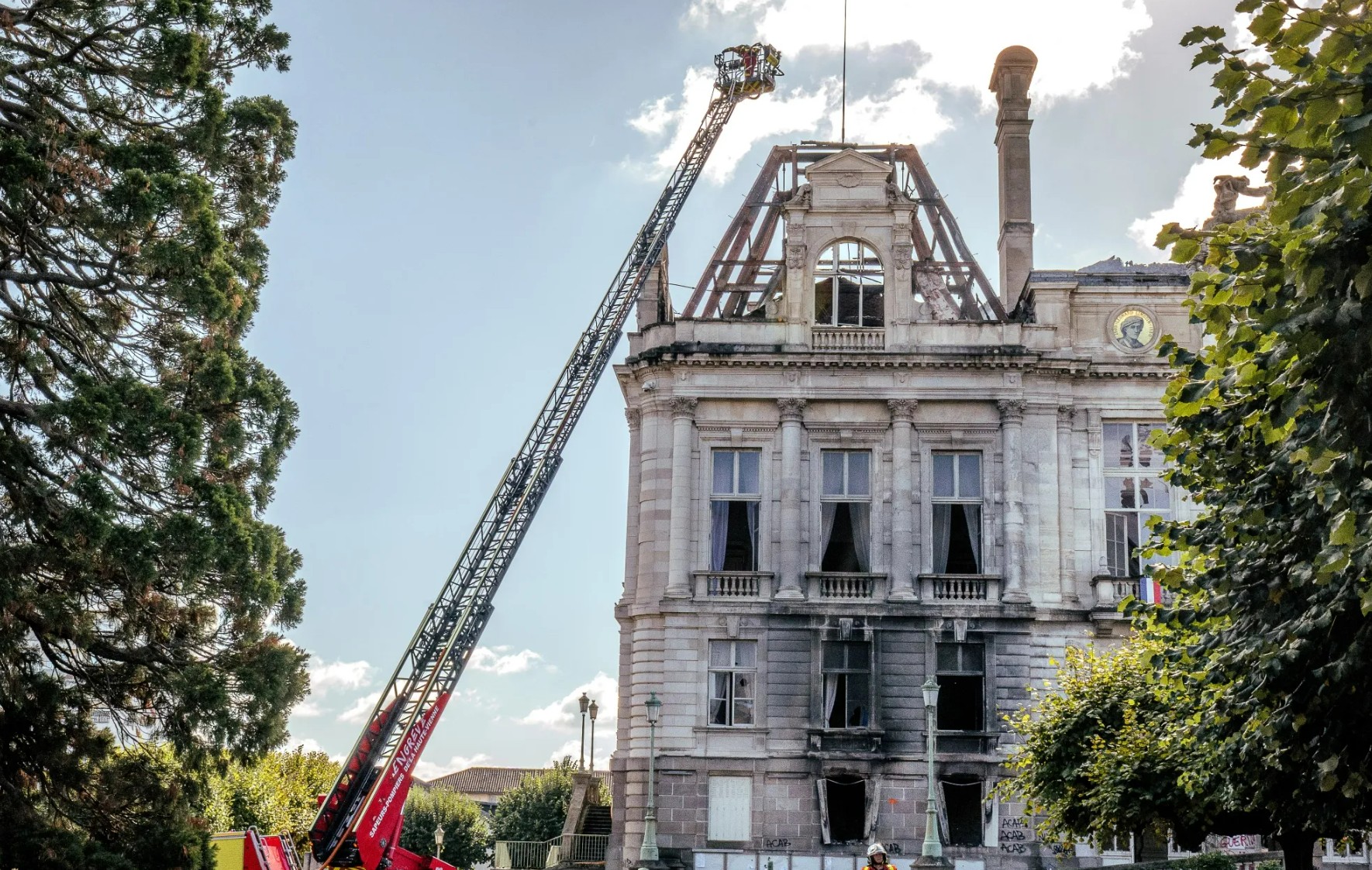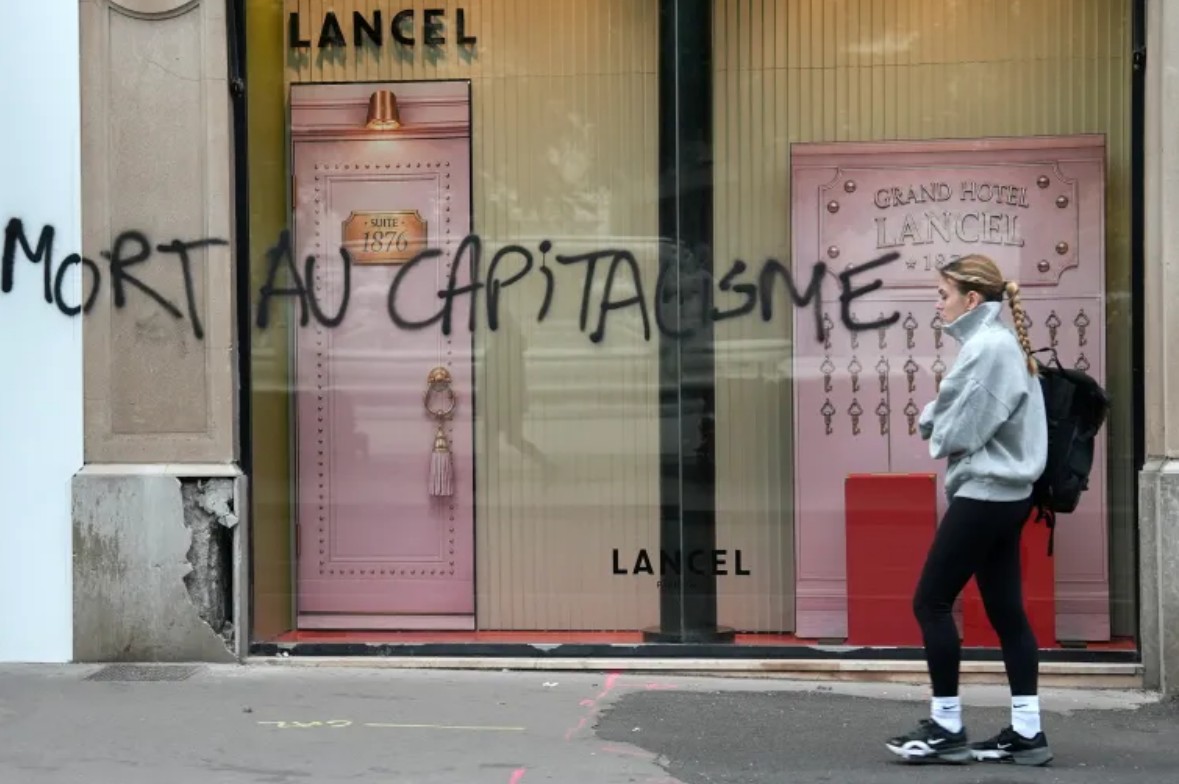
PARIS (Realist English). The Paris criminal court has begun fast-track trials of those detained during the October 17 riots. Courtrooms designed for one or two hearings at a time had to open four to cope with the flow of defendants. On October 17 alone, 2,513 people were taken into custody. According to the authorities, more than 800 people have appeared in court, and 149 have already been remanded in custody.
“Is this a weapon? A mask and a smoke bomb?”
The first to appear before the judge was 21-year-old Victor B., an audiovisual student from Sartrouville. Police claim he built barricades, threw stones, and shouted “ACAB.” Victor says he lost his girlfriend in the crowd, fell, and was beaten with batons. “I never threw stones or shouted ‘ACAB,'” he insisted. According to him, he only pushed aside a board lying on a burning trash can.
He explained the smoke bomb found on him by a desire to make a short film with friends. The judge remarked: “Perhaps you should have thought about that more carefully.” The prosecutor sought five months of actual imprisonment, but the court, taking into account his clean record, sentenced him to six months suspended with a three-year ban on carrying weapons.
“I found them on the ground”
18-year-old Mustafa D., a construction intern with no criminal record, was charged with throwing objects, resisting arrest, and handling stolen goods. Seven pairs of sunglasses and a Nike T-shirt were found on him. “I found them on the ground. I didn’t know it was theft,” he said.
The judge responded: “There was chaos all around, and that’s what you noticed? You know perfectly well those glasses came from a looted store.” The prosecutor sought 10 months of actual imprisonment, but the court sentenced him to eight months suspended with a five-year weapons ban.
The Louis Vuitton case
38-year-old Lamine B. and 34-year-old Sofiane R. were charged with stealing €37,000 worth of goods from the Louis Vuitton boutique in the Printemps department store. They were found inside the store at 7 a.m. on October 18. Sofiane was wearing stolen sneakers with the anti-theft tag still attached. Lamine denied the theft, claiming he was locked inside, drank alcohol he had brought with him, and fell asleep. However, a photo of Louis Vuitton products taken at 1:59 a.m. was found on his phone, and cameras recorded both men trying on clothes.
Lamine has 22 prior convictions, including violence and theft. The prosecutor described the motive as “pure greed.” Lamine received 10 months with partial detention (working by day, in prison by night), Sofiane — six months under electronic monitoring.
Pressure on justice
Before the hearings began, a group of lawyers handed the presiding judge a statement condemning “repression as the only response” and interference by the Justice Minister. Gérald Darmanen that same day called for “extreme severity” and welcomed the remand of 149 people. “Our role as lawyers is to reject any interference by a minister who might try to influence the outcome of decisions,” said lawyer Arié Alimi.
Fast-track trials (comparution immédiate) allow hundreds of people to be tried in a matter of days but create a risk of superficial examination of cases. The profiles of the defendants — a student, an intern, a father of five — show that the riots were not exclusively the work of “marginals,” as they are sometimes portrayed.
At the same time, the Justice Minister’s call for “extreme severity” and his comments on specific cases raise questions about judicial independence. For the French judicial system, this is a test: can it ensure justice amid mass arrests and political pressure? For society, it is another signal of the depth of social discontent that spilled onto the streets on October 17.