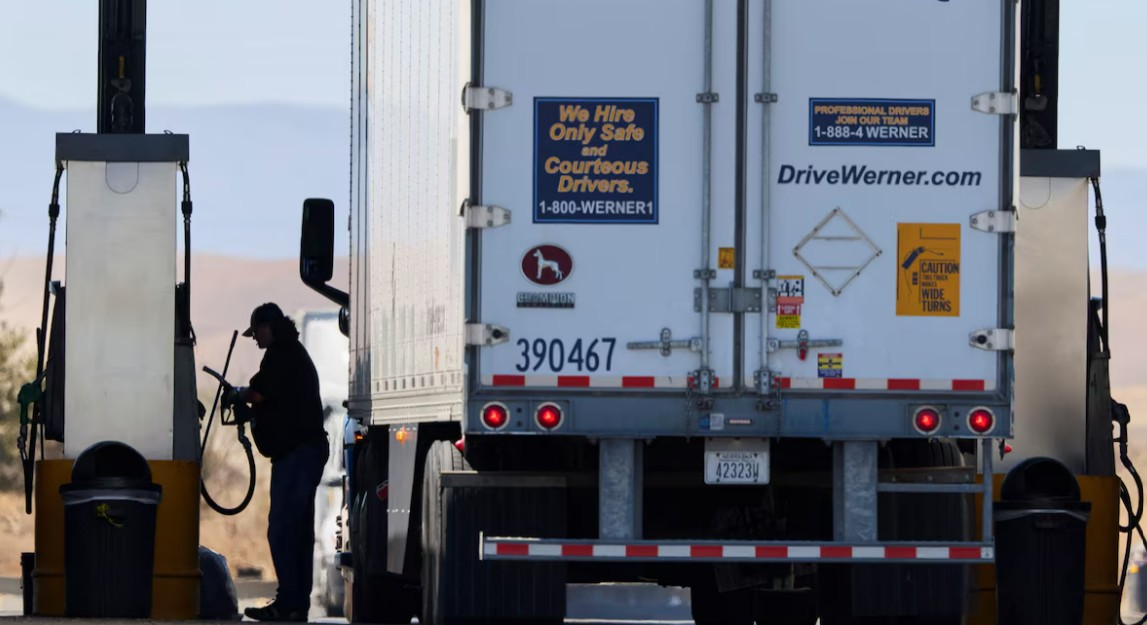
MOSCOW (Realist English). Transport Minister Andrey Nikitin, speaking in the State Duma, named the timeline for bringing driverless freight vehicles onto public roads. According to him, this will happen by 2028. Currently, under the “Unmanned Logistics Corridors” project, autonomous trucks from KamAZ, Yandex, and Navio are already operating on the M-11 “Neva”, TsKAD, M-4 “Don”, and M-12 “Vostok” highways, but a test driver or remote operator is still present in the cabin.
Current fleet and plans
At the beginning of 2026, about 90 unmanned trucks were in operation on the roads, with plans to increase that number to 111 by the end of the year. According to Deputy Prime Minister Vitaly Savelyev, by September 2026 the fleet had grown to 121 vehicles with a total mileage of over 20 million kilometers.
By 2028, the Ministry of Transport expects the fleet to grow to 992 vehicles, and by 2030 — to over 4,000. By 2035, the share of unmanned trucks in road freight turnover should reach about 19%, with a total fleet of 57,000 vehicles.
Legislative barrier
The key condition for driverless road access is the adoption of a federal law on highly automated vehicles (HAVs). The Ministry of Transport has prepared a draft law due to come into force on September 1, 2027. The document for the first time sets out in detail the conditions for autonomous vehicle movement on public roads, including requirements for registration, insurance, and a mandatory data recording system. Liability for violations (speeding, driving onto a lawn) will rest with the vehicle owner, and for untimely software updates — with the service center.
Provision is made for the creation of zones where autonomous vehicle movement is prohibited. After the law comes into force, about another year will be needed to develop secondary legislation and technical regulations, after which, in 2028, the vehicles will be able to enter public roads.
The transition from experimental legal regimes to a full-fledged law is not a formality but a necessity: currently, unmanned trucks can only operate with a driver in the cabin or under remote control. It is the presence of a human, not the technology, that remains the main barrier to economic efficiency: business is interested in logistics without test drivers.
If the law comes into force on time and secondary legislation is not delayed, 2028 could be the point when unmanned freight vehicles cease to be an experiment and become part of freight turnover. However, recent experience shows that timelines in this area have repeatedly slipped, and much will depend on how quickly regulators close the remaining legal gaps.