VATICAN CITY (Realist English). Pope Leo XIV’s vote in the US midterm elections set a historic precedent: for the first time, a sitting pontiff took part in secular democratic elections. According to the Holy See press office, the 71-year-old pope, born Robert Prevost, mailed his ballot in Chicago, where he is registered, before election day on 3 November. Local authorities in Will County, Illinois, confirmed that the absentee ballot request was submitted on 3 October, ten days before surgery to remove a cancerous tumour from his right lung.
“Proud to be an American”: motivation and reaction
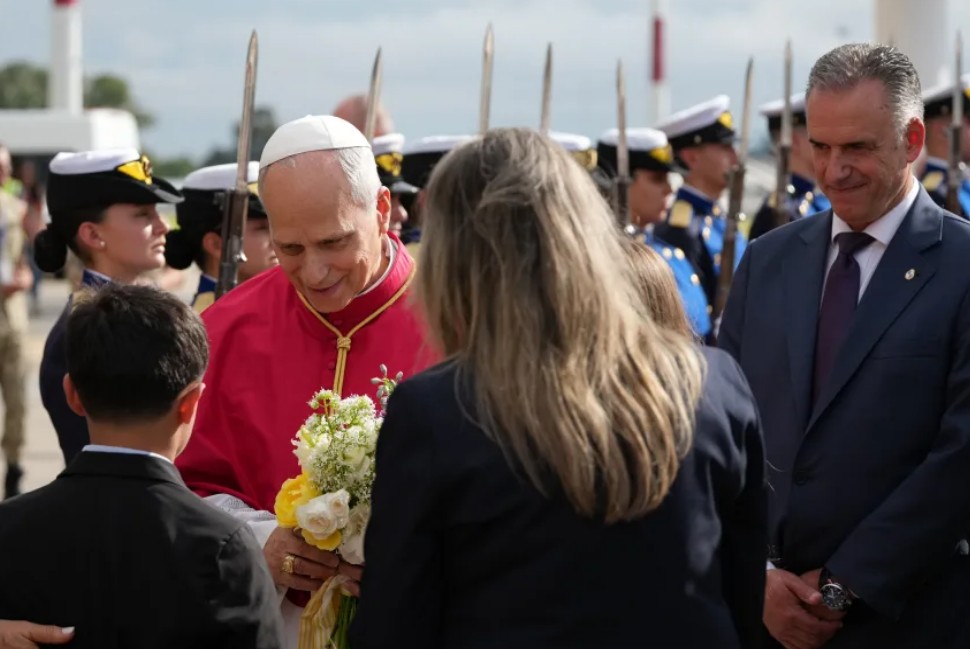
The pope himself, answering journalists’ questions aboard a flight to Uruguay as part of a 12-day South American tour, explained his decision as a civic duty. “I am proud to be an American and to exercise this right,” Reuters quoted him as saying. The Vatican had earlier clarified that the pontiff “believes in the right and duty of citizens to participate in democratic processes.”
The pope’s decision sparked debate given his status as head of a foreign state (the Holy See). However, legal experts note that US federal law allows citizens living abroad, even those working for foreign governments, to vote by mail. The US Conference of Catholic Bishops supported the pope’s gesture, saying he “sets an example, encouraging every citizen to fulfil their civic duty.”
Political background: Trump criticism and election results
The pope’s vote coincided with the midterm elections in which, according to AP, Democrats regained control of Congress, seen as a “rebuke” to President Donald Trump and his policies. Leo XIV himself declined to comment on the election results, referring to a previously issued Vatican statement.
At the same time, the pontiff’s relations with the White House remain tense. Trump had publicly called the pope “weak” and a “captive of the radical left” after Leo XIV sharply condemned the US-Israeli war against Iran and called for dignified treatment of immigrants. Responding to the criticism, the pope said: “I am not afraid of the Trump administration and I am not afraid to speak loudly about the message of the Gospel… I will continue to speak out decisively against war, striving to promote peace and dialogue.”
Health and future plans
The vote took place amid the pope’s recovery from surgery. He underwent the operation on 13 October and was discharged from hospital on 17 October. In the in-flight interview, Leo XIV also said he attributes his recovery to “God and the doctors.” The pontiff is continuing his 12-day South American tour, which includes visits to Uruguay, Argentina and Peru, despite his recent hospitalisation.
Pope Leo XIV’s vote is not merely a routine civic act but a symbolic gesture that blurs the line between spiritual and secular authority. On the one hand, it confirms the Vatican’s commitment to the principles of democratic participation and civic responsibility, which is especially important amid growing polarisation in the US.
On the other hand, this step inevitably politicises the figure of the pontiff, who, despite refraining from commenting on the election results, is already in conflict with the Trump administration over the war with Iran and immigration policy. The key question is whether this precedent will remain a one-off exception due to the unique status of an American pope, or whether it signals more active participation by future pontiffs in their countries’ elections, which could change the balance between religious authority and political influence.