LOS ANGELES (Realist English). Renée Plant’s story began in 1983, when, as a 12-year-old schoolgirl from Queensland, Australia, she managed to slip past a barrier and pick up a small clay platypus figurine that Princess Diana had dropped during a visit. “A kind policeman told me it was fate,” Plant recalls. Since then she has devoted much of her life to the princess’s memory and in 2018 founded the non-profit Princess & The Platypus Foundation.
From a chance purchase to a major collection
The turning point came twelve years ago when a friend suggested she look at six of Diana’s dresses on auction at Julien’s. “I thought all of Diana’s things were just scattered aimlessly around the world,” Plant says. Today her collection includes more than 800 dresses, accessories and personal items, and she believes it is one of the largest private collections of the princess’s belongings in the world.
“Manifestation” and re-mortgages
Plant explains her auction successes not only through calculation but also through belief in “manifestation” — the idea that the universe helps those who passionately desire something. A telling case occurred when she bought the floral Belville Sassoon dress that Diana wore for visits to children’s hospitals for $520,000. Plant was surprised the item did not go for more. “The universe was on my side,” she says, noting that her auction participant number (333) seemed to her an “angel number,” and a technical glitch prevented a competitor from outbidding her.
Behind this faith in signs lies a thoroughly prosaic financial reality. “My husband is a very loving man because he allows us to take out a mortgage on our house from time to time,” Plant admits. The couple have refinanced their home twice: in 2015, to buy a beaded Atelier Versace dress for $200,000, and in 2025, to acquire the Belleville Sassoon dress and 34 other items, including an ostrich-feather hat Diana wore on her honeymoon, for $26,000. That day they spent about $1.9 million.
The exhibition and future plans
The exhibition “The Princess Diana: Love, Life and Legacy — A Life of Giving” opened on 7 November 2026 at the Ronald Reagan Presidential Library and Museum and will run until 31 May 2027.
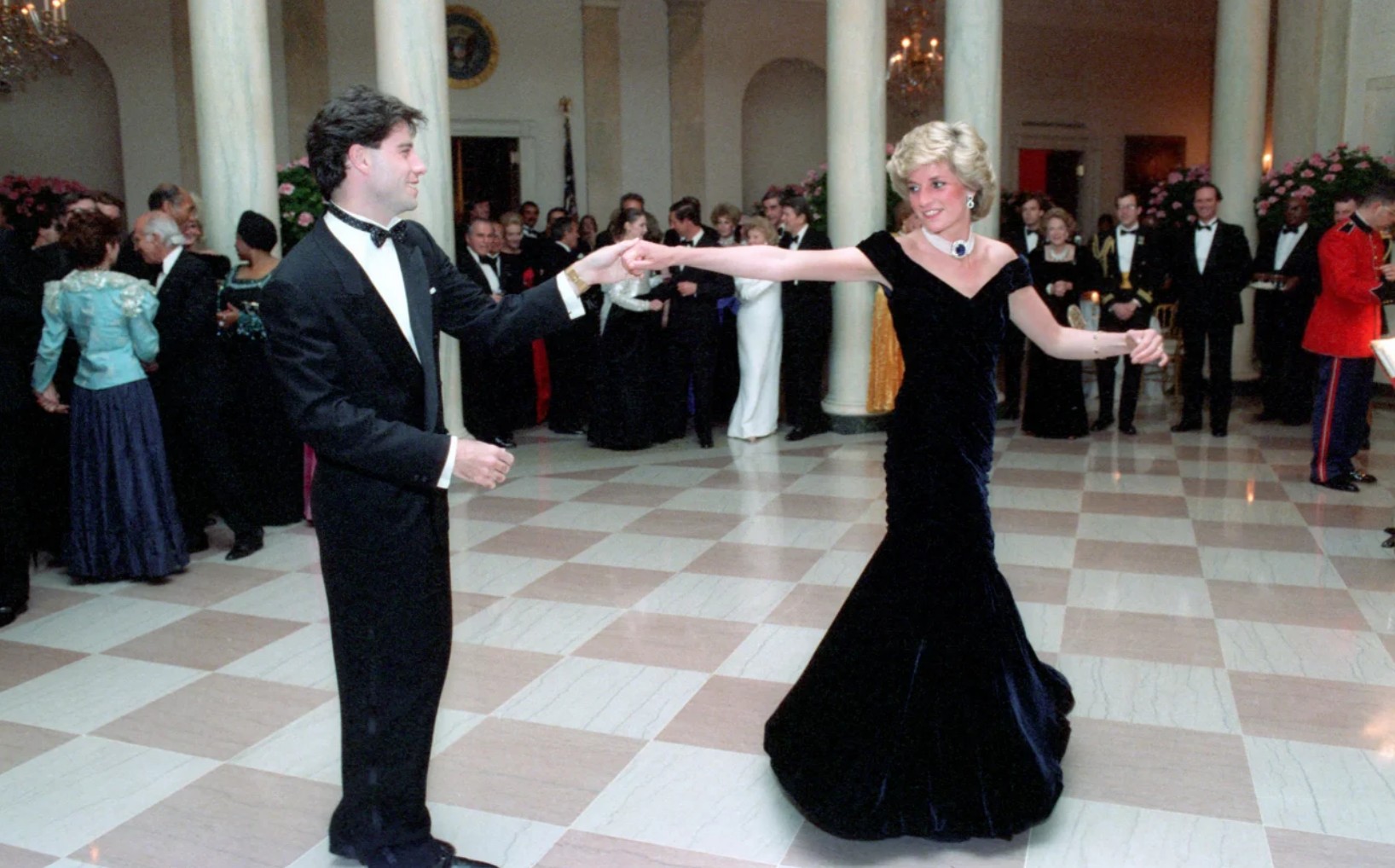
For the display, covering Diana’s life from childhood to her death in 1997, Plant provided almost her entire collection: personal letters, childhood dresses, cassettes with voice notes and, of course, numerous outfits. The only item she does not own is the velvet dress Diana wore while dancing with John Travolta at a White House dinner in 1985; it had to be rented.
Although Plant can no longer afford the “revenge dress” by Christina Stambolian, listed at Sotheby’s with an estimate of $300,000 (“I chose my mortgage long ago”), she does not abandon her intention to bring as many of the princess’s belongings together as possible. “What I do is greater than me. I am a vessel. I pass it through myself,” the collector says.
Renée Plant’s story is not just that of a passionate collector. It illustrates how belief in “manifestation” and “signs of fate” coexists with thoroughly rational financial instruments — re-mortgaging real estate. Plant does not hide that her collection is built on loans, yet she refuses to value the collection as a whole, shifting the emphasis from money to the mission of preserving Diana’s legacy.
The question is whether this model is sustainable: auction prices for the princess’s items are rising, while the debt burden is growing. The opening of the exhibition at the Reagan Library gives the collection public legitimacy, but further expansion, by Plant’s own admission, is constrained by exhausted mortgage capacity. Whether her “museum” will remain a private initiative or eventually become part of a public institutional collection remains unclear.