WASHINGTON (Realist English). US beef prices continue to hit historic highs, and, as Bloomberg notes, there is no quick fix for this problem. The cause is not a temporary supply disruption but a structural crisis stretching over years: the cattle herd is shrinking, farmers are in no hurry to rebuild it, and consumer demand remains high.
Record prices
The average price of a pound of ground beef reached $7.158 in August — a historic high, exceeding last year’s level by 7.9%. Retail beef prices overall reached $9.64 per pound in April, 13% higher than a year earlier. According to the Kansas City Fed, rising beef prices accounted for most of the inflation in the meat category, which in turn made the main contribution to food price growth.
Why the herd is not growing
The key reason is a historically low herd. According to the US Department of Agriculture, as of January 1, 2026, the country had 86.2 million head of cattle, slightly below the level a year earlier, while the beef herd shrank by 1% to 27.6 million head. This is close to a multi-decade low.
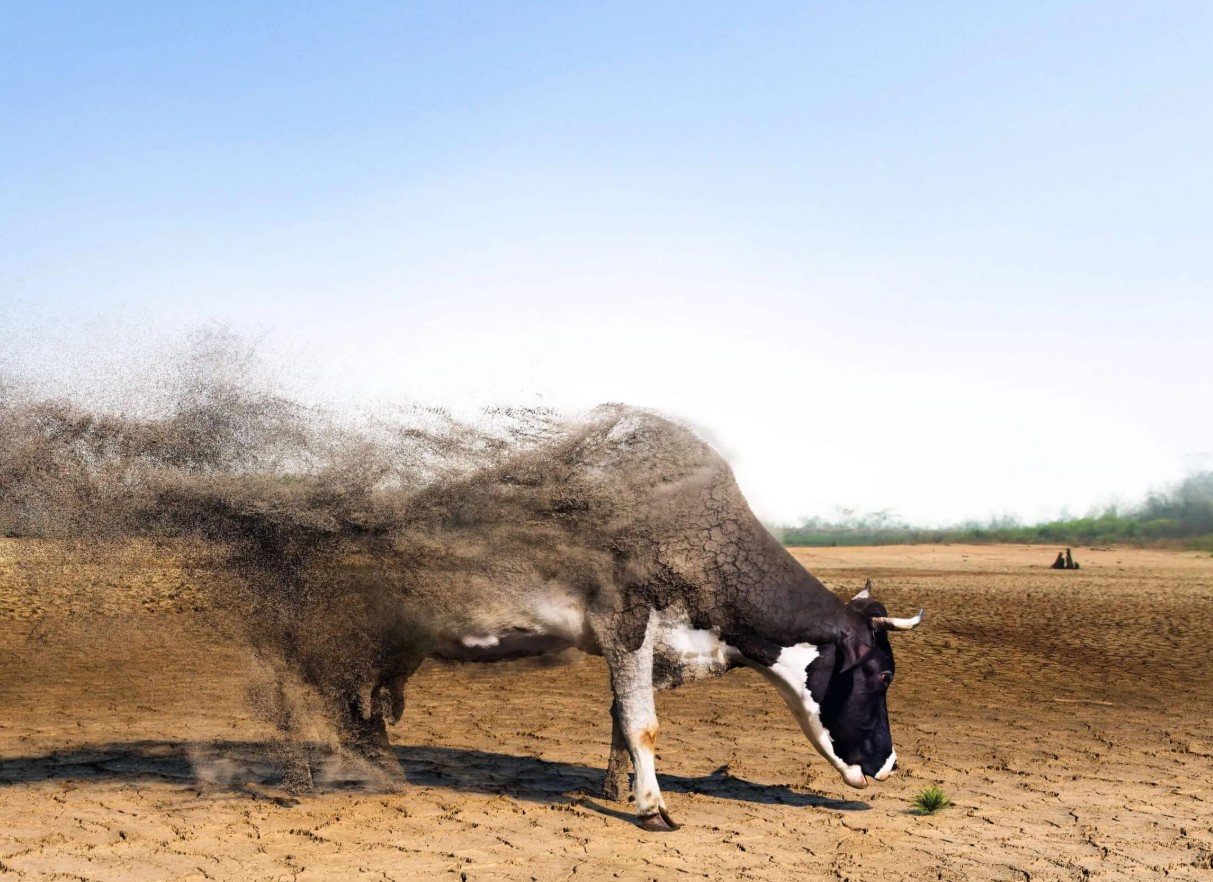
The paradox is that market signals should encourage farmers to expand the herd: the ratio of cattle prices to feed costs has been above historical averages since 2021. Yet the herd continues to shrink. The reasons are drought, which makes pastures unusable, expensive feed, high credit rates, and uncertainty. Farmers remember that high prices are not forever and do not want to invest in expansion that will pay off years later.
Recovery will take years
The biological cycle does not allow the problem to be solved quickly. For the herd to grow, farmers must retain more heifers for breeding rather than sending them to slaughter.
This process takes two to three years just to start herd growth. According to Omaha Steaks, if recovery was previously expected by 2027, now it is 2028 or even 2029. In July 2026, the beef cow herd continued to decline, although the number of replacement heifers rose slightly — a signal that recovery will begin, but very slowly.
Political attempts are not working
The Trump administration tried to bring prices down by suspending tariffs on beef imports and allowing additional supplies. However, the effect was limited: according to the American Farm Bureau, ground beef prices fell only about 2% after the decision, and farmers who sold cattle in the first weeks lost $400–500 per head.
Imports from Mexico, which could quickly increase supply, remain limited due to an outbreak of screwworm — a parasite dangerous to cattle.
The problem of high beef prices is not one that can be solved by decree or short-term intervention. It is rooted in biology (cattle grow over years), climate (drought has become the norm), and economics (farmers bear the risks while profits are captured at different stages of the chain).
Until farmers are confident that investments in herd expansion will pay off, supply will not grow. And until supply grows, prices will remain high — adjusted for demand fluctuations and seasonality.
For consumers, this means beef will remain expensive at least until the end of the decade, and for politicians, it means that campaign promises to lower food prices will collide with a reality that cannot be changed within a single electoral cycle.