BETHLEHEM (Realist English). Palestinian Christian leaders have called on American evangelicals to stop ignoring their existence and suffering. Priests from Bethlehem and the last fully Christian town on the West Bank say the growing influence of Christian Zionism is funding Israeli settlements that directly threaten their communities.
“Come and see,” urge Pastor Munther Isaac, director of the Bethlehem Institute of Peace and Justice, and Father Bashar Fawadleh from the town of Taybeh.
According to Isaac, when pastors and congregants come to Palestine, see the walls, the settlements and meet families struggling to survive on their land, “then their eyes are opened.”
‘Theology has been weaponized’
Isaac and Fawadleh are trying to reach out to evangelicals who follow Christian Zionism – a movement that views the modern state of Israel as the fulfilment of biblical prophecy. However, they argue that this position ignores the existence of Palestinian Christian communities and contradicts the Christian principle of loving one’s neighbour.
“Theology has been weaponized,” Isaac told CNN. “These are Christians who are funding and supporting the main threat to our existence on this land today.”
Ancient communities under threat of extinction
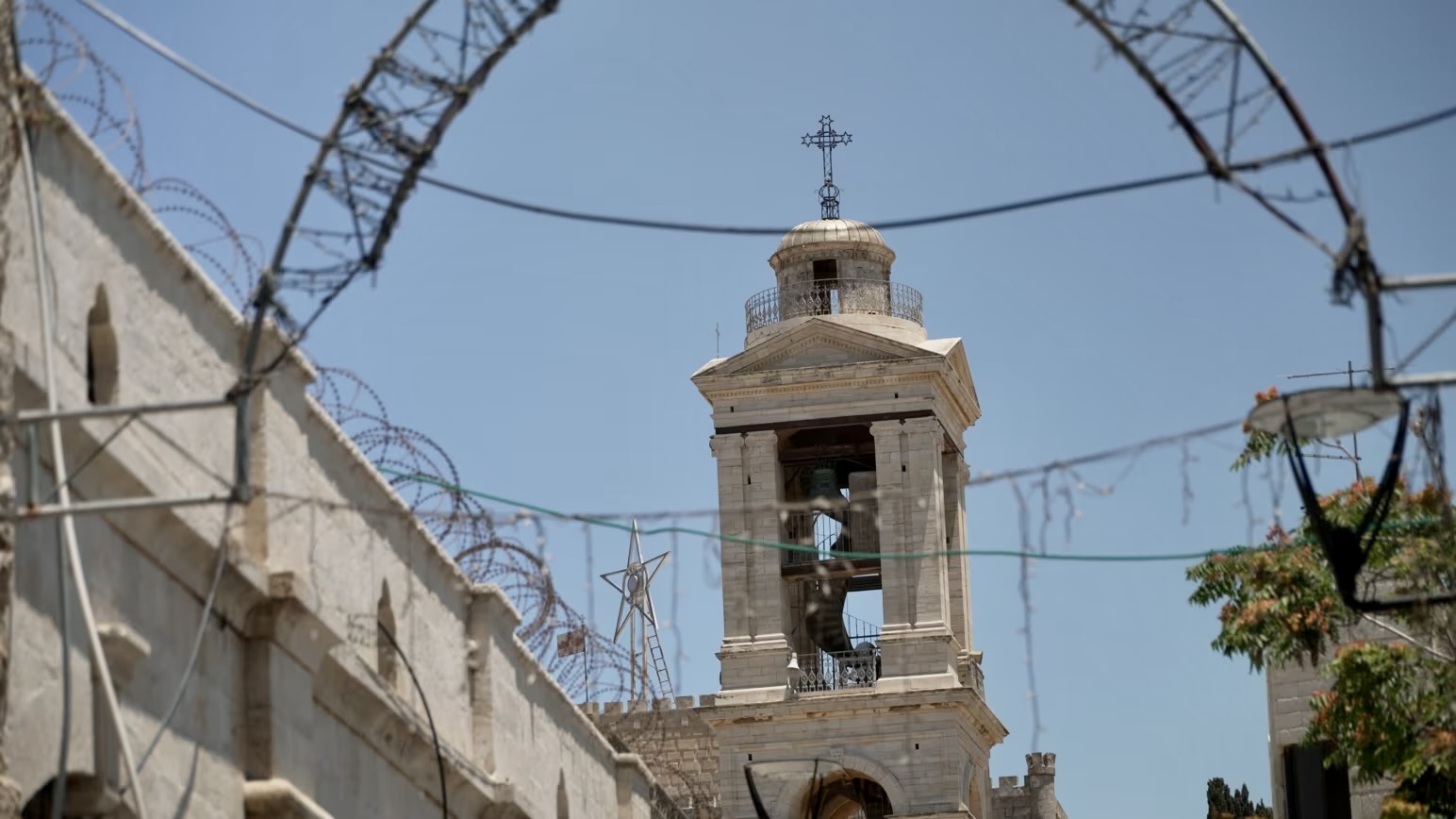
Isaac, 47, was born in the Christian town of Beit Sahour near Bethlehem. Jewish settlements have spread over much of the land where he played as a child; now he cannot travel the few kilometres from his home in Bethlehem to the ancient churches and mosques in Jerusalem. The West Bank city is surrounded by a 26‑foot (about 8‑metre) separation wall built after the Second Intifada.
Father Bashar Fawadleh from Taybeh – the last fully Christian town on the West Bank – reported that more than 90 people have left the town in the past three years. Currently, about 1,200 people live in Taybeh, and the number continues to decline.
Fawadleh’s parishioners are afraid to harvest their olive groves. Roland Bassir, the owner of a cement factory near Taybeh, said his plant is attacked almost daily by settlers. “If I have the opportunity to leave, I will leave and not stay in this city, because there is no future here for me or for my children,” he admitted.
Christian Zionism and settlement funding
Christian leaders are particularly troubled by the fact that moral and financial support for settlement growth comes from many adherents of “Christian Zionism.” In January, the Patriarchs and Heads of Churches in Jerusalem issued a statement calling this ideology “harmful.”
Christian Zionists see Scripture as a call to support Jews living in the Holy Land in order to hasten Christ’s Second Coming, the end of days and the transition to eternal life for Christians.
Among the most prominent organisations supporting Israeli settlements are American evangelical groups Christians United for Israel (CUFI) and Christian Friends of Israeli Communities (CFOIC). CFOIC says it supports 80 Israeli “communities” in the occupied West Bank, referring to them by the biblical names Judea and Samaria.
Kimberly Troup, director of CFOIC’s US office, told CNN that in her view, Palestinian Christians are leaving Bethlehem because of persecution by Muslims, not because of Israeli actions.
Generational shift among evangelicals
Isaac notes a shift in sentiment among young evangelicals. According to a 2025 University of Maryland study, 51% of older American evangelicals sympathise more with Israelis than Palestinians, while among younger evangelicals that figure is only 24%.
“Our experience shows that when pastors and laypeople come to Palestine, see the walls, see the settlements, meet families who are struggling to survive on their land – that’s when their eyes are opened,” Isaac repeated.
Palestinian Christians, whose roots in the Holy Land go back 2,000 years, find themselves caught between two fires: on one side – Israeli occupation and settlement expansion; on the other – American evangelicals whose theology and financial support, they say, are making their situation worse.
Isaac invites American evangelicals to see the reality for themselves: “Come and see.” The question is whether those who fund the settlements are willing to hear this call and see with their own eyes what they have long preferred to ignore.