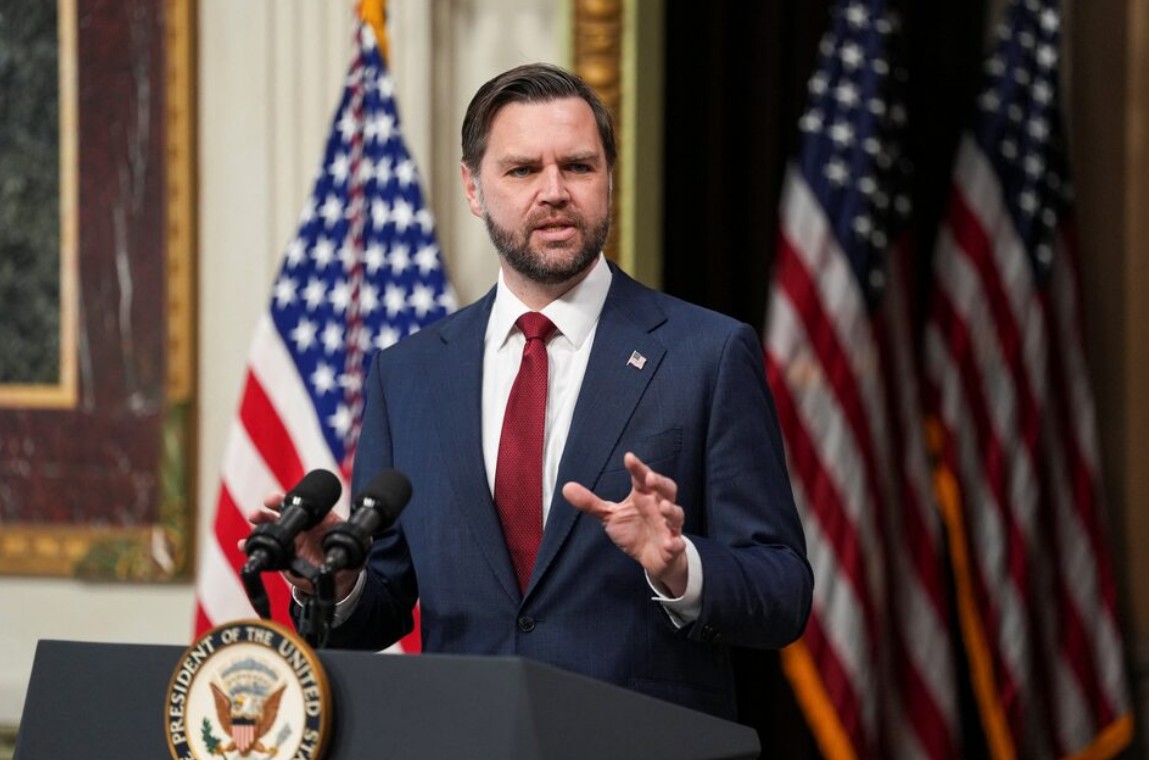
WASHINGTON(Realist English). US Vice President JD Vance stated that Iran must agree to a “substantial” reduction in uranium enrichment capacity for Washington to agree to end the seven-month war. He emphasized that the US does not intend to trade concrete actions for verbal promises.
Washington’s main condition
In an interview with Reuters, Vance formulated the demand extremely directly: any agreement must oblige Iran to actually reduce its uranium enrichment capacity, rather than simply promise future restrictions on its nuclear program.
Vance’s key argument is built on the question of why enrichment to 60% is necessary: “If you don’t want nuclear weapons, why do you need fuel enriched to 60%? If you want to demonstrate commitment to not creating nuclear weapons, don’t produce highly enriched fuel. This is a very basic threshold question.” He added: “We are not going to trade words for actions.”
Uncertainty in Tehran
Vance acknowledged that Washington is negotiating with Iranian President Masoud Pezeshkian and Foreign Minister Abbas Araghchi, but is not sure whether they hold real power in the Iranian political system.
This is related to the death of Supreme Leader Ali Khamenei as a result of joint US-Israeli strikes at the beginning of the war. According to Vance: “One of the things we’ve noticed is that it’s not entirely clear how decisions are made in their country.” Trump also stated that his “biggest problem” is that no one knows who runs Iran.
Iran’s position
Iranian Foreign Ministry spokesman Esmail Baghaei rejected these claims. He stated that American officials know their Iranian counterparts perfectly well and understand how the Iranian decision-making system works. According to him, “the problem is actually the opposite: it lies in the contradictory positions and mixed signals from American officials.”
War as a political burden
The seven-month war with Iran has cost the US about $3 billion per month and has become a central theme of the election campaign ahead of the November midterms. Rising energy prices have put Trump and Republicans on the defensive in key states where control of Congress will be decided.
Vance, known as an opponent of US involvement in foreign wars, previously mediated a temporary peace agreement in June that quickly collapsed. Trump rejected the latest Iranian proposal and warned that military operations could intensify after the elections.
Vance also reported that he personally communicated with field commanders and dismissed concerns about shortages of critical ammunition. According to him, Iranian forces periodically attack commercial vessels in the Strait of Hormuz, but are generally unable to stop energy exports through this waterway.