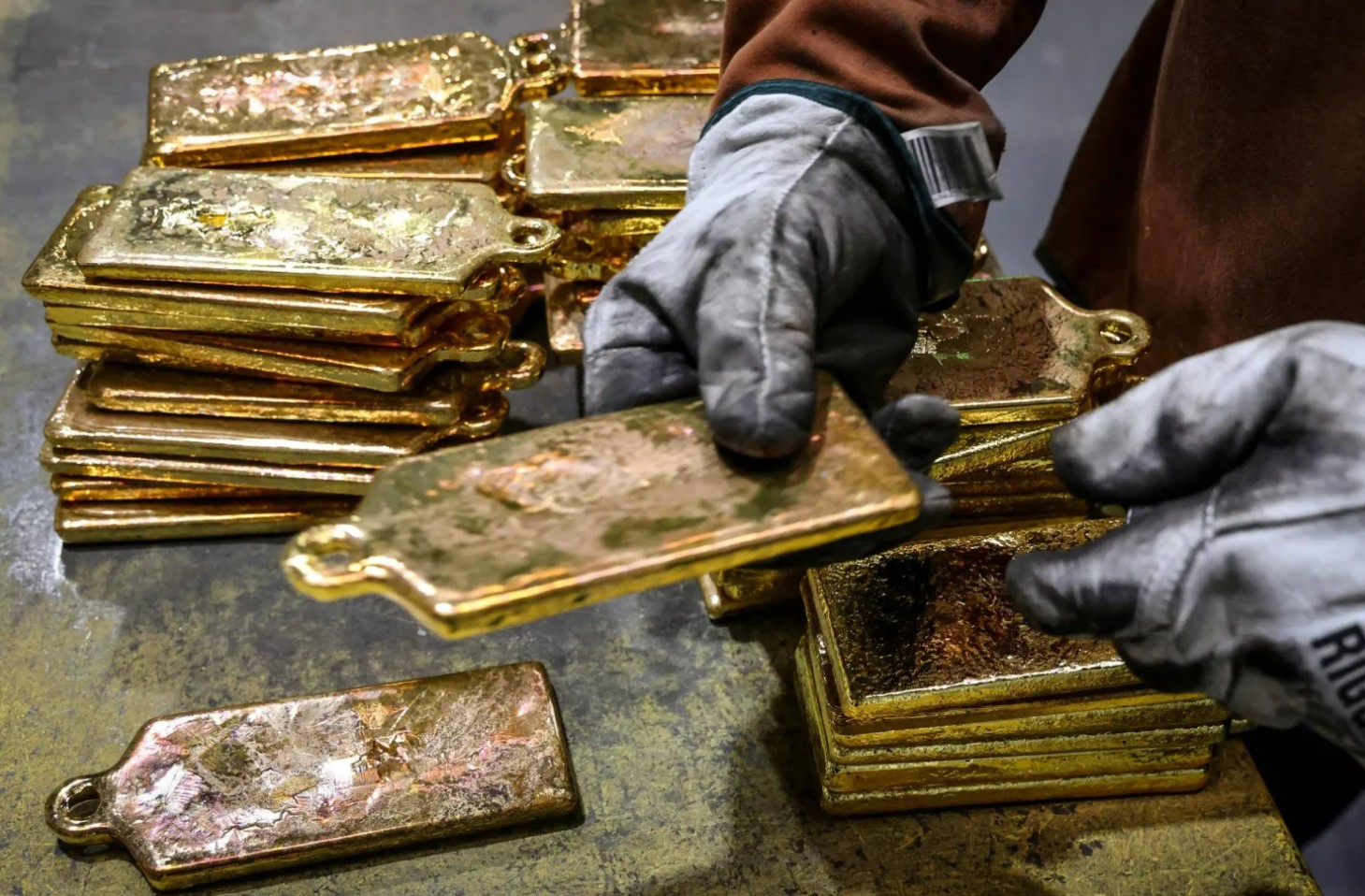
BEIJING (Realist English) . According to data from the People’s Bank of China published on October 7, the country’s gold reserves at the end of September amounted to 77.47 million ounces (about 2,409.59 tonnes). Over the month, they increased by 740,000 ounces — approximately 23.02 tonnes. This is already the 23rd consecutive month in which the central bank has increased its gold reserves.
Pace and scale of purchases
In September, 740,000 ounces were bought — noticeably more than in August (650,000 ounces) and July (640,000 ounces). In tonnes, this is about 23 tonnes — the largest monthly increase since September 2023. At that time, 840,000 ounces were bought.
The current accumulation cycle began in November 2024 and has continued for almost two years. At the end of September, the total volume of China’s official gold reserves amounted to about 2,409.59 tonnes.
Background: a window to buy on a weak market
The timing of the acceleration in purchases deserves attention. In September, international gold prices experienced a noticeable correction: from more than $4,200 per ounce at the beginning of the month, they weakened to around $4,000 by the end of the month. As Bloomberg notes, the People’s Bank of China — one of the largest gold buyers in the world — has increased purchases in recent months amid falling prices.
By the beginning of October, the spot price of gold fluctuated around $4,150, having fallen by about 6% since the beginning of September. The decline in gold prices was caused mainly by a global bond sell-off and a stronger dollar.
Strategic significance: diversification of reserves
Continuous purchases over 23 months reflect China’s long-term strategy of diversifying its foreign exchange reserves. Official gold reserves currently account for about 9% of China’s total reserves. At the same time, at the end of September, China’s foreign exchange reserves declined by 1.11% compared to the previous month — the divergence in the dynamics of gold and foreign exchange reserves further confirms this direction of adjustment.
Notably, market analysts have long suspected that China actually owns significantly more gold than officially disclosed. Money Metals Exchange, citing an analysis by researcher Jan Nieuwenhuijs, reports that the People’s Bank of China may have secretly purchased significant volumes of gold through “off-balance-sheet” channels.
Its actual reserves may exceed 5,000 tonnes — more than double the officially disclosed figure. Analysts at Goldman Sachs and BMO Capital have also drawn attention to China’s undisclosed gold purchases. The latter estimates that China’s gold reserves could surpass America’s within five years.
What next
The central bank’s constant purchases provide the gold market with a stable source of structural demand. Against the backdrop of global geopolitical tension — the war with Iran and the ongoing Russia-Ukraine conflict — and doubts about the creditworthiness of the dollar, China is reducing its dependence on dollar assets by building up its gold reserves. This trend shows no signs of reversal in the short term.