GENEVA (Realist English). Against the backdrop of intensifying geopolitical conflicts and returning inflation, the luxury wristwatch market is demonstrating counterintuitive growth. However, this is not “consumption growth” but polarization: a flight into assets and a decline in consumption are happening simultaneously.
Market data: external prosperity and structural stratification
The global pre-owned wristwatch market noticeably revived in the first half of 2026. According to EveryWatch, the total market value reached $10.5 billion. Annual growth was 37.2%. Swiss watch exports in June rose 11.2% year-on-year.
At the same time, exports of expensive watches worth over 3,000 Swiss francs rose 14.2%. This significantly outpaced the mid-range segment of 500–3,000 francs, which declined 4.7%.
However, growth is distributed extremely unevenly. The gap between brands is enormous. Cartier, Vacheron Constantin, and others are benefiting from the new wave of demand. Panerai and some other brands have even become cheaper. According to Subdial, by April 2026, the average price of Panerai fell by about 8% compared to January 2024. Piaget rose more than 30%. Vacheron Constantin — by about 13%.
Why geopolitics is spurring demand for watches
After the US and Israeli attack on Iran in February 2026, the Strait of Hormuz was blocked. The WTI price exceeded $100 per barrel. Global inflationary pressure intensified again.
Against this backdrop, confidence in traditional safe-haven assets was shaken. The dollar weakened as the US became the main participant in the conflict. The yen continued to fall due to Japan’s dependence on Middle Eastern oil and the deteriorating budget situation. Deposits and bonds depreciated amid inflation.
Capital rushed into tangible assets. Stocks, real estate, precious metals, and luxury watches. Watches are viewed as “portable wealth”: high value is concentrated in minimal volume and weight. They can be worn. They can be sold on the secondary market.
According to the Federation of the Swiss Watch Industry, in January–February 2026, Swiss watch exports rose 2.8% year-on-year. This reversed the downward trend of 1.7% at the end of 2025.
Polarization of consumers: the rich buy, the rest save
Consumer groups are sharply polarizing. Wealthy strata, benefiting from rising prices for stocks, real estate, and precious metals, continue to increase spending on luxury. Ordinary consumers are forced to cut spending due to rising prices for everyday goods.
Watches and jewelry are therefore more resilient than leather goods and ready-to-wear. They are less influenced by fashion. Their premium positioning makes them less sensitive to economic cycles.
LVMH’s “Watches and Jewelry” division continues to outperform other segments of the group. Hermès’s extremely high positioning ensures stable demand for its watch and jewelry lines.
Artificial maintenance of scarcity
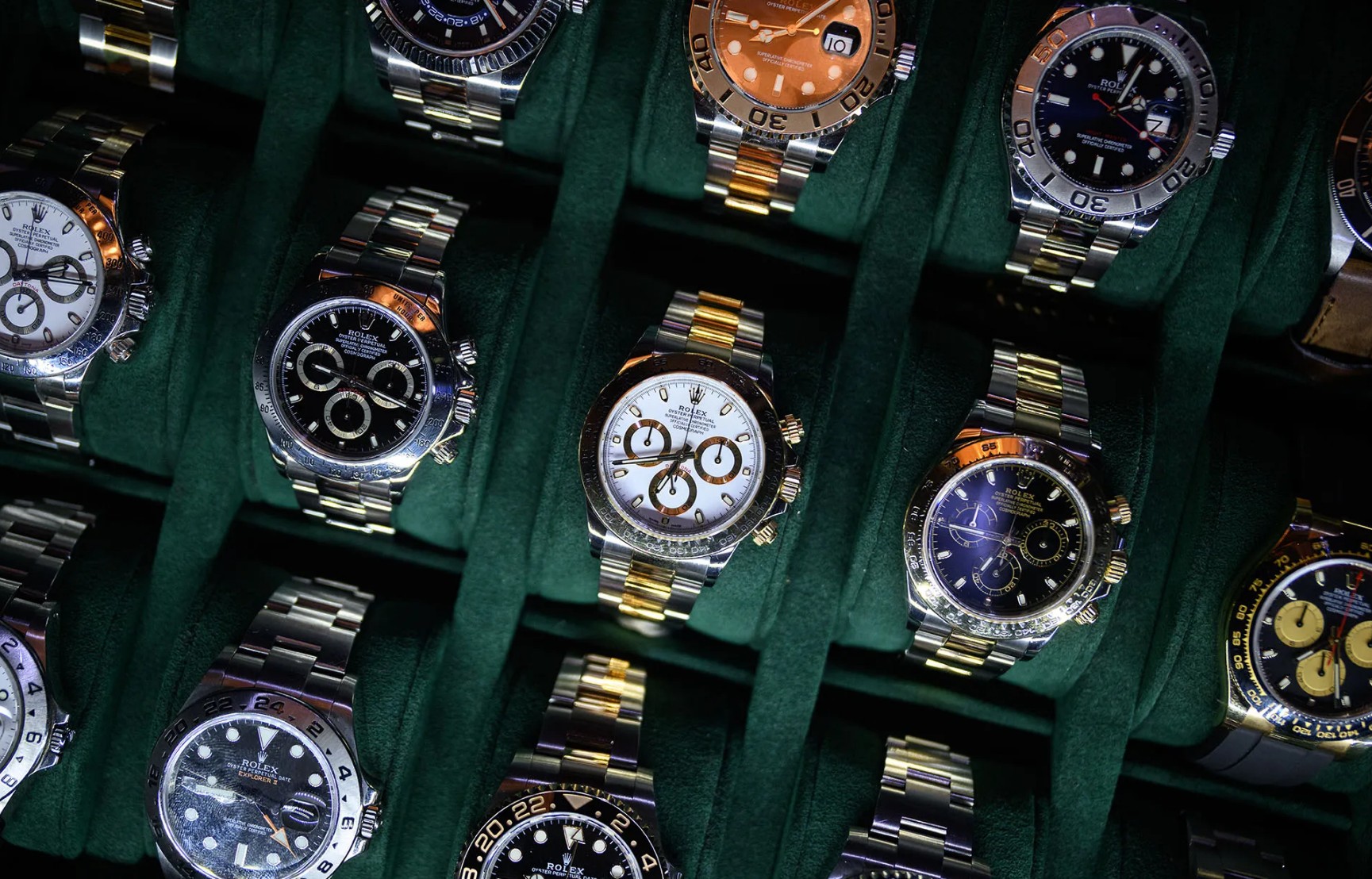
The key supply strategy is artificial scarcity. Rolex’s annual production has long been stable at 1–1.3 million pieces. In 2026 — about 1.3 million. But for just two popular steel models — the Daytona and Submariner — the number of people wanting to buy exceeds 6 million.
Brands maintain scarcity through controlling production volumes. In 2026, “Superlative Chronometer” certification increased the inspection cycle for each model by about 30%. Prices for precious metal models rose almost 12% in total.
This scarcity provides Rolex with a 30–50% premium on the secondary market. However, Rolex’s share on the Chrono24 platform fell from a peak of 44% in 2022 to 30.5%. This is a return to the pre-pandemic level.
This is not the “decline” of Rolex, but the market’s return from speculative frenzy to normal. Buyers no longer concentrate on a single brand. Cartier, Patek Philippe, Vacheron Constantin are gradually redistributing demand.
The departure of speculation and the return of real demand
The “bubble” in the watch market of 2020–2022 was generated by ultra-low rates and excess liquidity. Some popular models brought double-digit profits when resold on the secondary market. Today this speculative logic has disappeared. Secondary market prices have retreated from peaks but have not returned to the pre-pandemic level.
The Rolex price index on Chrono24 is still about 55% higher than in 2019. Over the past 12 months, it has risen by about 7%. The market is returning to a more “natural” equilibrium. Value is again determined by genuine desire, history, and craftsmanship, rather than short-term arbitrage.
Young buyers under 30 still spend a significant share on Rolex. About 34% of watch spending. But compared to the 2022 peak, this share has fallen by about 30%. They prefer to distribute funds between Cartier, Patek Philippe, and other brands.