MANAMA (Realist English). Kuwait and Bahrain reported repelling aerial attacks overnight on 18 November, marking a new round of escalation between the US and Iran in the Persian Gulf.
Kuwait’s General Staff of the Army said its air defences “are currently countering attacks by hostile drones” and urged the population to follow safety instructions. Bahrain’s Interior Ministry issued a warning urging citizens and residents to remain calm and move to a safe location.
Timeline of strikes: Qeshm, Bahrain, Kuwait
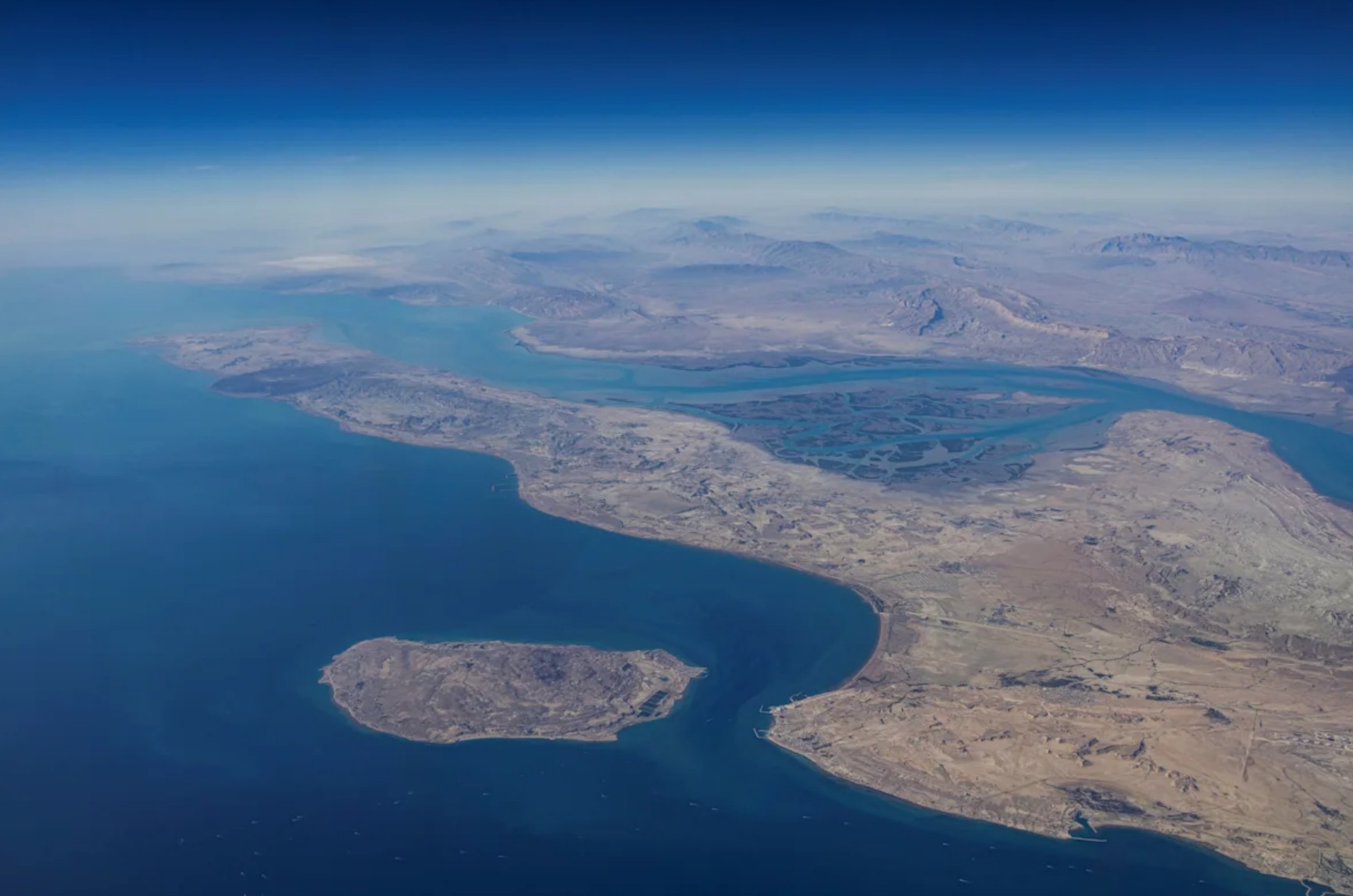
The current escalation continues a series of mutual attacks that resumed last week. According to a US military source, on 17 November a US fighter jet carried out a precision-guided munitions strike on a missile launch site of the Islamic Revolutionary Guard Corps (IRGC) on Iran’s Qeshm Island in the Strait of Hormuz. Washington described the strike as “self-defence” in response to Iranian “aggression directed against US personnel and facilities.”
Earlier, the IRGC claimed that its drones had carried out a “precision strike” on a US radar system at Sheikh Isa Air Base in Bahrain, describing it as a response to “repeated violations of Iranian airspace by US military drones.” Bahrain’s armed forces said they “intercepted and destroyed a number of Iranian aerial attacks before they reached their targets.” Iranian state television later reported that Iran’s army had attacked Patriot air defence systems and launch platforms at Ali Al Salem Air Base in Kuwait with drones.
Russia’s reaction: call for a ceasefire
Russian Foreign Ministry spokeswoman Maria Zakharova said Moscow notes with regret “another surge of tension” in the Persian Gulf.
According to her, strikes were recorded on Iran’s Qeshm Island and on Bahraini territory, and such attacks “represent a blatant violation of the sovereignty and security of the states located in this area.” Russia called on all parties to the conflict, “and above all its initiators in the person of the United States,” to stop hostilities and settle differences at the negotiating table.
Third strike on Bahrain in five days
The current attack on Bahrain was the third in five days after several weeks of relative calm. Friday’s strike was the first Iranian attack on a Gulf state since early September. Bahrain, home to the US Navy’s Fifth Fleet, had previously come under intense attack during the war that began on 28 February with US-Israeli strikes on Iran.
Against this backdrop, the US has increased its military presence in the region: last week the aircraft carrier USS Theodore Roosevelt arrived in the area of responsibility of Central Command, bringing the number of US carrier strike groups in the Middle East to three.
As observers note, the key feature of the current episode is the combination of limited military strikes with the preservation of a diplomatic track. Despite the exchange of attacks, the parties refrain from a full-scale resumption of hostilities, and mediation efforts (in particular by Qatar) continue. However, each new strike on US facilities in the Gulf states expands the geography of the conflict and increases the risk of error or uncontrolled escalation.
For regional security, the immediate effect will be most noticeable primarily in the durability of the ceasefire and in assessments of the vulnerability of US facilities in Kuwait and Bahrain — and that is precisely where it is most sensitive for the prospects of de-escalation.