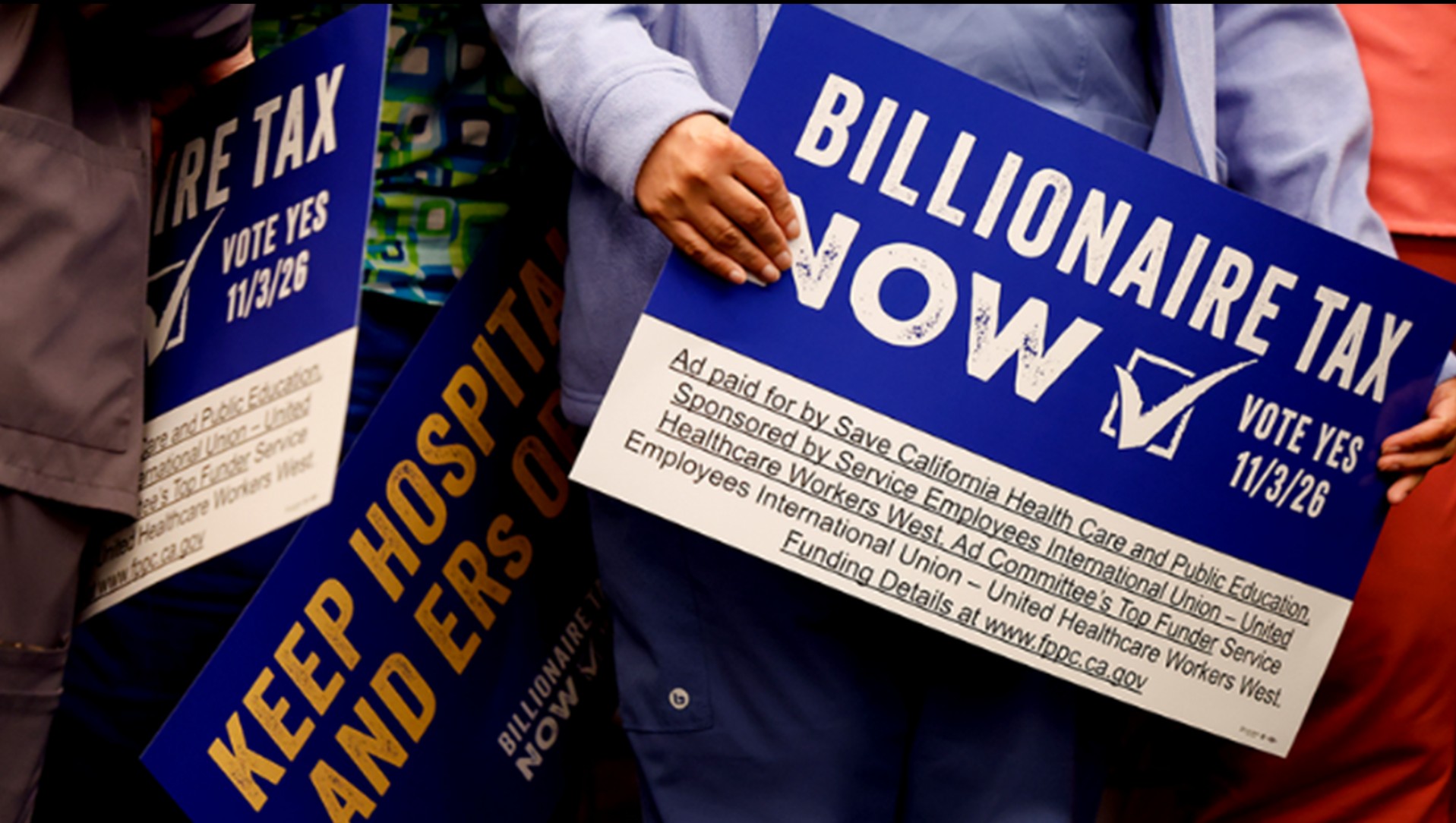
LOS ANGELES (Realist English). California is preparing for a vote on an initiative that could become the first wealth tax in US history. On November 3, voters will decide the fate of Proposition 40 — a one-time 5% tax on the fortunes of approximately 200 California billionaires. If the initiative passes, it will create a precedent that supporters believe could spread to other states.
How the tax works
The tax applies to California residents with fortunes over $1 billion worldwide as of January 1, 2026. A key feature is the “residency snapshot” on a single date: those who left the state after January 1 are still required to pay. The tax can be paid in five equal installments from 2028 to 2032, but with an annual 7.5% surcharge on the remaining balance.
Direct real estate, most pension accounts, and personal property located outside California for more than 270 days in 2026 are excluded from the base. 90% of the funds raised would go to Medi-Cal — the health insurance program for low-income residents that federal authorities have cut by approximately $30 billion per year.
How much it would raise
According to estimates by economists Emmanuel Saez and Gabriel Zucman, the tax could raise about $100 billion. This is a significant sum relative to the taxes billionaires currently pay: on average, they contribute about 0.2% of their wealth annually in California income tax. By comparison, the five largest tech billionaires — Zuckerberg, Page, Brin, Ellison, and Schmidt — collectively own more than $646 billion, and their combined annual California income tax is incomparable to 5% of their wealth.
Who is for and who is against
The initiative was put forward by the Service Employees International Union-United Healthcare Workers West. Supporters include Senator Bernie Sanders, Congressman Ro Khanna, and a group of Nobel laureates in economics, including Joseph Stiglitz and Paul Krugman. At a rally in Los Angeles, Sanders said: “The whole country is watching what you do here.”
Opposition includes a coalition comprising Governor Gavin Newsom, the California Teachers Association, Planned Parenthood, and almost all Republicans. The main sponsor of the opposition is Google co-founder Sergey Brin, who moved to Nevada and has spent more than $205 million on the campaign against it. His estimated tax bill, had he remained a California resident, would have been $13.3 billion.
Polls and forecasts
A Manhattan Institute poll showed that only 35% of voters support Proposition 40, while 50% are against. Over ten years, California has voted on wealth taxes three times, and each time the initiative failed.
Countermeasures on the same ballot
Opponents have not limited themselves to campaigning. They have put forward two competing propositions that could nullify the tax even if it passes. Proposition 41 requires that any new taxes comply with the constitutional spending limit of the 1970s.
Proposition 42 prohibits new taxes on personal property and retroactive taxes — precisely the category to which Proposition 40 belongs. If either countermeasure receives more votes than Proposition 40, the tax will not take effect.
Billionaire exodus
Even before the vote, some billionaires have left the state. In addition to Brin, California has been left by Peter Thiel, Uber co-founder Travis Kalanick, director Steven Spielberg, and others.
Berkeley economist Enrico Moretti estimates that the wealth tax could cost the state one in five billionaires from the Forbes 400 list. However, according to him, the main risk is not the loss of existing billionaires, but a decline in California’s attractiveness to future company founders.
What this means
The vote on Proposition 40 is not just a fiscal question. It is a test of whether voters in the largest US state are ready to support redistribution through a tax on unrealized capital that will affect the most mobile and politically influential group of taxpayers.
Even if the tax passes, it will face legal challenges: the retroactive “residency snapshot” as of January 1, 2026, already raises constitutional questions. If it fails, supporters will likely take the fight to the federal level, as Newsom proposes.
For now, California remains the arena where it is being decided whether a democracy can tax wealth rather than income — and retain those who create that wealth.