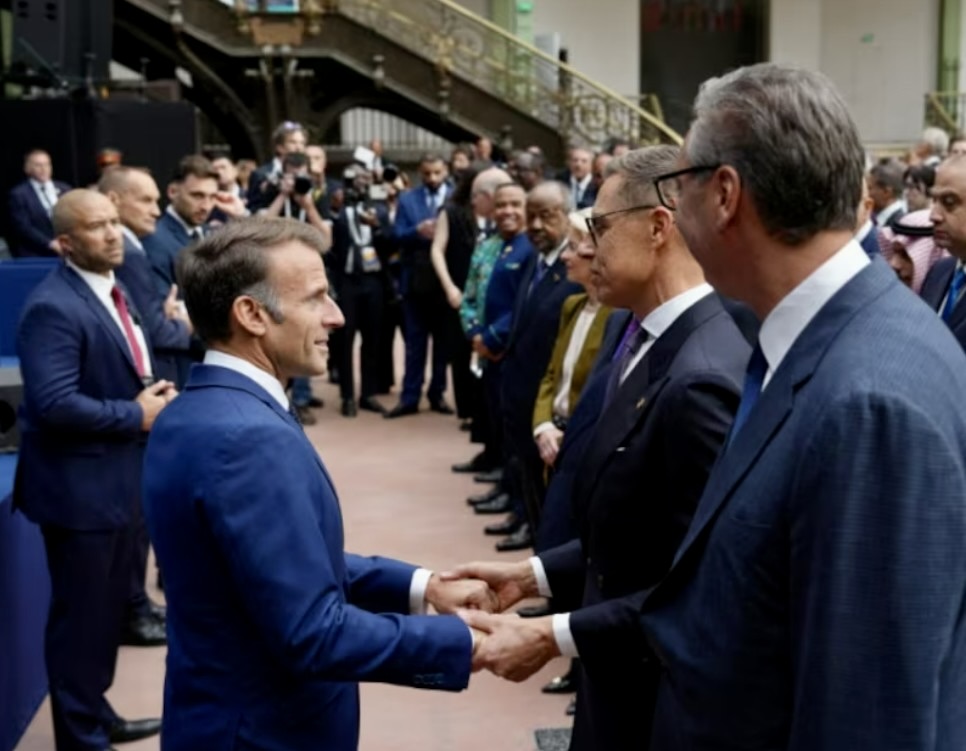
HELSINKI (Realist English). Finnish President Alexander Stubb and the French side published a joint statement announcing Finland’s decision to join the French nuclear deterrence initiative “frontline deterrence.” The Élysée Palace confirmed this information the same day.
According to the joint statement by the two countries, a steering group on nuclear issues will be created in the coming months, which will launch concrete work on implementing the relevant cooperation.
Participating Countries: Finland Became the Tenth
Finland is the tenth European country to join the French nuclear deterrence initiative. Initially, eight countries participated in the program: Germany, the United Kingdom, Poland, the Netherlands, Belgium, Greece, Sweden and Denmark. Norway joined in May 2026, and Finland officially confirmed its participation on September 14.
Finnish Defense Minister Antti Häkkänen called this decision a “natural step,” since Finland’s closest allies — Norway, Sweden and Denmark — had already joined the initiative.
Finland’s Position: No Deployment of Nuclear Weapons, No Replacement of NATO
Finnish President Stubb emphasized on social network X that the French plan is “primarily aimed at strengthening European security,” contributes to increasing Europe’s responsibility for its own defense and “helps prevent escalation.”
Stubb clearly stated that the French initiative does not replace or duplicate NATO nuclear deterrence. He also confirmed that Finland does not intend to deploy nuclear weapons on its territory in peacetime.
Häkkänen further explained that the French initiative is fundamentally different from the nuclear deterrence of the North Atlantic Alliance: participating countries do not assume obligations similar to the alliance’s collective defense, and France does not require other countries to share the costs of maintaining nuclear deterrence. Each country determines the specific forms of cooperation independently.
French “Frontline Deterrence”: Forms and Limits
French President Emmanuel Macron on March 2, 2026, at a military base on the island of Île Longue in western France, officially presented the concept of “frontline deterrence” (dissuasion avancée). The program is aimed at closer cooperation with European partners in the field of nuclear deterrence, including joint exercises, information exchange and — in extreme cases — “the deployment of strategic nuclear forces on the territory of allies.”
According to an explanation published by the Finnish Ministry of Defense, possible forms of cooperation include: dialogue on French nuclear doctrine, joint exercises (participating countries may act as observers or provide conventional forces), and, ultimately, the temporary deployment of part of the French strategic air forces on the territory of allies.
The key limitation is that the French president retains the sole right to decide on the use of nuclear weapons. Unlike NATO, where there is a joint nuclear planning group, the French initiative does not give participating countries the right to participate in decisions on the use of nuclear weapons. French nuclear doctrine remains strictly defensive and does not provide participating countries with an alternative “nuclear umbrella.”
Background: A Turn in Finland’s Security Policy
Finland had previously long adhered to a policy of military non-alignment. After the start of Russia’s full-scale invasion of Ukraine in February 2022, Finland joined NATO in 2023.
In June 2026, Finland’s parliament voted to repeal the country’s full ban on nuclear weapons, allowing the import, transport, supply or storage of nuclear weapons on the country’s territory in the event of defense necessity. This legislative adjustment removed legal obstacles to Finland’s participation in the French nuclear deterrence initiative.
Finnish Foreign Minister Elina Valtonen had earlier said in an interview that Helsinki was interested in discussing the extension of the French “nuclear umbrella” to all of Europe, but emphasized that Finland does not plan to deploy nuclear weapons.
The advancement of the French nuclear deterrence initiative is taking place against the backdrop of fluctuations in U.S. President Donald Trump’s attitude toward commitments to NATO and growing doubts among European countries about the reliability of American security guarantees. Macron, announcing the initiative, also said that France plans to increase the number of nuclear warheads and will no longer publicly disclose their exact number.