

BRASÍLIA (Realist English). Tatiana Poskolova, Doctor of Political Science, in an exclusive column for Realist English, analyses the Trump administration’s strategy in Latin America.
The author, who is personally acquainted with Venezuelan President Delcy Rodríguez and has observed political processes in the region for many years, examines Washington’s ultimatum to Havana (“deal or military operation”), the three‑stage US plan to bring Venezuela under its control, and the covert mechanisms of influence on the upcoming presidential election in Brazil, where the interests of the United States, China and Russia collide.
Venezuela as a Testing Ground: The US Three‑Stage Strategy
Official Washington has issued a final “Chinese warning” to Cuba. A few days ago, Pentagon chief Pete Hegseth said the future of the Island of Freedom depends on whether a political “deal” is reached soon between Trump and Cuba’s leadership. “The future of Cuba is in the hands of the President of the United States and the leadership of Cuba,” Hegseth told American troops during a visit to the US naval base at Guantánamo Bay on the island.
He added that the Pentagon remains ready for “any contingency”. In other words, Hegseth once again voiced Trump’s thesis: either Cuba accepts US terms, or it faces a military operation.
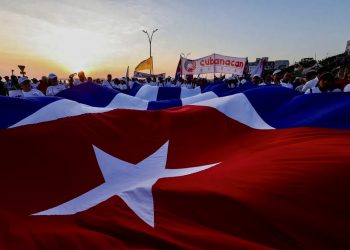
For its part, the Cuban leadership has begun distributing weapons to the population and holding military exercises. However, it is obvious that this time Russia, unlike the USSR during the Cuban Missile Crisis, will not intervene radically. China, whose multi‑million dollar investments are tied up in economic and logistics projects on the island, is currently engaged in active negotiations with Trump to salvage at least some of the money spent on projects in Cuba and Venezuela.
What future Trump has in store for Cuba can be seen from how Washington is implementing in Venezuela the three‑stage strategy developed by his administration with the support of Secretary of State Marco Rubio, aimed at “stabilisation, recovery and transition to democracy”.
The three stages of this strategy are as follows.
First phase: “stabilisation” — preventing systemic collapse or civil war. This includes the controlled sale of tens of millions of barrels of Venezuelan oil. The proceeds are placed “under supervision” by the US Treasury and undergo international auditing to ensure they “benefit the Venezuelan people”.
Second phase: “recovery” — aimed at stabilising the Venezuelan market by opening it up to US and Western companies to modernise infrastructure. This phase also includes measures for “national reconciliation” through amnesty processes and the release of political prisoners.
Third phase: “transition period” — implies temporary US oversight of Venezuela until a “safe and functioning government with a long‑term goal” is formed.
Betting on Delcy Rodríguez
How are Venezuela’s authorities reacting? President Delcy Rodríguez has actively engaged in these processes. She simply had no alternative; otherwise the US would have launched a military operation. And Venezuela can expect help from almost nowhere. Delcy Rodríguez — and I can assess her because I know her personally and have observed her political moves — is forced to act in a politically divided country, both to save face and to prevent the US from completely swallowing Venezuela and all its resources.
In an interview with Realist English, regional expert George Saint‑Just assessed the situation as follows:
“I have no doubt that the US has bet on Delcy Rodríguez. All her public actions — opening a memorial to Cuban guards killed in the line of duty, statements of support for Maduro, loyalty to the revolution, etc. — are merely attempts not to lose the sympathy of those sections that support ‘Chavismo’. First and foremost, the military. The entire Venezuelan opposition has long been against Delcy. The US does not even hide its plans. Washington’s goal is to bring Venezuela completely and finally under US control. Curiously, the US will not allow the opposition to consolidate and win the upcoming elections either. Because if that happens, the country will begin to develop, rebuild its industry and return to the top ranks of regional development. No one in the US wants that — the old scheme is tried and tested and it works: all obsolete goods and all surplus production will be dumped on Venezuela. Perhaps Delcy hopes to outsmart Trump in this game. Or maybe she just wants to hold onto power? Time will tell.”
It is worth noting that, judging by the website of the Russian embassy in Venezuela, the situation is not causing much concern to our diplomats. Round‑table discussions on the inviolability of the Russia‑Venezuela strategic partnership are being held. Rossotrudnichestvo is organising concerts and presentations of Russian paintings and cartoons.
Brazil — Trump’s Main Prize
Cuba and Venezuela are certainly important to Trump. But far more significant for US interests as a corporation is to regain control over Brazil’s resources. Presidential elections are scheduled in Brazil for 4 October 2026. Vice‑president, congressmen and governors will also be elected on that date. The current president, the left‑wing politician Luiz Inácio Lula da Silva, who is popular not only in Brazil, has announced his intention to run for a new presidential term and has already entered the race.
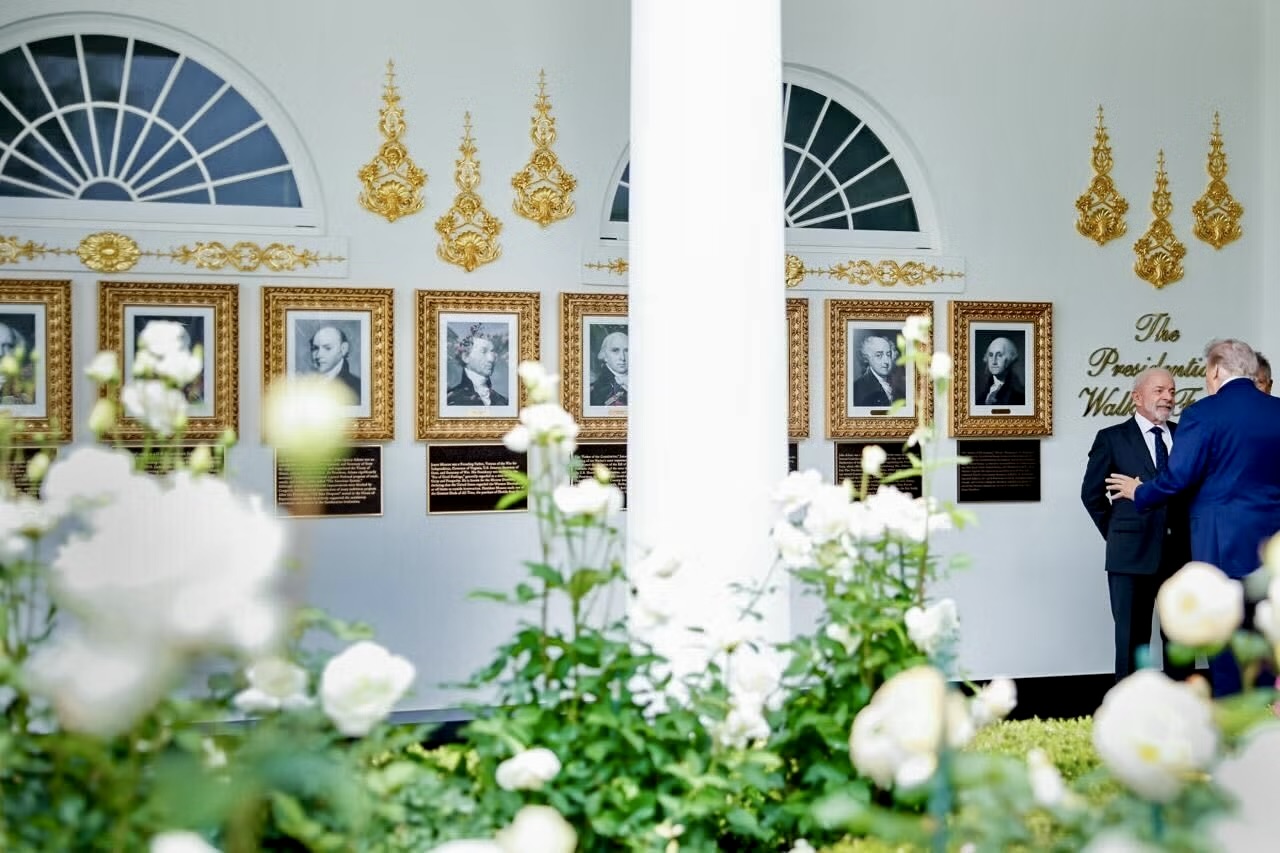
Fully aware of Trump’s intentions to regain control over the region and wanting to secure his loyalty ahead of the elections, Lula visited the United States and described his impression of the meeting with Trump as follows:
“You know that story about love at first sight, that chemistry? That’s what happened. I hope it continues that way.”
Love, however, did not come from nowhere. As it became known, Lula struck an unofficial deal with Trump: he handed over a rare‑earth metal deposit to the US for development in exchange for Trump’s loyalty during the election period. Let us recall that not long ago Lula publicly accused China of investment‑occupying Brazil.
Alas, the love was short‑lived. A few days ago, Lula’s main rival in the presidential election, Bolsonaro‑Jr, also visited the White House. Secretary of State Marco Rubio was particularly active in the meetings with him. A tacit agreement has been reached to support Bolsonaro‑Jr in the elections in exchange for a promise to remove large Chinese companies from strategically important sectors. Trump, as an experienced operator, has handled the situation skilfully: he took what he could from Lula, but placed his bet on the rise of pro‑American forces. Especially since Brazilian society is almost evenly split along political lines. In the previous election, Lula won by a minimal margin — within the margin of error.
The Balance of Forces and Trump’s Role
According to data for June 2026, the main rivals remain incumbent president Luiz Inácio Lula da Silva (Workers’ Party, PT) and Senator Flávio Bolsonaro (Liberal Party, PL), son of former president Jair Bolsonaro. Jair Bolsonaro repeatedly called himself a personal friend of Trump. Bolsonaro‑Jr’s rating is significantly lower than Lula’s. However, poll results vary: in some of them, Bolsonaro‑Jr maintains a comparable level of support to Lula in a hypothetical second round. And a second round is almost inevitable. According to the Polymarket platform for June 2026, traders estimated the probability of Lula reaching the second round at 74%, and Flávio Bolsonaro at 63%. This indirectly reflects the ongoing competition between the candidates.
The outcome of the election will largely depend on the support of the 10–15% of voters who have not yet decided.
Brazilian elections are held in two rounds. If no candidate receives more than 50% of the vote in the first round, a second round is held between the top two candidates.
One of the important factors working in favour of the right‑wing forces is the position Trump will take. Brazil is a South American economic giant, too big a prize, where foreign corporations, primarily from the US, have traditionally played a leading role. In the struggle to control this resource, Trump may resort to the harshest measures. Note that the overwhelming majority of representatives of Brazil’s security forces have been educated in the United States. Moreover, enormous resources — both financial and professional — will be deployed to boost Bolsonaro’s rating. Therefore, the Trump factor may this time be decisive in the confrontation between left and right in Brazil.
It is significant that Lula himself initiated the meeting with Trump, while Bolsonaro‑Jr received an invitation from the White House. Some Russian experts have commented that no major progress was achieved in the recent negotiations with Lula, and that the US will publicly throw its weight behind Bolsonaro in the Brazilian presidential race. I believe Trump did nevertheless extract important steps from Lula, including handing over deposits for development to the US side. But Trump harbours a serious element of distrust towards Lula — he has been pushing the US out of Brazil for too long and too actively.
Lula himself blames Secretary of State Marco Rubio — “the main enemy” of Latin America’s left — for Trump’s decision to back Bolsonaro. In a fit of anger, Lula even publicly called Rubio a “shoddy Latin American”, which certainly did not earn him any sympathy in Trump’s team.
Lula’s team is trying to exploit a corruption scandal that has erupted involving Bolsonaro‑Jr. But this surprises no one in Brazil, especially since the country is one of the leaders in fabricated criminal cases against politicians. Lula himself was behind bars not so long ago.
Lula reacted very sharply to Flávio Bolsonaro’s meeting with the US leadership.
“I spent three hours with President Donald Trump… Mr Marco Rubio was not there, perhaps because he was busy preparing to help Bolsonaro’s son, who is a candidate in the elections and is not ashamed to betray our homeland. He is an enemy of the people, he flies to the US and wants American intervention in Brazil,” Lula said publicly.
Rubio’s Rhetoric and Lula’s Response
The deal between Trump and Bolsonaro has been struck. Whether it will be implemented and to what extent — time will tell.
Marco Rubio recently spoke in the Senate, stating that Latin America is “full” of US allies, but there are exceptions. He listed Nicaragua, Cuba, Venezuela (which still presents “certain problems”), Brazil (with the caveat that it has entered an electoral cycle, so not all is lost) and Colombia under Gustavo Petro. Lula responded by calling Rubio an “anti‑Latin Americanist” and stating that the Secretary of State is a “mortal enemy of Cuba and some Latin American countries”.
In my view, it is still too early to predict the outcome of the Brazilian presidential election. But a right‑wing victory is quite possible. In that case, China will have to engage in serious and difficult bargaining to preserve its already multi‑billion dollar investments. That is exactly how things stand in Brazil.
I once again express my regret that the struggle for the region is being waged between the United States and China. Russia has never managed to gain a serious foothold in Latin America, let alone regain the positions it held in the USSR. Yet this task was set as long as twenty years ago. It is high time for the Russian side to learn from its mistakes and choose priority directions and countries, taking into account that the emphasis must be placed on a pragmatic approach, not on a struggle of ideologies as was the case during the Soviet era.
Tatiana Poskolova — Doctor of Political Science, State Councillor of the Russian Federation, 1st Class