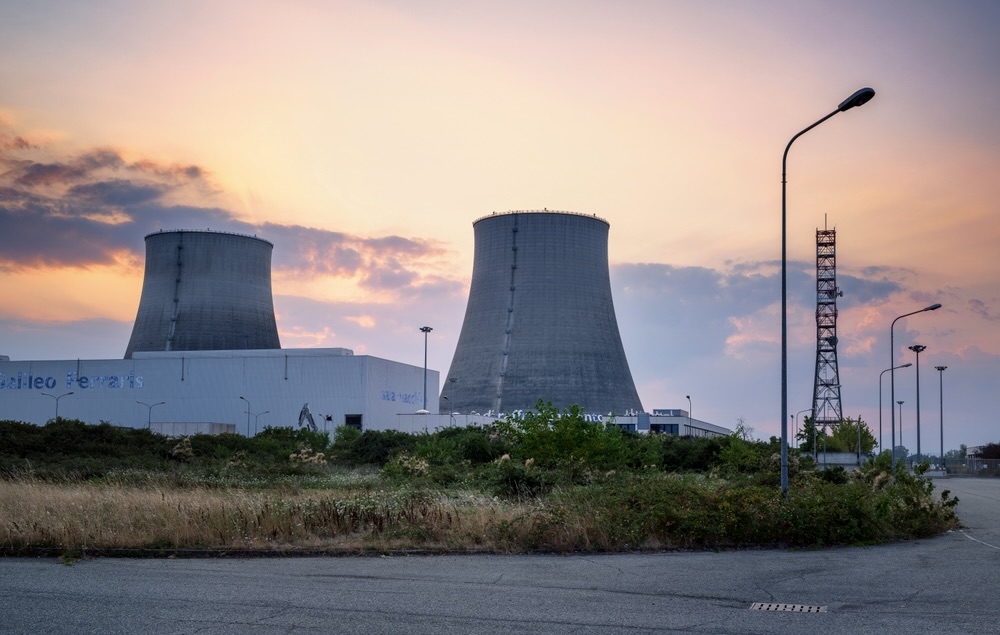
ROME (Realist English). Italy, the only G7 country without any operating nuclear power plants, is preparing for a historic shift in energy policy.
Prime Minister Giorgia Meloni has pledged to approve a legal framework for the return of nuclear energy by summer 2026, focusing on next‑generation reactors – small modular reactors (SMRs).
On 4 June 2026, the lower house of the Italian parliament approved in first reading a bill delegating authority to the government to revive “sustainable” nuclear energy. The vote was 155 in favour and 86 against. The document now goes to the Senate, and the government hopes to pass it before the summer recess.
40 years without nuclear: why Italy is returning
Italy abandoned nuclear power after the 1986 Chernobyl disaster – in a 1987 referendum, citizens voted against continuing the nuclear programme. The last two reactors – Caorso and Trino Vercellese – were shut down in 1990. In 2011, after the Fukushima‑1 accident, the government imposed a moratorium on new nuclear construction, and a subsequent referendum confirmed the rejection of nuclear energy by an overwhelming margin – 94.1% in favour of the ban, with 55% turnout.
However, the geopolitical shocks of 2026 have changed the calculus. Meloni directly linked the return to nuclear power to the war involving Iran, which, she said, “is contributing to rising energy costs and putting broader pressure on the economy.” The instability of energy supplies amid the Middle East conflict has once again raised the question of the country’s energy independence.
In May 2023, the Italian parliament had already passed a resolution urging the government to consider including nuclear energy in the country’s energy mix. In September of that year, a National Platform for Sustainable Nuclear Energy was established to determine the timeline for a possible nuclear return.
Technology of the future: betting on mini‑reactors
Meloni’s government does not plan to revive old nuclear plants. Instead, it is betting on small modular reactors (SMRs) – fourth‑generation technology that, according to the authorities, is safer, more efficient and more economically viable. However, as the government itself admits, these reactors currently exist only as prototypes.
Environment and Energy Security Minister Gilberto Pichetto Fratin clarified that the law concerns civilian nuclear energy only: “I agree that it should not be used for military purposes.”
According to government plans, the first next‑generation reactors could start operating in Italy in 2034–2035. By 2050, the authorities estimate, nuclear power could supply between 11% and 22% of the country’s electricity generation, contributing to decarbonisation and reducing dependence on fossil fuel imports.
Public opinion: the country is divided
Italians remain deeply divided on nuclear energy. According to a YouTrend survey conducted in June 2026:
- 46% support nuclear power for energy independence;
- 36% expect lower costs;
- 47% fear radioactive waste;
- 42% are worried about the risk of accidents.
At the same time, 77.1% of families favour a balanced mix of renewable and traditional energy sources. Interestingly, support for nuclear energy is highest among young people.
Criticism: ‘expensive, slow and pointless’
The government initiative has faced strong opposition from both the left and the right.
Nobel laureate in physics Giorgio Parisi, speaking in the Senate, said: “If it were not a tragedy, Shakespeare would have already found a title for this bill – ‘Much Ado About Nothing’.” By his calculations, the cost of generating electricity from SMRs would be between $140 and $220 per megawatt‑hour, while solar energy costs no more than $50. Parisi also noted that nuclear power could cover only a fifth of Italy’s needs.
Laura Boldrini, a Democratic Party deputy, accused Meloni of “a pointless crusade against green policy.” She pointed out that the project would take 10–15 years and asked rhetorically: “How does Meloni intend to deal with the crisis in the meantime?”
Stefano Patuanelli of the Five Star Movement expressed concern that SMRs could produce more nuclear waste and generate electricity at a higher cost than renewables. He was backed by former prime minister Matteo Renzi, who accused the government of being unprepared for the energy crisis.
Another former prime minister, Carlo Calenda (Action Party), also called for a more comprehensive strategy, warning that piecemeal measures would not solve the problem.
The law is expected to be finally approved before the end of summer, to be followed by implementing regulations that must be issued within 12 months. The government hopes to issue the first implementation decrees by Christmas 2026.
The opposition has already threatened to organise a national referendum to overturn the law and subsequent regulations.
However, as Il Fatto Quotidiano notes, “Meloni’s government is playing the nuclear card ahead of the 2027 parliamentary elections, making promises it cannot keep.” Even under the most optimistic scenario, the first reactors will appear no earlier than 2034, and some experts cite 2040 as a more realistic date.
Italy is reopening the nuclear door – but whether it will walk through it depends on whether the government can convince the sceptics and prove that nuclear power can deliver results faster than the critics predict.