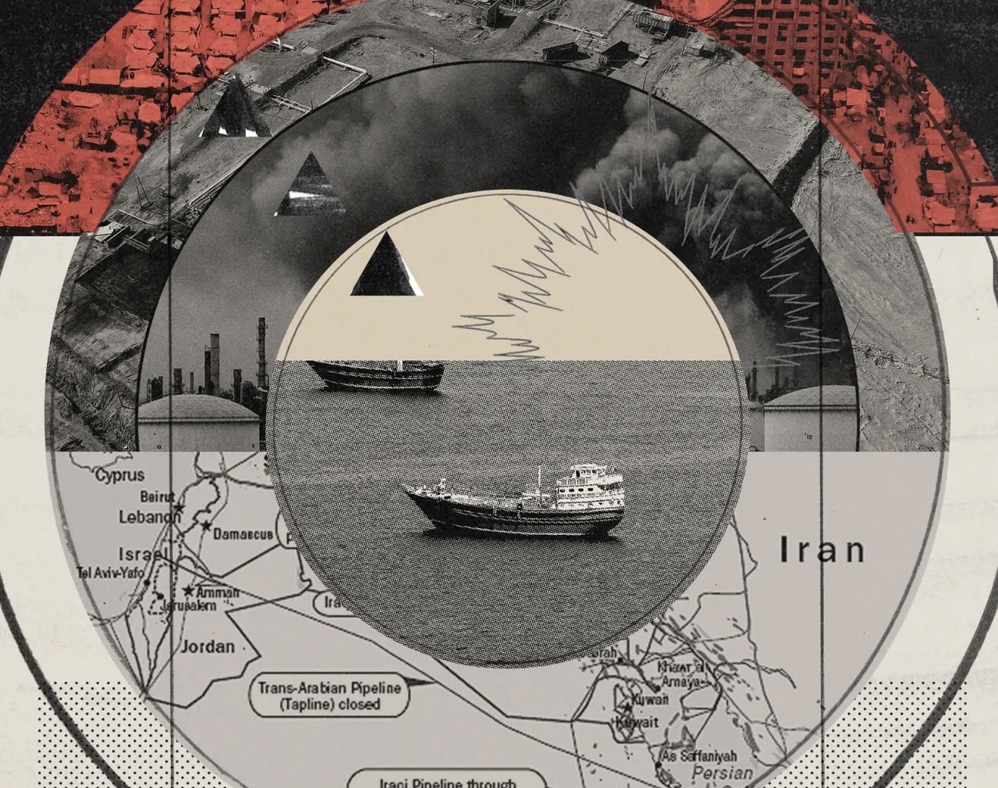
WASHINGTON (Realist English). American political scientist, leading specialist on the Gulf states and professor at Texas A&M University F. Gregory Gause III has taken stock of the three‑year conflict in the Middle East in an article for Foreign Affairs. His verdict is damning: the war has changed the region — and at the same time changed nothing at all.
“Sound and fury,” Gause quotes Shakespeare to describe the period from 7 October 2023 to the summer of 2026. The tragedy is that over these years, tens of thousands of people have died, regimes have fallen, and spheres of influence have shifted — but the fundamental problems have remained untouched.
The paradox of victory: Iran weaker but more dangerous
Between 7 October 2023 and 28 February 2026, Iran suffered devastating defeats: its nuclear infrastructure was destroyed by Israeli and US strikes, generals and scientists were killed on Iranian soil, Assad’s regime fell in Syria, and Hezbollah and Hamas were brought to the brink of annihilation.
It seemed Tehran was on the verge of collapse. Yet, as Gause writes, “Iran emerged victorious from this last round of struggle.” By maintaining control over the Strait of Hormuz and striking its neighbours, Tehran demonstrated that its regime had “largely survived.” Economic problems and social discontent have not gone away, but the regime has gained new strength by realising its influence over global energy markets.
“Iran will continue the fundamental elements of its regional policy of the last 47 years: confrontation with Israel, resistance to American influence and interference in the affairs of weak Arab states,” the author warns. More importantly, Tehran now has “every incentive to do everything possible to develop nuclear weapons as a final deterrent.”
Gulf states caught between fear and disappointment
The Gulf states, which had long remained on the sidelines of regional wars, found themselves in the crosshairs of Iranian strikes. Their energy facilities, airports and hotels were set ablaze. At the start of the conflict, Gulf leaders were irritated that the US had dragged them into the firing line. But then many elites came to believe that the war must continue until Iran was fully weakened. Disappointment came from both sides.
The June truce between the US and Iran heightened the fear of being “abandoned”: the memorandum made no mention of the Gulf states or Iran’s missile capability. Yet all Gulf states supported the agreement for fear of further escalation. “The Gulf states are not ready to distance themselves from the US – they have no alternative,” Gause stresses. China does not want to play that role, Russia is bogged down in Ukraine, and Europe lacks the necessary military capability.
Attitudes towards Israel have also shifted. The normalisation trend set in motion by the Abraham Accords has stalled. Gaza made cooperation with Israel politically risky, and Israel’s strike on Qatar in September 2025 led Gulf leaders to question whether Israel cared about their security at all. The only country to have strengthened ties with Israel is the UAE.
Israel: a winner that doesn’t know how to win
By the end of 2025, Israel rightly considered itself the victor in the regional wars. But it failed to achieve its primary goal – the overthrow of the Iranian regime. Moreover, Israel’s leadership, in Gause’s view, “showed no interest in translating its victories into diplomatic initiatives.”
Netanyahu’s government preferred the role of “regional destabiliser,” confident that its military might would protect it indefinitely. As the author ironically notes, “that’s a questionable bet, given that its military power was equally impressive before 7 October.”
Israel refuses to allow the Palestinian Authority to administer Gaza, sabotages its work in the West Bank and continues to build new settlements. Instead of supporting Lebanon’s new government in its fight against Hezbollah, Israel resumed war in Lebanon. In Syria, Israel encourages the Druze to resist the new authorities and strikes government forces.
Syria: hope and fragility
The most significant geopolitical shift – the fall of Assad’s regime and the rise of Ahmed al‑Shara – is a serious blow to Iranian influence in Lebanon and on Israel’s borders. The new leader is distancing himself from Iran and has secured the backing of the US, Turkey and the Arab world.
Yet Syria remains deeply divided and weakened after 14 years of civil war. As long as there is no effective central government, it will be a “plaything for stronger neighbours.” If Iran, Israel or Turkey intervene again in Syria, chances for regional stability will vanish.
The Palestinian question: unresolved and unresolvable?
Gause reminds us: “The 7 October attack once again demonstrated that as long as Palestinian self‑determination remains unrealised, Palestinian rejection of the status quo can explode the Middle East.” However, no US administration “has been willing to use the leverage on Israel necessary for a political solution.”
“The prospects for a new Middle East are dim,” Gause concludes. Iran and Israel are as strong as ever, their leaders more unyielding in their convictions. The Arab states remain weak and vulnerable to outside interference.
The Trump administration, in the author’s view, correctly understands that stability requires strengthening weak Arab states. But that requires not only a US military presence in the region, but also diplomatic pressure on Israel and negotiations with Iran.
“Without a willingness to use leverage on Israel, without a diplomatic settlement with Iran, and without efforts to strengthen weak states, any hopes for genuine, long‑term stability in the Middle East are just fantasy,” the professor concludes.
“The region’s players have not changed: a confident Iran with scores to settle, Iranian proxies that are weakened but not broken, and an Israel that has resigned itself to a state of near‑permanent war instead of compromise.”