
YEREVAN (Realist English). On 22 November, the Armenian government published a preliminary draft of a new Constitution, which Prime Minister Nikol Pashinyan called a condition for signing a peace treaty with Azerbaijan. However, the content of the document and the circumstances of its introduction raise increasing questions: the key change — the removal from the preamble of the reference to the 1990 Declaration of Independence — coincides with a long-standing demand from Baku rather than with a request from Armenian society.
A concession disguised as reform
The preamble no longer refers to the Declaration of Independence, which contained a provision on the “reunification” of Nagorno-Karabakh with Armenia. It was precisely this provision that Azerbaijan regarded as a territorial claim and demanded be removed as a condition for peace. Thus, the central point of the constitutional reform is effectively dictated by an external actor — and presented by Yerevan as an internal initiative.
Parliament Speaker Ruben Rubinyan said on 17 November that Yerevan does not accept linking the peace treaty to constitutional amendments and is ready to sign the document “today.”
This statement sits poorly with the government’s actions, which simultaneously published a draft Constitution conditioned precisely on Baku’s demands. The ambiguity of official Yerevan’s position points either to a lack of coordination within the authorities or to a deliberate attempt to present a concession as a voluntary step.
“Constitutional capitulation”: the critics’ position
The opposition factions “Strong Armenia” and “Hayastan” have already called the draft a “constitutional capitulation” to Baku. In their view, removing the reference to the Declaration of Independence deprives the Armenian state of historical continuity and legally enshrines the renunciation of claims to Nagorno-Karabakh — without obtaining in return security guarantees for the Armenians who left the region in 2023.
Critics also point out that the reform is being carried out in a compressed timeframe and without broad public discussion. Publishing the draft on a website for comments does not substitute for a full debate, especially when the document defines the foundations of statehood.
Procedural deadlock and political bargaining
To put the draft to a referendum, at least two-thirds of parliament — 70 of 105 votes — are required. The ruling Civil Contract party holds only 64 seats. Pashinyan proposed that the opposition support the referendum, promising to resign if voters reject it and not to run for prime minister in 2031 if the Constitution is adopted.
This proposal looks like political bargaining rather than a search for consensus. Both opposition factions, holding a combined 41 seats, have already rejected it. Thus, Pashinyan has staked his political future on a document he cannot push through parliament without the support of those who publicly call it capitulation.
Peace without a treaty
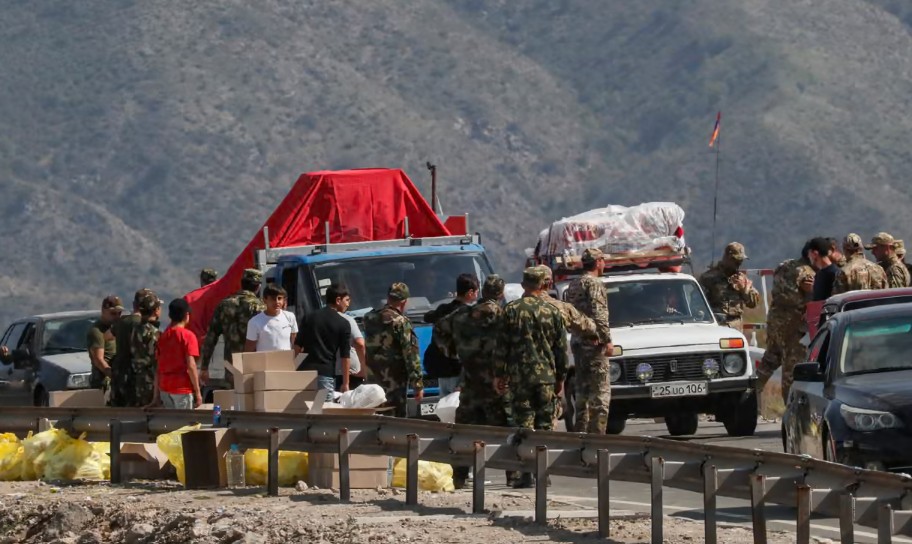
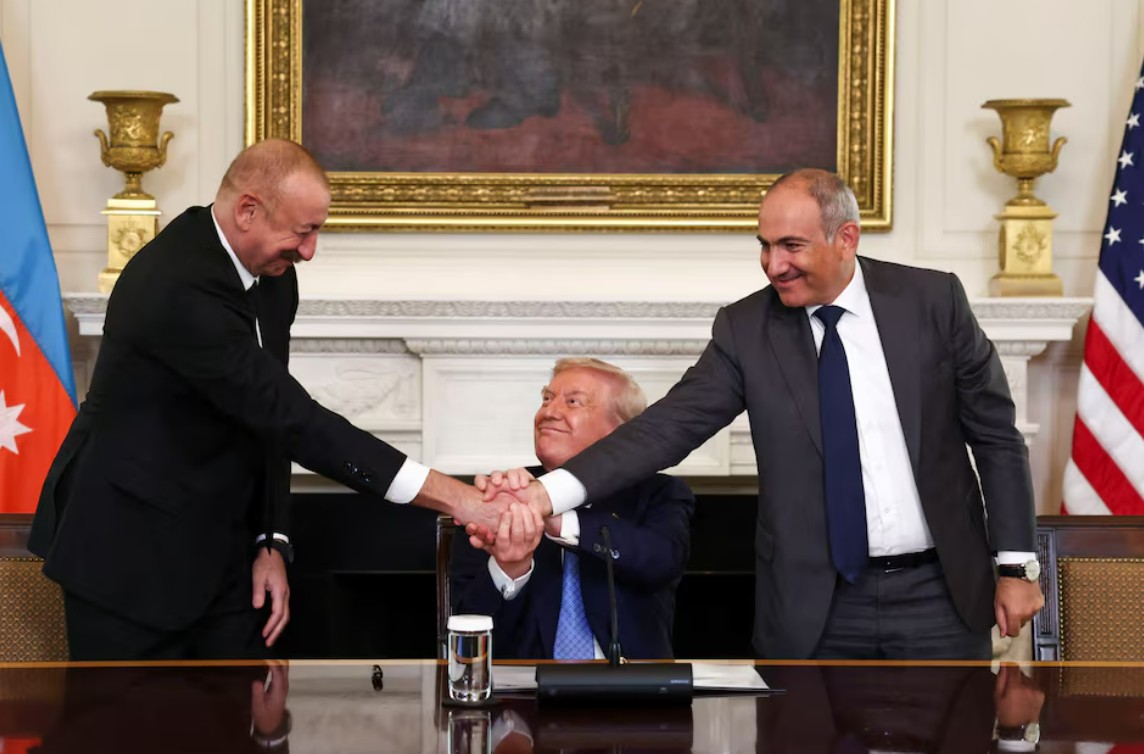
The conflict over Nagorno-Karabakh ended with Azerbaijan establishing full control over the region in September 2023, after which tens of thousands of ethnic Armenians left. In August 2025, the sides preliminarily agreed on the text of a peace agreement in Washington, but the document has still not been signed. In addition to changing the Constitution, Baku demanded the dissolution of the OSCE Minsk Group.
Against this backdrop, the publication of the draft Constitution looks like an attempt by Yerevan to fulfil the last of the conditions without receiving guarantees that the treaty will be signed in return. Pashinyan claims such guarantees exist, but there is no public confirmation from Baku.
As observers note, the key feature of the situation is the gap between the declared readiness to sign peace and the procedural impossibility of fulfilling Baku’s condition without opposition support. Pashinyan has tied his political fate to the adoption of the Constitution, but the absence of two-thirds of the votes makes the referendum dependent on factions that have publicly rejected his proposal.
Moreover, the draft itself raises questions of legitimacy: a reform dictated by an external demand and carried out in a compressed timeframe without broad discussion risks becoming not the foundation for a sustainable peace but a source of new internal division.
For the Armenian-Azerbaijani settlement, the immediate effect will be most noticeable primarily in whether the opposition agrees to a referendum or Pashinyan goes for early elections — and that is precisely where it is most sensitive for the prospects of signing the peace treaty.