JERUSALEM (Realist English). Israeli Prime Minister Benjamin Netanyahu threatened to conduct a military operation in the occupied West Bank “unprecedented in scale for decades” after Palestinian militants killed two Israeli soldiers on October 23. The attack occurred just four days before the parliamentary elections in Israel, scheduled for October 27.
What happened
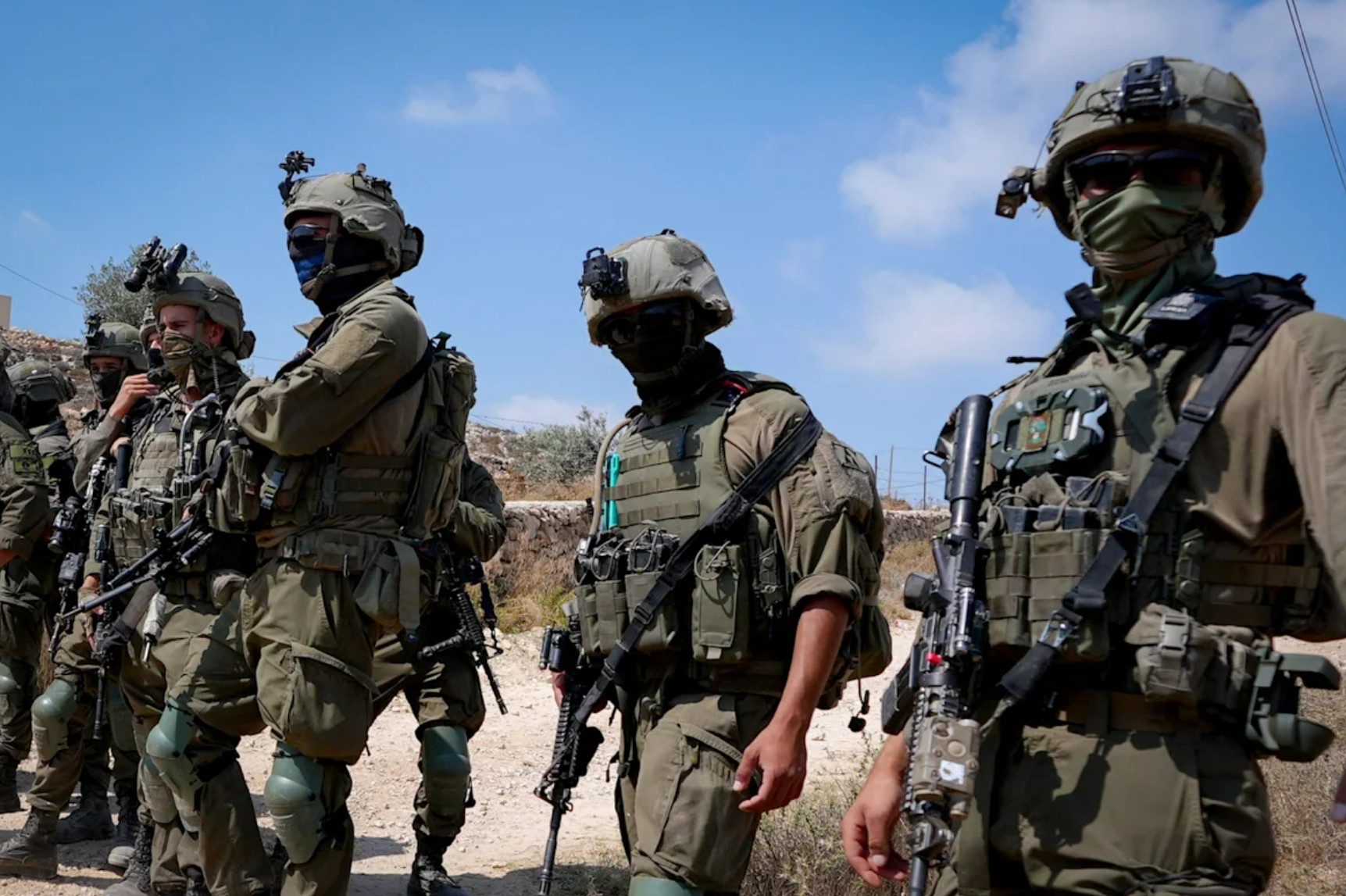
The clash began on the morning of October 23 at the Farsh al-Hawa checkpoint near Hebron. Two Palestinians armed with a pistol and an automatic rifle opened fire on Israeli servicemen. The exchange of fire lasted more than 20 minutes.
As a result, two Israeli soldiers — Ron Yonatan Reutman and Sergeant Yuval Shai Svillem — sustained fatal injuries, and three others were lightly wounded. Both attackers were killed by Israeli forces at the scene.
According to a preliminary investigation, the attackers were unable to reach a nearby highway where, according to the military, they intended to attack civilians, and instead attacked a temporary checkpoint.
Netanyahu’s reaction
Netanyahu, in the midst of a tense election campaign, visited Hebron the same day. He stated that together with Defense Minister Israel Katz he had reviewed plans for a “very large-scale operation of the Israel Defense Forces (IDF) in Judea and Samaria, the likes of which has not been conducted since the 1967 Six-Day War.” According to him, the army is “ready for execution, and we will determine the time, but it is imminent.”
The first phase of the operation, according to the prime minister, will include the deployment of troops into the area from which the attackers came, the evacuation of residents, house searches, and the destruction of “terrorist infrastructure.” Netanyahu also ordered an immediate full blockade of the West Bank and the imposition of a closure regime on Hebron.
Election campaign
The attack occurred at a critical moment for Netanyahu: only days remain before the elections, and the prime minister canceled all campaign events of the Likud party on October 23. Netanyahu stated that Israel “several weeks ago warned of attempts by enemies to attack Israeli citizens and soldiers ahead of the October 27 elections.”
Human rights organizations warned that the government could use the attack to justify tougher measures against Palestinians and to strengthen its security positions before the elections.
Reaction of Hamas and the far right
Hamas, without claiming responsibility for the attack, called it a “heroic operation” and a “natural and legitimate response to the ongoing crimes and brutal attacks on our people.”
Finance Minister Bezalel Smotrich, who also holds a position in the Defense Ministry, called for a “comprehensive military campaign in Judea and Samaria, just as in Gaza,” with the aim to “dismantle the Palestinian Authority, collect weapons, and destroy terrorists.”
National Security Minister Itamar Ben-Gvir also demanded to “dismantle and demilitarize” the Palestinian Authority. At the same time, according to AP, there is no evidence of the Palestinian Authority’s involvement in the attack.
The escalation in Hebron is not simply a response to a local incident but an attempt by Netanyahu to seize the agenda ahead of elections where his position remains shaky. The threat of an operation “the likes of which has not been seen since 1967” and a full blockade of the West Bank is a signal both to Palestinians and to Israeli voters: the prime minister is demonstrating toughness that the far-right members of his coalition have long demanded.
However, implementing this threat carries serious risks. An operation of such scale will inevitably lead to civilian casualties, further isolation of Israel in the international arena, and could provoke a new wave of violence in the West Bank.
While Netanyahu speaks of “readiness” and a “time” that he will “determine,” the key question is whether he will risk escalation before the vote or limit himself to a demonstration of force to avoid political consequences.