OTTAWA (Realist English). The Canadian government has obligated its diplomats and officials in the United States to avoid any public contact with candidates in the upcoming midterm elections. According to a written directive circulated on October 20, Canadian representatives are prohibited not only from meeting with politicians running for Congress but also from being in the same room with them without special permission.
The essence of the restrictions
The directive covers all candidates for the House of Representatives and a third of the Senate, where re-elections are taking place. An exception is made only for incumbent legislators who are not participating in the current election campaign: working meetings with them are permitted, but an internal memo instructs to “avoid joint photographs with any sitting American officials at all costs.” Canadian officials themselves describe these measures as “a very conservative approach with minimal risk.”
Reason: pressure from Washington
The decision was made against the backdrop of a sharp escalation in rhetoric from the United States. On October 21, the American embassy in Ottawa published a document titled “Fact Sheet: Monitoring Canadian Activities in U.S. Politics,” which lists nine examples of Canada’s “interference” in American politics.
Among them are meetings by Industry Minister Mélanie Joly with Democratic officials in Boston and Chicago in September 2026, her comment that she meets with “potential presidential candidates,” and a speech by Consul General Bernadette Jordan at an event with two Democratic congressmen just three weeks before the elections.
The document also mentions that in 2026, at least 11 Canadians were charged or convicted of illegal voting in the US between 2012 and 2024, and Canada ranks second among countries in the number of such prosecutions.
Ottawa’s position
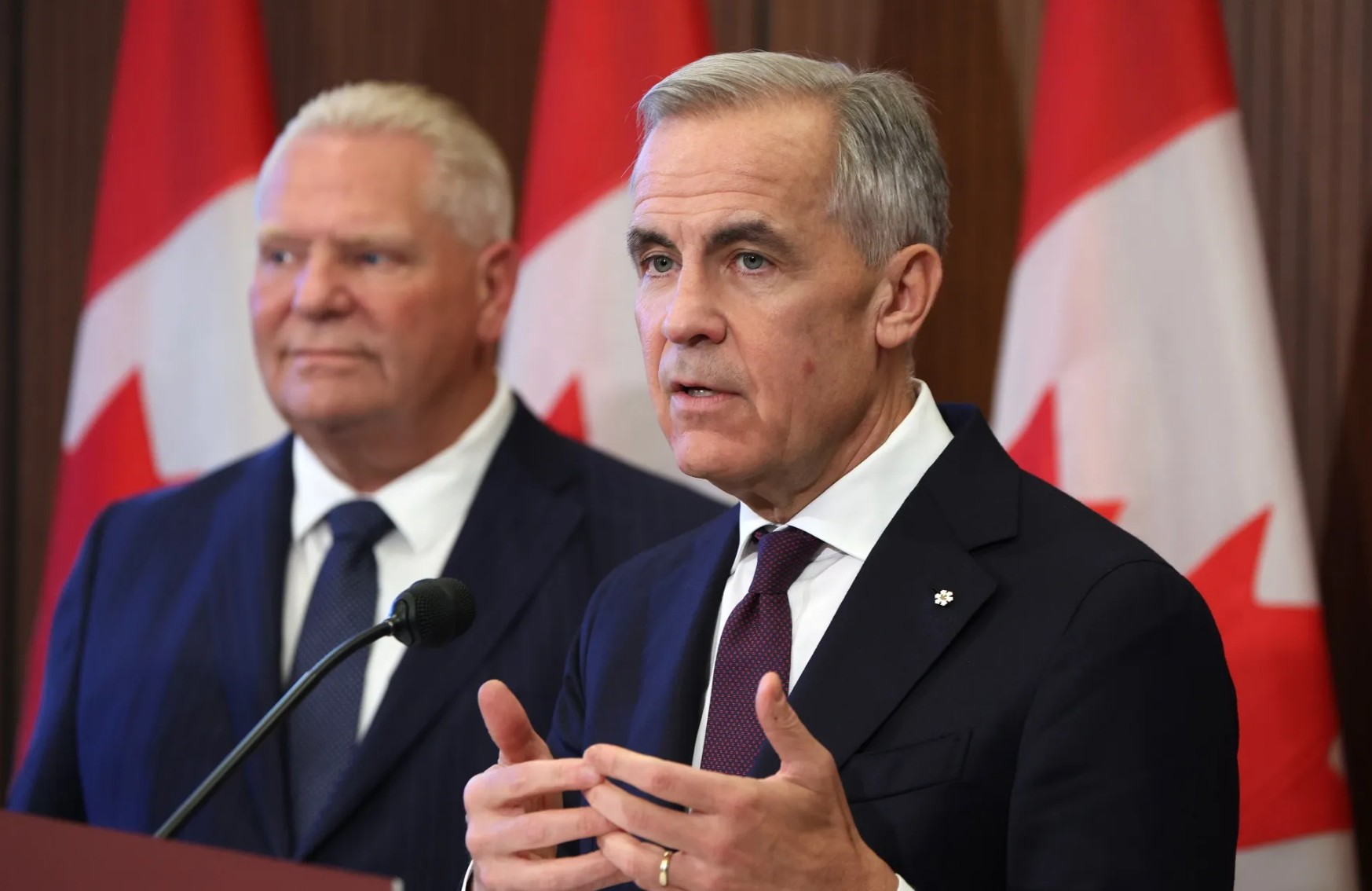
Prime Minister Mark Carney stated on October 16: “Our expectation, to be absolutely clear, is this: we do not interfere in their elections, they do not interfere in ours.” Minister Joly had also previously denied intentions to influence voting, but in August 2026 she acknowledged that Canada is “targeting products that will affect US states” to exert “political pressure” in response to tariffs.
The ban on public contacts with candidates is not just a diplomatic formality but an attempt by Ottawa to reduce risks in a situation where any interaction with American politicians could be interpreted as interference. The Trump administration is already using the fact of such meetings to justify its claims, and the Canadian side, judging by the directive, has decided to act preemptively.
However, the US embassy document, as analysts note, conflates trade advocacy (lobbying against tariffs) with actual electoral interference. Meetings with Democrats and criticism of tariffs in Republican states are elements of economic pressure, not a coordinated operation to influence elections.
Nevertheless, in an atmosphere where even a joint photo with a congressman can become grounds for accusations, Canada is choosing a strategy of maximum caution. The question is whether this caution will lead to Canadian interests in Washington remaining without proper representation at a key moment for bilateral relations.