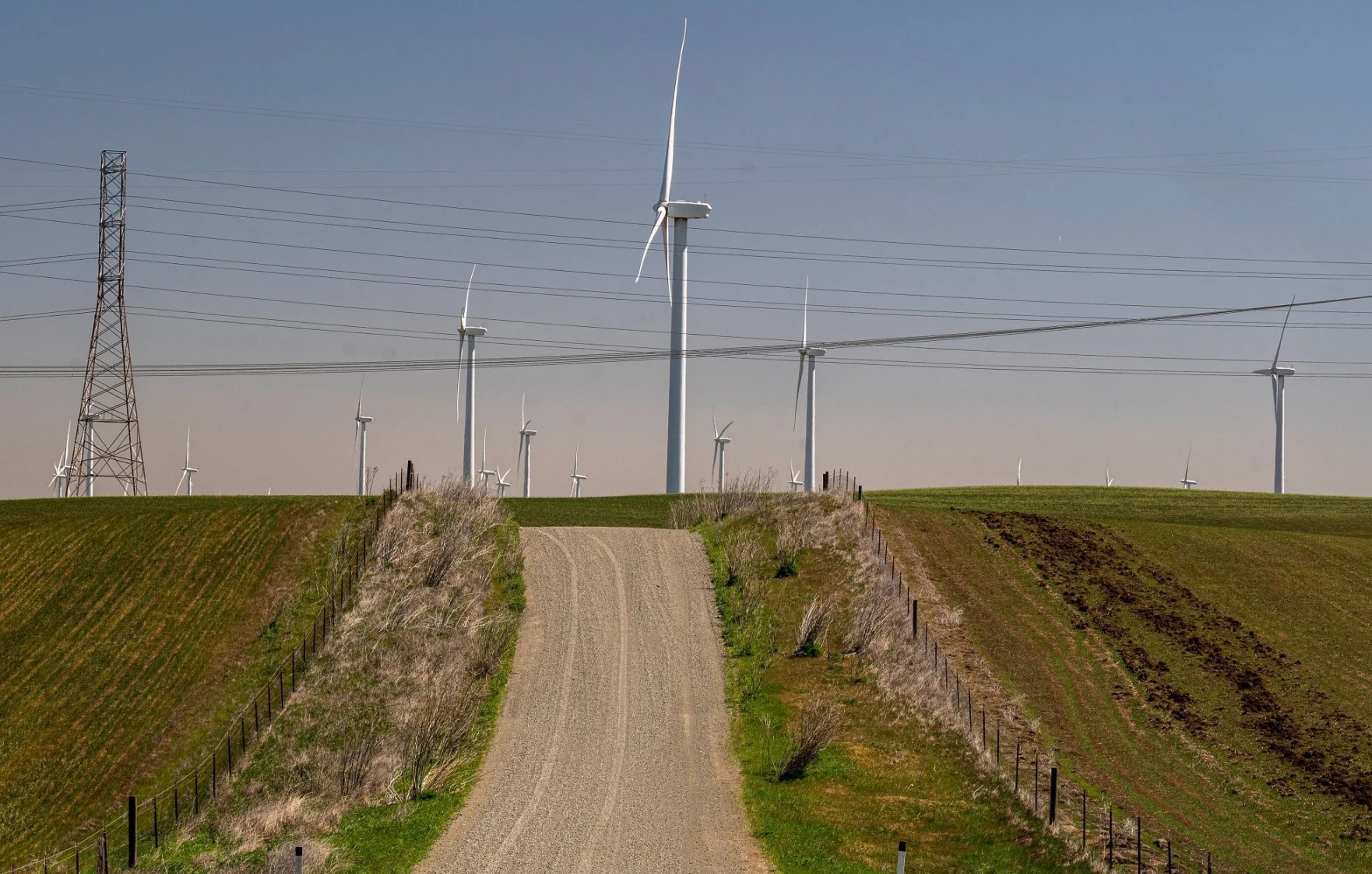
WASHINGTON (Realist English). On October 22, the Pentagon approved two wind projects — in Maine and South Dakota — that had previously been blocked during a national security review. Bloomberg reports this, citing a White House official who requested anonymity because no official announcement had been made.
What happened
This is the first “tranche” of wind projects that the US Defense Department has advanced after determining they do not pose a threat to military operations, radars, or air routes. A White House official said: “The Trump administration is removing all barriers, clearing the way for the Senate to pass the permitting reform bill.” According to him, further approvals are expected in the coming days and weeks — the Pentagon will consider each application on a case-by-case basis.
The blockade and the court ruling
Since April 2026, the Pentagon had effectively suspended consideration of onshore wind farm applications, citing the need for national security reviews. These reviews were historically considered routine, but this year they turned into a barrier: more than 30 projects with a total capacity of about 7.5 GW became stuck in red tape. In August, a federal court sided with a group of renewable energy companies, ruling that the department was illegally delaying dozens of projects, which cost states $47 billion.
Political calculation
The approval of the two projects is not so much a technological decision as an attempt to preserve a fragile bipartisan deal. Key negotiator Democratic Senator Sheldon Whitehouse had previously warned that the administration’s actions against offshore wind farms could “blow up” the permitting reform agreement. The White House insists: “The administration has done everything it promised. If the deal fails, it is entirely on the conscience of the Democrats’ internal squabbles.”
The Pentagon’s approval demonstrates that the Trump administration is prepared to make a tactical retreat on wind energy in order to push through the Senate a bill that, in its view, will accelerate the construction of energy facilities — including those needed for the AI race.
However, this does not change the systemic approach: Trump has repeatedly stated publicly that his goal is “not to allow a single windmill to be built.” Unblocking two projects is a signal to Democrats that their votes are needed, but not a guarantee that the administration will be equally accommodating on other applications. The key question is whether the deal will hold if the Pentagon continues to delay reviews for the remaining projects and Democrats demand broader guarantees.