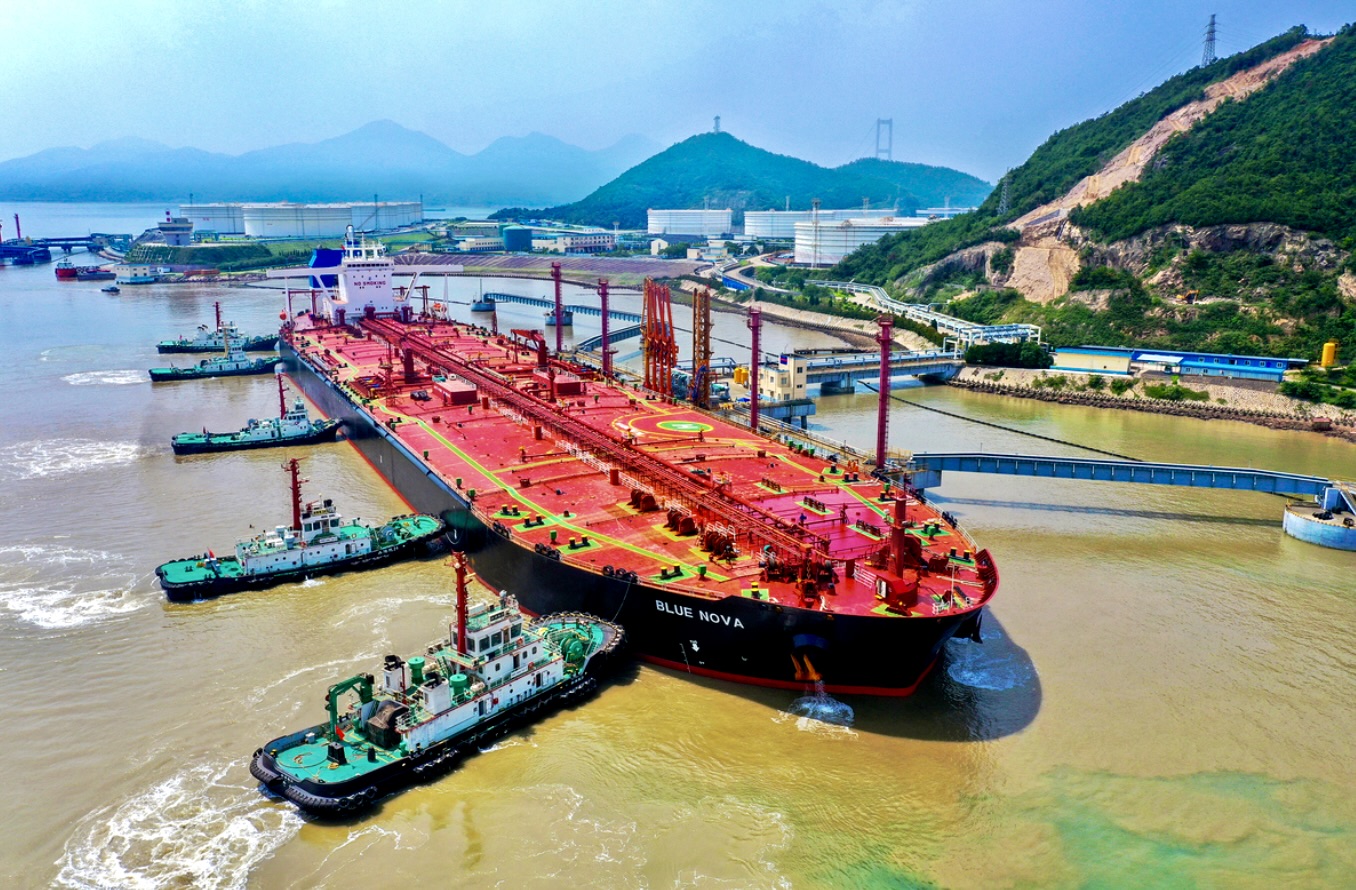
BEIJING (Realist English). Since the start of the Iran war, China has consciously cut its crude imports, using strategic reserves and switching to Iraqi and Russian supplies that bypass the Strait of Hormuz.
In June, purchases fell to 7.12 million barrels per day – a decade low, 41% below last year’s level. Brent prices have held firmly above $90 a barrel, and Beijing continues to buy only minimal volumes to avoid a market collapse.
China’s strategy: price restraint and reserves
The world’s largest oil importer has deliberately reduced purchases since the Iran war began in February, aiming to prevent a collapse in global prices.
In June, imports fell to 7.12 million bpd – the lowest level in ten years, down 41% from the same period last year. The reduction amounted to about 4 million bpd from normal levels.
China traditionally cuts imports when prices exceed $80 a barrel, and actively buys in the $60–70 range. By the start of the war, Beijing held strategic and commercial reserves of between 1.2 and 1.4 billion barrels. In June alone, according to the IEA, China drew down about 41 million barrels from these stockpiles.
Bypassing Hormuz: Iraqi and Russian options
The closure of the Strait of Hormuz, through which about 20% of global oil trade passed before the war, has forced China to seek alternative routes.
| Route | Volume (July–August 2026) | Features |
| Iraq | Imports more than doubled in July | Exports via pipelines and terminals independent of Hormuz |
| Russia (ESPO) | 1.423 million bpd (July), 1.25 million (August) | Premium of up to $1 over Brent, crowding out Indian buyers |
The main “bypass route” has been Iraq. A significant portion of Iraqi exports flow through pipelines and terminals not dependent on the Strait of Hormuz, making Iraqi oil the most reliable alternative. Chinese refineries are actively ramping up purchases of Iraqi crude.
In July, China’s imports of Middle Eastern oil more than doubled compared to June following a brief US‑Iran truce.
At the same time, China is increasing purchases of Russian oil. In July, seaborne imports of Russian crude reached 1.423 million bpd , and in August – 1.25 million bpd.
Chinese refineries are actively acquiring Russian ESPO blend for October deliveries, crowding out Indian buyers. ESPO is already trading at a premium of up to $1 over Brent.
Competition with India and consequences for Asia
Amid rising Chinese demand for Russian oil, India – the world’s third‑largest oil importer – is losing volumes. In August, Indian imports of Russian oil fell to 1.87 million bpd from 2.79 million bpd in July.
If Indian refineries receive less feedstock, diesel and gasoline exports from India could decline as early as September, exacerbating tightness in the Asian refined products market.
As Reuters notes, Chinese refineries are seeking to buy more Russian oil to compensate for reduced Middle Eastern supplies.
Expert opinion: ‘China is the market’s main buffer’
An energy markets analyst and partner at a Singapore‑based consulting firm told the press:
“China has become the main factor holding back oil prices. The country has consciously cut imports by almost 4 million bpd to avoid a market collapse. At the same time, Beijing is using accumulated reserves and switching to Iraqi and Russian supplies that bypass Hormuz. If China decides to resume active purchases, Brent could quickly move towards $100, but for now Beijing continues to restrain demand.”
Analysis: a delicate balance
China finds itself at the centre of the global oil market. On one hand, the country is consciously restraining imports, using strategic reserves and alternative routes to prevent a price spike. On the other, any decision by Beijing to resume active purchases could instantly push Brent towards $100 a barrel.
Iraqi oil has become the key “bypass route,” and Russian oil a reliable alternative to Middle Eastern supplies. However, competition for Russian oil between China and India is already intensifying, which could lead to a fuel shortage in Asia.
The key question is how long China can keep imports at minimum levels – and when Beijing will decide to resume purchases. As Goldman Sachs notes, China could increase purchases in the near future. If that happens, the market faces a new wave of price increases.