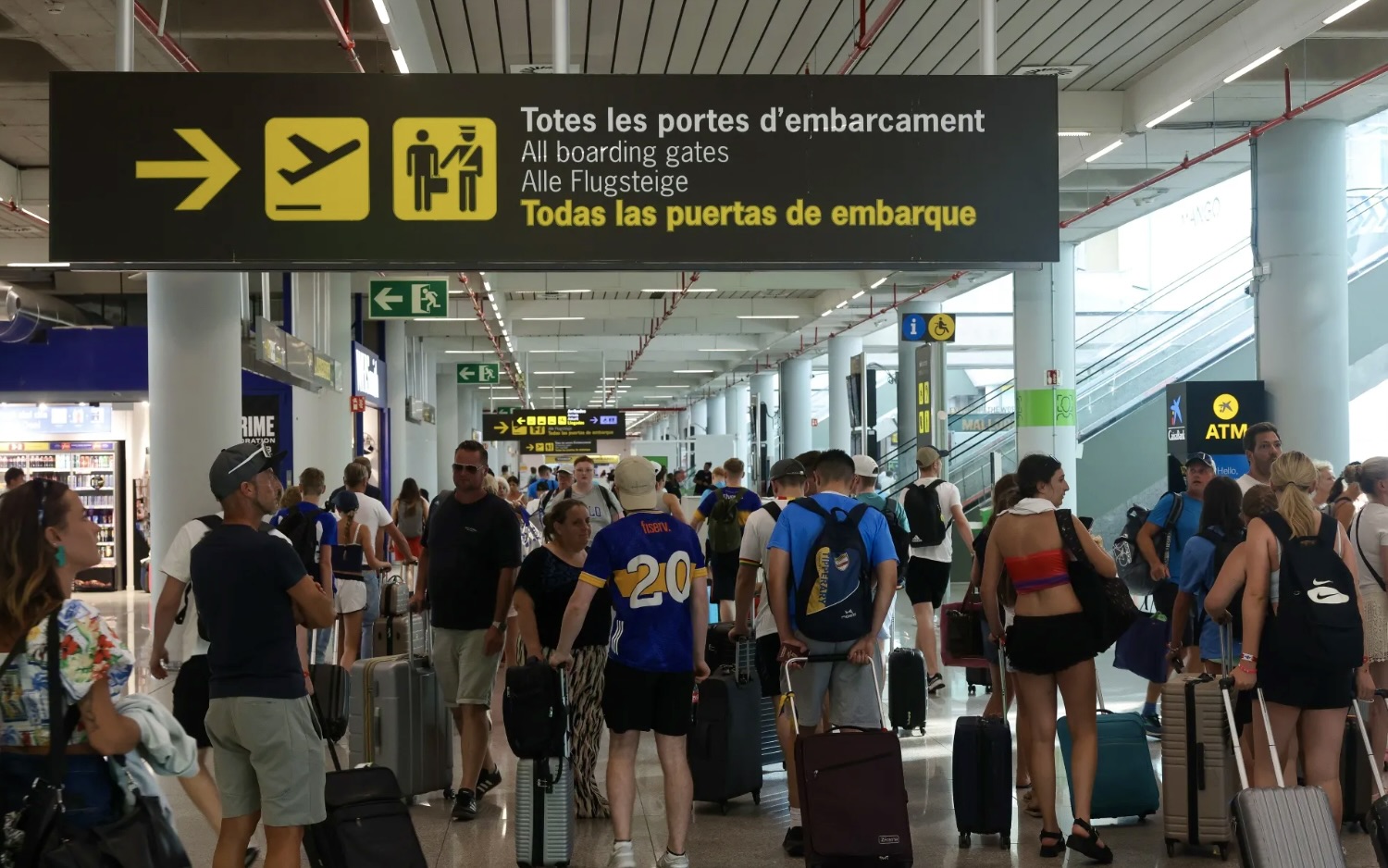
FRANKFURT (Realist English). The summer tourist season in Europe has turned into a nightmare for millions of travellers. The EU’s introduction of the new Entry/Exit System (EES) has more than doubled peak waiting times at the continent’s largest airports compared to last year.
According to data from analytics firm Qsensor, obtained by the Financial Times, peak waiting times at Frankfurt reached 120 minutes in July, up from 60 minutes a year earlier; at Amsterdam, 120 minutes, up from 80; and at Munich, 60 minutes, up from 31.
Chaos at the border: how EES works
The EES system was launched in April 2026 and requires passengers from the UK and other non‑EU countries to register with fingerprints, a photograph and personal data upon their first border crossing.
Brussels’ intention was for the system to strengthen border security, track visa overstayers and help locate criminals. In practice, however, its implementation has been plagued by technical failures, equipment problems and, consequently, massive congestion.
The problem has been particularly acute during peak hours. In Munich, the increase in waiting times affected only passengers undergoing manual checks, indicating a direct link between delays and EES registration.
Airline reaction: ‘Only Europeans could have come up with this’
Aviation industry representatives have not concealed their frustration. Ryanair CEO Michael O’Leary called the system “badly designed” and called for registration to be moved online.
“Only Europeans could have come up with this shit,” O’Leary told investors, adding that his airline had faced serious queues at around 15 airports.
EasyJet CEO Kenton Jarvis, for his part, called on airports to “use common sense and not make people stand in line for three hours.” A Frankfurt airport representative confirmed that the new checks had led to “flight delays and further operational disruptions.”
Temporary relaxations and uncertainty
To ease the pressure, many airports were forced to temporarily disable parts of the EES system, for example by waiving fingerprint collection during peak hours. However, this flexibility was due to end in September.
Eight EU member states, as well as Switzerland, have already asked the European Commission to extend this grace period. Brussels has said the issue is under discussion but insisted that the average EES registration time is only 70 seconds and that in most cases the impact on travellers is limited.
The European Commission also emphasises the “obvious security benefits”: since the system’s launch, 160 million entries and exits have been recorded. However, for passengers standing in two‑hour queues at Athens airports, where chaos was also seen this week, these arguments ring hollow.
The situation raises serious questions about the EU’s ability to implement large‑scale digital projects without undermining the convenience of citizens and businesses. The industry warned of problems, but Brussels appears not to have listened.
Now, with the system’s operational flexibility coming to an end and the summer season in full swing, Europe risks an even more massive collapse at its borders. The question is whether officials can find a solution before the reputational damage to European tourism becomes irreversible.