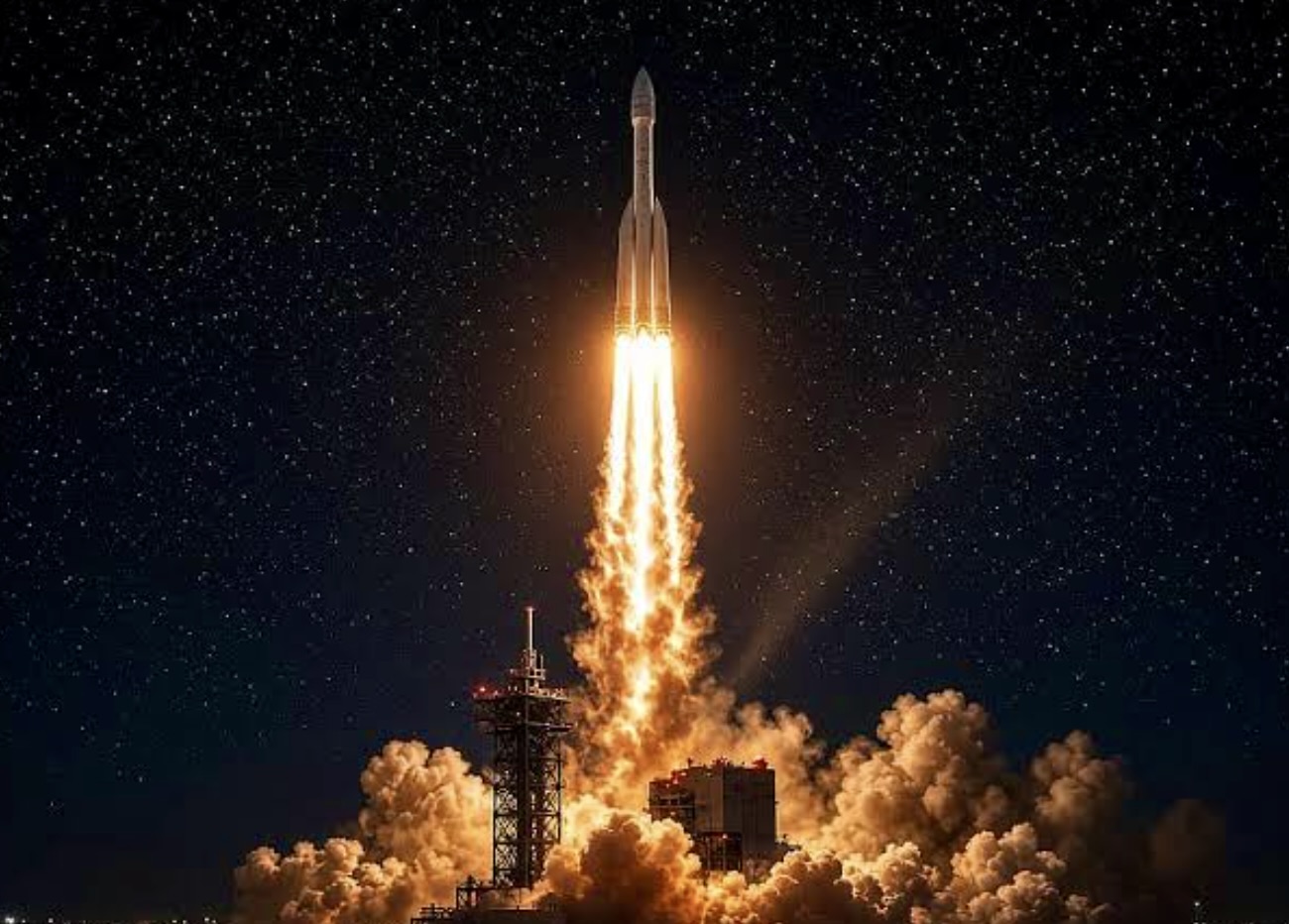
LONDON (Realist English). Europe is on the brink of a severe shortage of its own launch vehicles. European Space Agency (ESA) Director General Josef Aschbacher warned in an interview with the Financial Times that by 2030, Europe could face a serious lack of rockets to launch satellites into orbit.
The reason is explosive growth in launch demand that outstrips the production capacity of Europe’s space industry.
‘Launch peak’: 2029–2031
Aschbacher said the ESA has assessed Europe’s launch needs for the coming years. According to him, “if you add up all the satellites that will need to be launched as part of existing and planned constellations and missions, we will see a peak in launch demand around 2029, 2030 and 2031.”
This “launch peak” will place a critical burden on Europe’s space infrastructure.
Among the projects that will shape this demand:
- the multi‑satellite Iris² constellation;
- the Galileo satellite navigation system;
- the Copernicus global Earth observation network;
- national satellite constellations of Germany and other countries;
- orders from the defence ministries of Greece, Spain and Poland.
The gap with the US and China: 170 launches vs. 8
The figures cited by Aschbacher demonstrate the scale of the gap. Over the past five years, the US and China have launched hundreds of satellites and invested billions of dollars in developing defence and space capabilities.
In 2025 alone, Elon Musk’s SpaceX conducted 170 rocket launches. Europe in the same period – just 8.
SpaceX, using reusable rockets, has fundamentally changed the launch market and is setting the pace for the entire industry.
How Europe plans to close the gap
As an emergency measure, the ESA has sent requests to leading aerospace companies to assess the cost of expanding their production programmes. The agency plans to:
- increase annual production of the heavy‑lift Ariane 6 rocket from the current 9–10 to about 15 rockets per year;
- similarly increase production of the light‑lift Vega‑C.
The results of these assessments will influence the allocation of additional financial flows within the ESA over the next decade.
Record budget, but structural problems remain
In 2025, ESA member states approved a record budget of €22.1 billion for 2026–2028. That is €5 billion more than the previous three‑year cycle. The largest sponsors are Germany (€5 billion) and France (€3.6 billion).
However, as the Financial Times notes, Europe’s ability to implement ambitious plans faces serious difficulties. Sceptics warn that the region urgently needs structural reforms, including a change in procurement models.
In addition, Aschbacher has repeatedly called for accelerating the development of Europe’s own reusable launch vehicle. Without this, Europe risks forever remaining in a catch‑up position relative to SpaceX and other global leaders.
Europe, once proud of its space programme, now finds itself in a chasing position. Over five years, the gap with the US and China has become catastrophic. Increasing production of Ariane 6 and Vega‑C is an attempt to patch holes, but not a strategic response.
The key question is whether Europe can not only increase quantity but also make a qualitative leap by creating a reusable rocket capable of competing with the Falcon 9. For now, the ESA is forced to acknowledge: by 2030, it may simply not have enough rockets of its own.