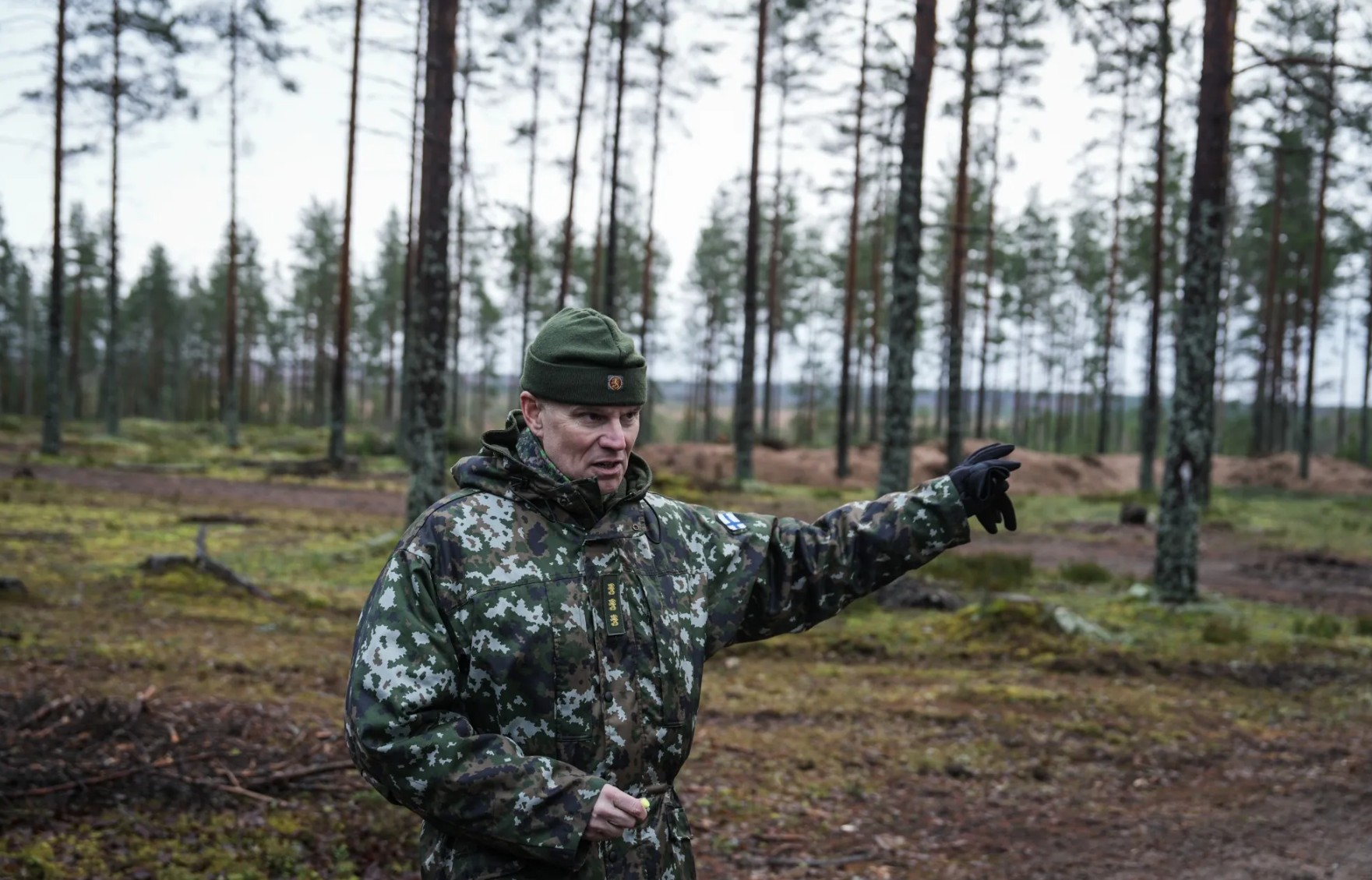
HELSINKI (Realist English). Finland is imposing strict requirements on potential suppliers under an army modernization program worth more than 11 billion euros. This was stated in an interview with Bloomberg by the Commander of the Finnish Army, Lieutenant General Pasi Vyalimyaki.
The Substance of the Requirements: Maturity, Speed, Compatibility
According to Vyalimyaki, defense suppliers must offer mature technologies, act faster, and demonstrate that their equipment is capable of operating in Finnish conditions.
This statement reflects Helsinki’s cautious approach to procurement: after years of rearming the Air Force (F-35 fighters) and Navy (Pohjanmaa-class corvettes), the turn has come for the ground forces, and the army does not intend to purchase untested systems.
An Unprecedented Rearmament Program
Finland launched a large-scale defense modernization program after joining NATO and amid a changing security situation. The Ministry of Defence’s budget proposal for 2026 is 6.3 billion euros, or 2.5% of projected GDP. About 1.5 billion euros is allocated for the purchase of defense equipment in 2026.
The budget provides for two new procurement authorities: 4 billion euros for developing the material base of the Defense Forces and 2 billion euros for joint weapons systems. The largest element of the first package is the army mobility program; the second is intended for the purchase of ammunition. Contracts may be signed in 2026, but the main payments are scheduled for 2029–2036.
Defense Minister Antti Hakkanen characterized these purchases as “a step toward significantly stronger defense capability” and “a large-scale process of modernizing ground defense.”
Army Priorities: Drones, Mobility, Protection
According to Yle, one of the army’s main priorities is unmanned systems. Large-scale trials are planned in Lapland in 2026 to assess which drones and counter-drone systems perform best in the northern climate and field conditions. Vyalimyaki emphasizes that this is not about purchasing a large batch of a single model, since drone technology is developing rapidly, and betting on the wrong equipment could lead to warehouses filled with outdated equipment.
Other priorities include replacing outdated Soviet-produced BMP-2 infantry fighting vehicles with new vehicles capable not only of transporting infantry but also of countering drones, as well as modernizing heavy MLRS multiple launch rocket systems with a service life extension to 30 years.
Contracts Already Signed
Despite the caution, a number of contracts have already been signed. In October 2026, Defense Minister Hakkanen approved the purchase of the RGW110 heavy anti-tank system from Germany’s Dynamit Nobel Defence for about 84.5 million euros; deliveries will begin in 2027. In September, a contract was signed with Patria for the pre-series purchase of TRACKX tracked vehicles, and the purchase of more than a hundred mortar systems on chassis was also approved.
In addition, Finland is jointly developing a common protected vehicle (CPV) with Latvia, and in June 2026, purchases of GBU-53 SDB II glide bombs for F-35 fighters were approved.
The Logic of “Maturity”: Lessons from Ukraine and the Northern Factor
Vyalimyaki’s requirement for “mature technologies” reflects two factors. First, the experience of the war in Ukraine has shown that the effectiveness of complex systems depends on reliability, logistics, and training, not just on declared specifications. Second, Finnish conditions — cold, forests, limited infrastructure — impose special requirements on equipment that are not always taken into account by manufacturers from other regions.
As observers note, the key feature of the situation is the gap between the scale of procurement and caution in selecting suppliers. Finland is ready to spend billions but is not ready to take risks: “immature” technologies, even promising ones, will not receive contracts until they prove their operability in real conditions.
For the defense technology market, the immediate effect will be visible primarily in the dynamics of drone trials in Lapland and in assessments of how quickly manufacturers can adapt their products to Finnish requirements — and that is precisely where it is most sensitive for the balance between innovation and reliability.