
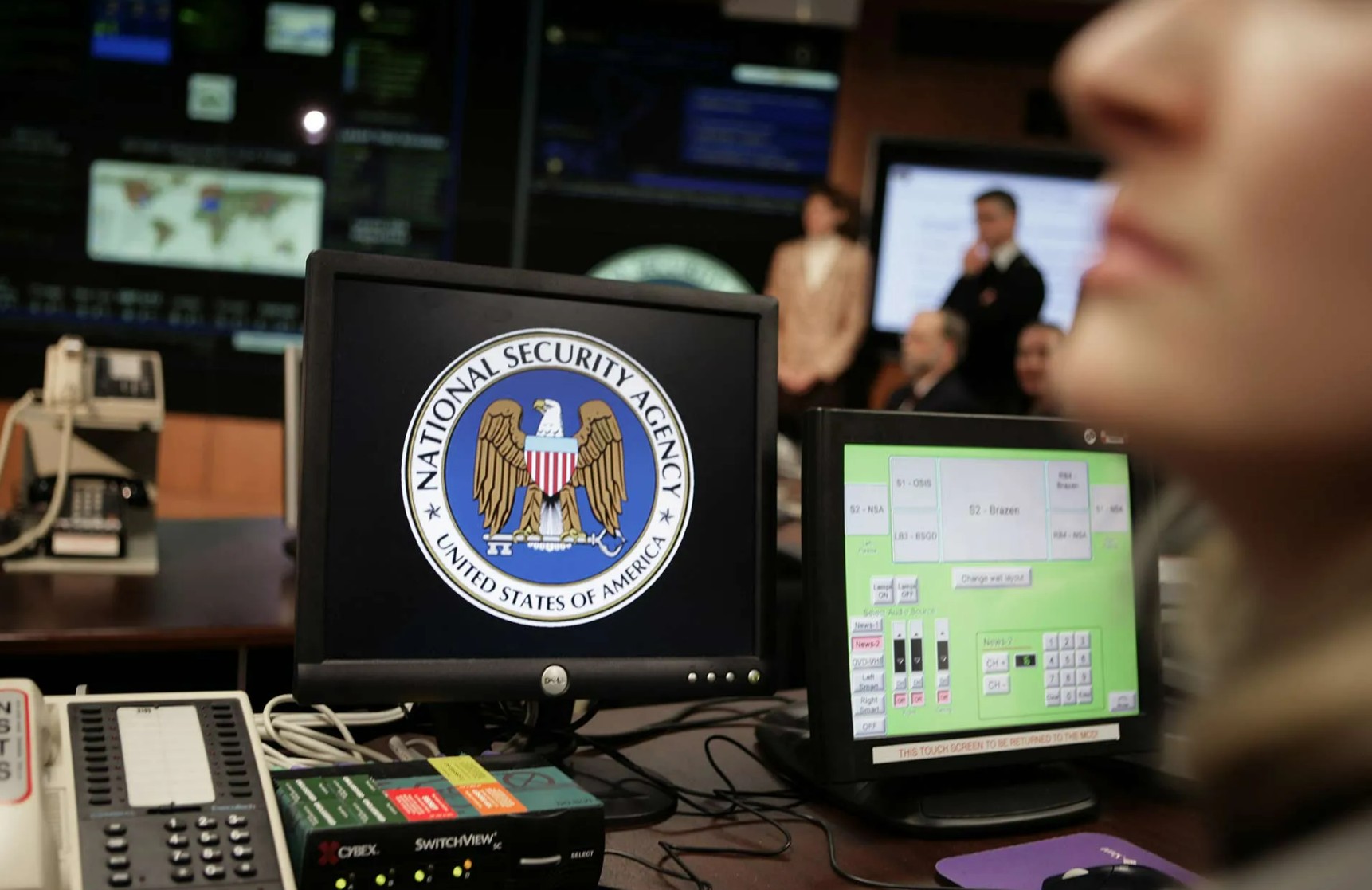
WASHINGTON (Realist English). The internal communications network of the US National Security Agency (NSA), known as NSANet, has gone down, CNN reports, citing six sources familiar with the situation. The network is designed for internal exchange of top-secret information and, according to The New York Times, its disruption “represents a serious obstacle” to the agency’s work.
Official version: scheduled update, not an attack
The White House and the NSA were quick to reject the version of external interference. White House spokesperson Lauren Bie said on Newsmax: “We see no evidence that this was a cyberattack. There is no crisis or anything like that that Americans should be worried about.”
The agency, in turn, issued a statement explaining that “a temporary degradation occurred during scheduled routine maintenance.” According to GIGAZINE, citing Director of National Intelligence Jay Clayton, the cause was the installation of a patch to address a PHP vulnerability discovered in October: after the update was applied, some systems did not return to normal operation.
Scale and response: “orange” alert level and personnel dispersal
Despite official assurances, the scale of the response proved significant. Employees at the headquarters in Fort Meade, Maryland, were instructed to report to work on a staggered schedule.
According to GIGAZINE, while a “yellow code” was declared on the morning of 17 November, by evening the level was raised to “orange,” and most employees were instructed to leave the campus until further notice.
At the same time, according to current and former US officials, the outage did not affect the NSA’s ability to transmit urgent intelligence to President Donald Trump, who is on a visit to Asia, thanks to backup networks and redundant channels. The intelligence-sharing system with the “Five Eyes” allies was also unaffected.
A series of technological failures
The NSA incident was part of a series of major technical failures in the US in recent days. On Friday, 13 November, the Federal Aviation Administration (FAA) suspended departures nationwide due to a communications failure that lasted more than four hours and affected nearly 20,000 flights. On Monday, 16 November, a failure occurred in United Airlines’ system, and disruptions were also observed in JPMorgan Chase’s online banking.
Trump himself, commenting on the situation in Manila, reacted with restraint: “These things happen. It’s fine.” At the same time, he refused to take responsibility for the aviation collapse, shifting it to inherited infrastructure.
As observers note, the key feature of the incident is the gap between assurances that there is no threat and the scale of the operational response. The official version of a scheduled update looks plausible, but the simultaneous failures at the NSA, FAA, Microsoft and the banking sector point to a systemic vulnerability in US critical infrastructure. CNN noted in this regard that although there are no signs of cyberattacks, “these cases are a vivid testament to how technological failures can shake markets and potentially threaten national security.”
For the US national security system, the immediate effect will be most noticeable primarily in assessments of the resilience of backup channels and in whether the incident is followed by public hearings or congressional reviews — and that is precisely where it is most sensitive for trust in the intelligence community’s infrastructure.