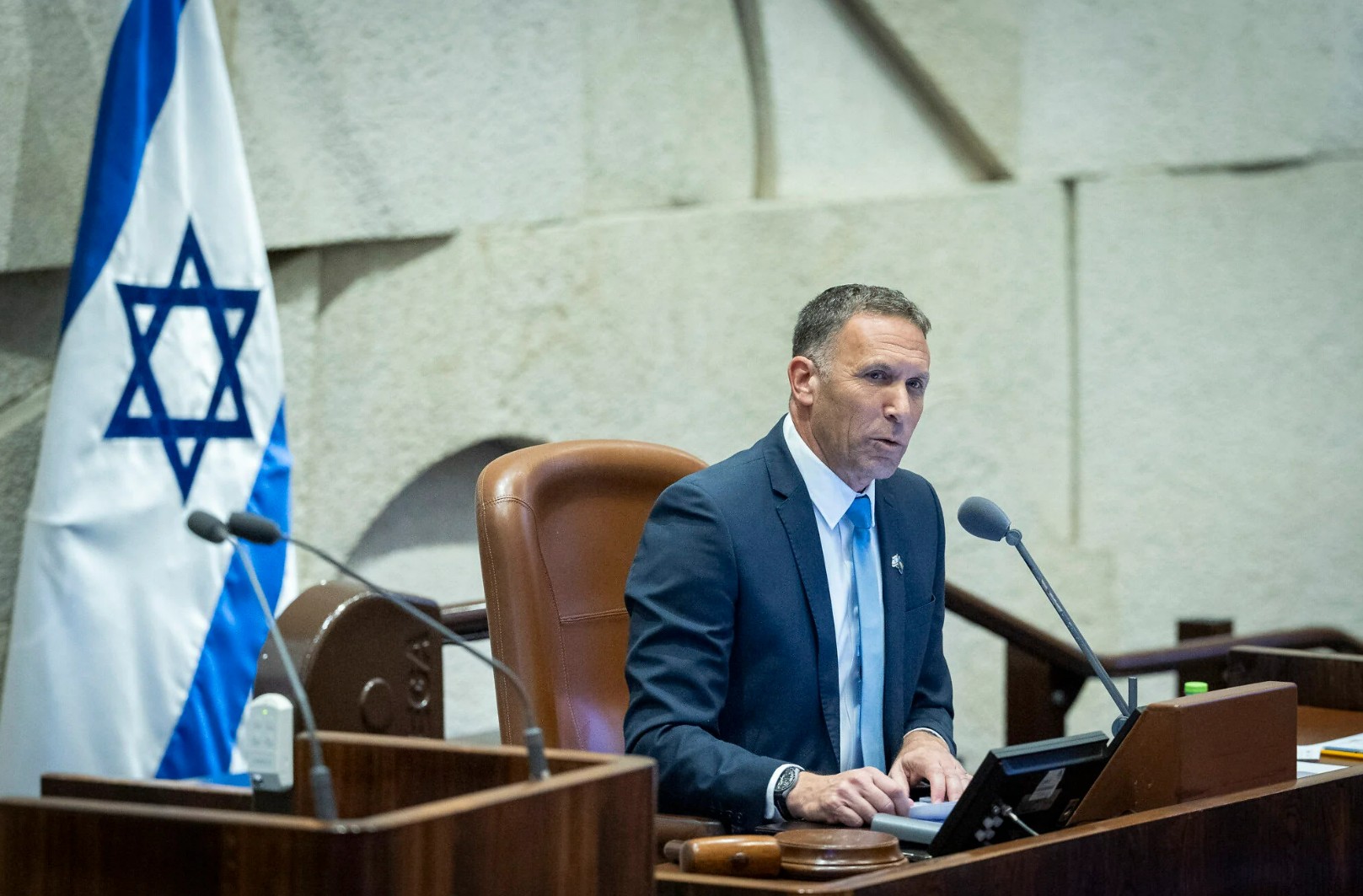
JERUSALEM (Realist English). On November 17, Israel’s parliament elected Matan Kahana, a representative of the “Yashar” party from Gadi Eisenkot’s bloc, as the new Speaker of the Knesset. Kahana received 66 votes in his support, while his rival Ofir Katz of the Likud party received 52 votes. He replaced Amir Ohana, an ally of Prime Minister Benjamin Netanyahu, in this post.
What the Speaker’s Election Means
In the Israeli parliament, the speaker wields significant influence, including control over which bills are brought to a vote. This means that even while Eisenkot tries to form a government, Kahana will have the opportunity to advance bills prioritized by Eisenkot’s bloc and the parties supporting it.
Among these initiatives are the creation of an independent commission of inquiry into the October 7, 2023 attack, which Netanyahu opposed; the introduction of term limits for the prime minister; and the repeal of laws passed by the previous Netanyahu government that critics believe restrict the powers of the judicial system.
“The Knesset of Israel is the home of all citizens of the State of Israel, and I intend to be a speaker for all,” Kahana said after his election.
Reaction of the Parties
The Likud party condemned the vote, stating that Kahana was elected “by the votes of supporters of terror.” Netanyahu in his statement called it “a disgrace for all time” and “the lowest point in the history of the Knesset.”
Eisenkot, in turn, welcomed the result, calling it “a worthy democratic step reflecting the absolute majority that voted for change.” Opposition leader Yair Lapid also supported the appointment, calling it “an important step toward repairing and healing Israel.”
After the Elections and Ahead of Government Formation
The vote took place several weeks after the October 27 elections, in which Netanyahu and his allies lost their parliamentary majority. President Isaac Herzog tasked Eisenkot with forming the government; he has until December 6 with the possibility of a two-week extension.
Eisenkot’s bloc and its partners hold 48 seats, while the alliance of Likud with ultra-right and ultra-Orthodox parties holds 53 seats. The Arab parties, which have 19 seats, support Eisenkot in his confrontation with Netanyahu. However, some of Eisenkot’s potential partners dislike the idea of relying on the support of Arab parties, which complicates the negotiations.
As observers note, the key feature of the situation is the gap between control over the legislative agenda and the ability to form a stable government.
Kahana’s election gives the opposition a tool to advance priority bills, but in itself does not guarantee the formation of a cabinet. If Eisenkot fails to assemble a coalition by the established deadline, the president may transfer the mandate to Netanyahu or call new elections.
For Israeli politics, the immediate effect will be visible primarily in the speed at which bills pass through the Knesset and in whether the opposition manages to pass the repeal of the judicial reform before a new government is formed — and that is precisely where it is most sensitive for the balance of power between the branches of government.