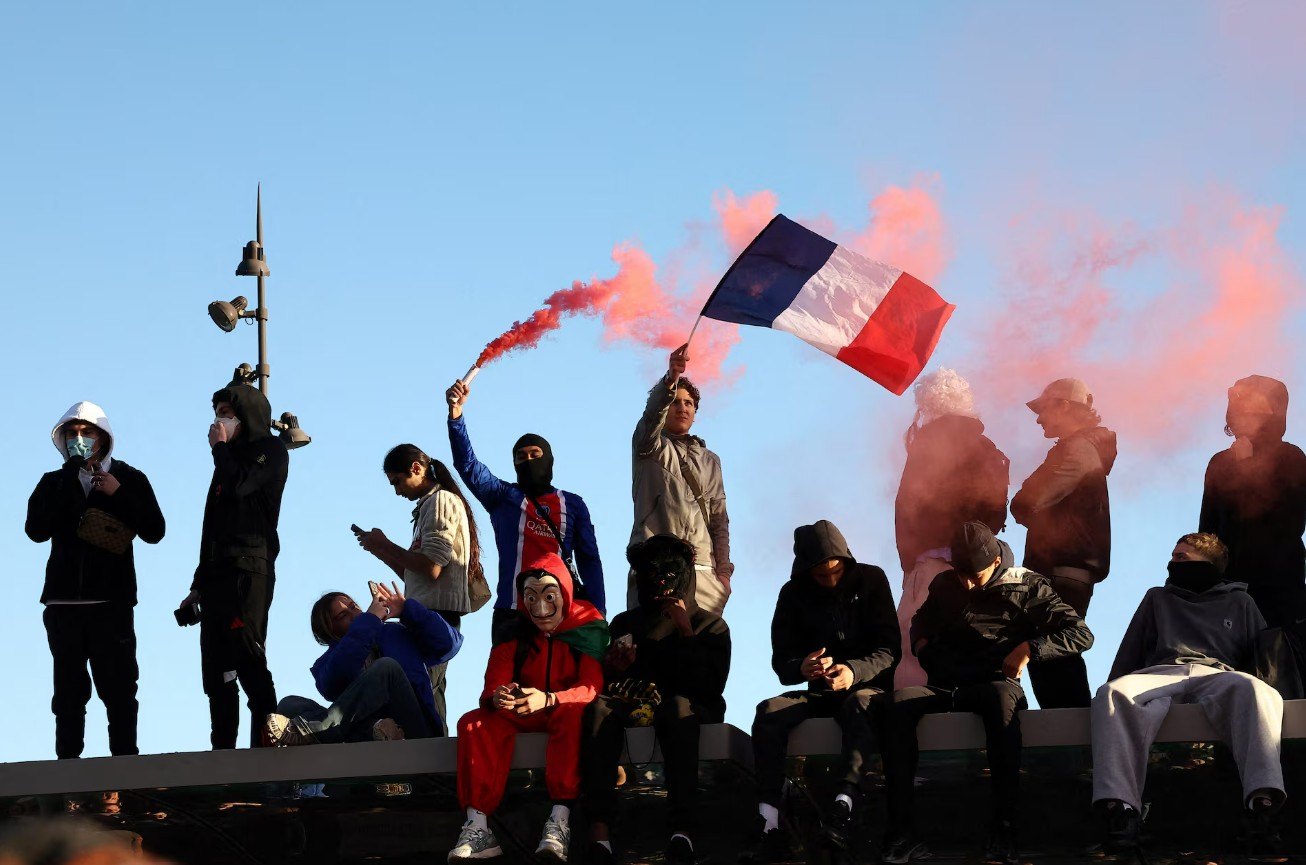
PARIS (Realist English). France is entering a day of nationwide strikes that will be another test for President Emmanuel Macron’s government five months before the presidential election. Five main unions — CGT, CFDT, FO, UNSA and FSU — have joined forces to demand higher wages and pensions, as well as changes to the 2027 budget draft. Hundreds of thousands of people are expected to take part in the actions, with more than 200 demonstrations planned outside Paris alone.
Scale of mobilisation and demands
The strike covers a wide range of sectors: transport, education, healthcare, postal services and energy. Students and high school pupils have joined the movement, protesting against overcrowded classes and dilapidated school buildings.
Unions at railway operator SNCF have warned of disruptions to regional trains and suburban routes around Paris, although high-speed lines are expected to be less affected. The Education Ministry estimates that about 17.5% of primary school teachers will take part in the strike.
The key point of tension remains the budget draft, which envisages about €43 billion in public spending cuts. Unions insist these measures will weaken already squeezed households suffering from rising prices for fuel, food, housing and energy. “Fuel, food, rent, gas, electricity… everything is rising except wages and pensions,” the unions said in a joint statement. They also demand an increase in the minimum wage and higher taxes on wealth, inheritance and dividends.
Unrest and unprecedented security measures
The authorities’ main fear is a repeat of the events of 17 October, when after several weeks of protests the country was engulfed in riots and arson that affected shops and public buildings across the country.
This time, about 70,000 police officers and gendarmes have been mobilised to maintain order, supported by armoured vehicles, drones and helicopters. Interior Minister Laurent Nuñez promised an “extremely firm response” to possible “excesses,” identifying three main risks: “black blocs,” “wild columns” and “looting and damage to shops or public buildings.”
Human rights organisations, in turn, criticise the excessive police presence and “authoritarian” attempts by the executive to restrict the right to demonstrate. The French Human Rights League spoke of an “authoritarian shift” aimed at silencing “any dissenting voice.”
Political background: Macron, Le Pen and the budget impasse
The strike is taking place against the backdrop of a deep political and economic crisis. France is mired in debt approaching 120% of GDP, and the government is struggling to approve the budget in a politically divided parliament. Unions warn that the country is on the brink of recession, and layoff plans are multiplying.
Macron, whose presidential term expires in 2027, is seeking to “get the river back into its bed” and conduct the presidential campaign in “maximally calm conditions,” according to a source close to the head of state. However, the opposition, including the far-right Marine Le Pen, is gaining support amid public discontent over the cost of living and government policy. The current wave of protests, which began in September with problems at a school near Paris, has grown into a nationwide movement that has challenged Macron’s course.
The current strike is not just another union action but an indicator of a deep crisis of confidence in the authorities on the eve of elections. Demands for higher wages and a review of the budget reflect accumulated years of discontent with economic policy, which critics say protects the interests of the wealthy at the expense of others.
For Macron, this is a test of his ability to keep control of the streets while maintaining budget manageability. The key question is whether the authorities will manage to avoid a repeat of the October unrest and whether this mobilisation will turn into a sustained campaign capable of influencing the outcome of the 2027 presidential race.