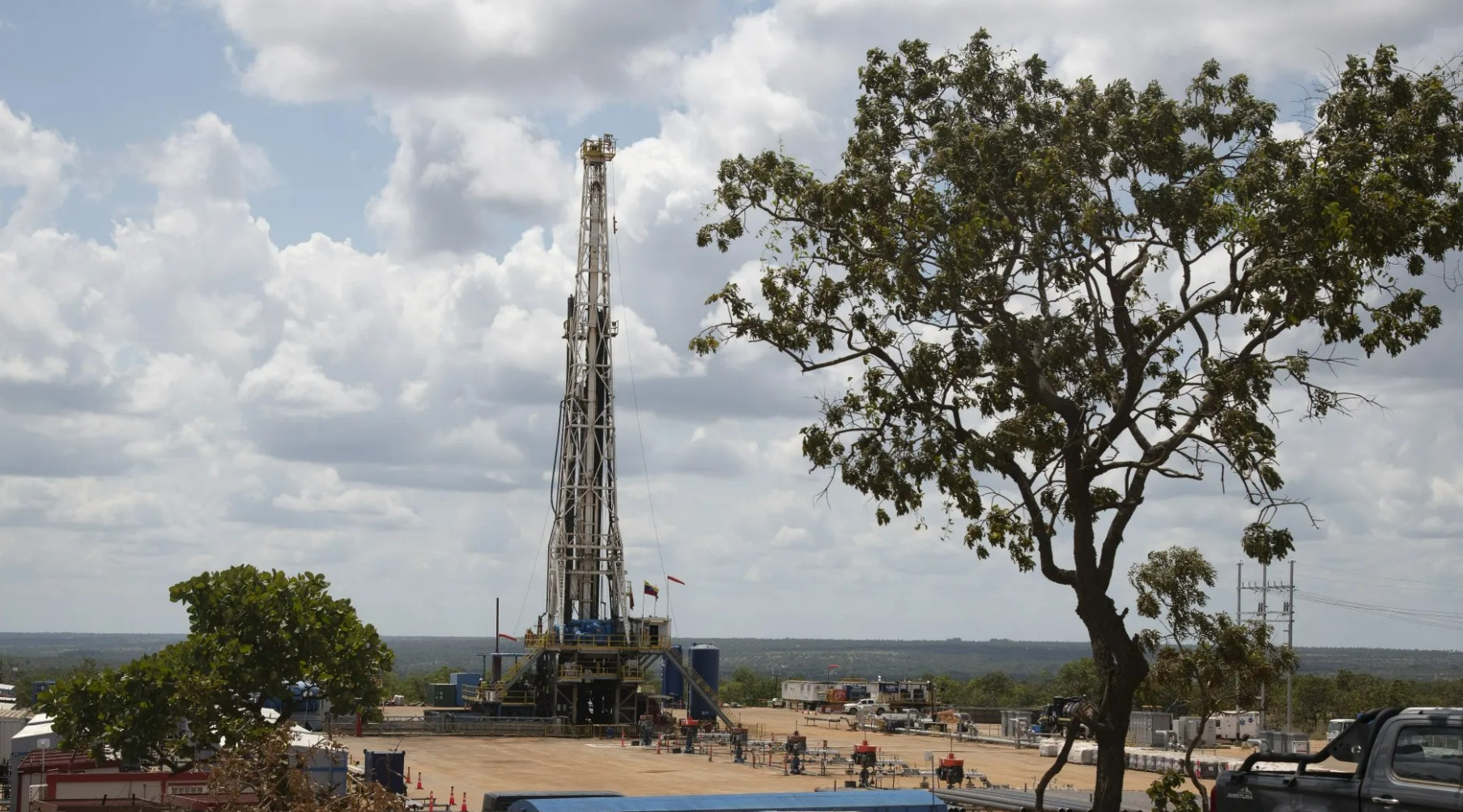
MARACAIBO (Realist English). Less than a year after the US military flew Nicolás Maduro out of the country, Washington has struck an agreement allowing it to control 20% of Venezuela’s oil reserves in the Lake Maracaibo basin and the Orinoco Oil Belt. The influx of foreign companies and private capital has already changed the face of the country’s western states, but the effect has been mixed.
Private jets over Maracaibo
One of the most visible symbols of the new boom has been private aircraft. The Financial Times reports that business jets are circling over dilapidated Maracaibo while oil company executives seek contracts amid rising oil prices. According to ACJ/JETNET, Venezuela shows a notable concentration of business jets per capita among South American countries, although public data do not allow the claim that the country ranks first in the region on this indicator.
Air links with the US, interrupted for years, are also being restored. American airline Aegis Air in October launched flights between Miami and Caracas on a 16-seat Embraer E135 at $3,750 per seat one-way or $7,500 round-trip. The target audience is bankers, oil company executives, diplomats and lawyers. American airlines returned to Venezuela back in April after an almost seven-year hiatus.
Record rents in Maracaibo
Oil activity has directly inflated the real estate market of Zulia state. According to the Zulia Real Estate Chamber, the first quarter of 2026 was the “best in many years”: both the number of transactions and average prices for residential and commercial premises rose. In the second quarter, sales declined, but demand did not disappear — it shifted to rentals, especially commercial.
The most in-demand properties are warehouses of 500 to 1,500 sq m for logistics, offices for oil contractors and housing with autonomous systems — a generator, a well, solar panels.
It is this segment, according to chamber head Rosalig Urdaneta, that “pays in foreign currency and does not haggle over price,” which pulls up the entire market. With an average salary in the formal private sector of a few hundred dollars, competition for quality housing pushes local families into areas with poorer services.
The flip side of the boom
In Mene Grande, a small town near Lake Maracaibo that AFP calls the “cradle of Venezuela’s oil industry,” hopes for investment coexist with deteriorating living conditions. Residents complain of more frequent power outages, and the road into town is covered with potholes. “We are rich with all this and many minerals, but… we are also poor,” AFP quoted 67-year-old pensioner Eladio Ramón Devides as saying.
Scepticism is also heard in assessments of the real estate market. In October, the Zulia Real Estate Chamber officially denied reports of a “boom,” stating that oil investment had not led to an “incredible surge” in prices and transactions, and that the market had plateaued in the second quarter.
Venezuela’s “oil boom” so far manifests itself more in symbolic and segmental effects — private jets, premium flights and rentals for expats — than in structural recovery of the economy. The capital inflow into Maracaibo is real, but it is localised and serves a narrow circle of international contractors, while the bulk of the population faces rising prices and a shortage of basic services. The key question is whether the new oil cycle can convert into jobs and infrastructure for local residents, or whether Venezuela will again reproduce the model of “enclave” enrichment, in which oil money bypasses most citizens.