NAYPYIDAW (Realist English). Myanmar’s government has rejected the historic ruling of the International Court of Justice (ICJ) finding the country guilty of genocide against the Rohingya people. This was stated at a press conference in the capital Naypyidaw by presidential spokesperson Khaing Khaing Soe, Reuters reports.
Reaction of the Authorities: “Unfair” and “Not Unanimous”
Khaing Khaing Soe drew attention to the fact that the ruling on the main point was adopted by nine votes to six and called it “unfair.” “Our country has been unfairly accused,” she stated. According to her, “not all 15 judges agreed with the decision,” so the verdict cannot be considered unanimous.
Myanmar’s Ministry of Foreign Affairs issued a tougher statement, calling the decision one taken “without the participation of Myanmar’s legitimate representative” and based on “unsubstantiated, biased reports and fabricated information.” The ministry accused the ICJ of “politicizing human rights and interfering in the internal affairs of other member states” and stated that Myanmar “categorically rejects” the resolution and “dissociates itself from it.”
What the Court Decided
On November 19, the ICJ ruled that the actions of the Myanmar military in 2017 were carried out with the intent to destroy a significant part of the Rohingya group. The court established that security forces killed thousands of civilians, committed widespread acts of sexual violence, used extreme forms of violence against children, and attacked refugees.
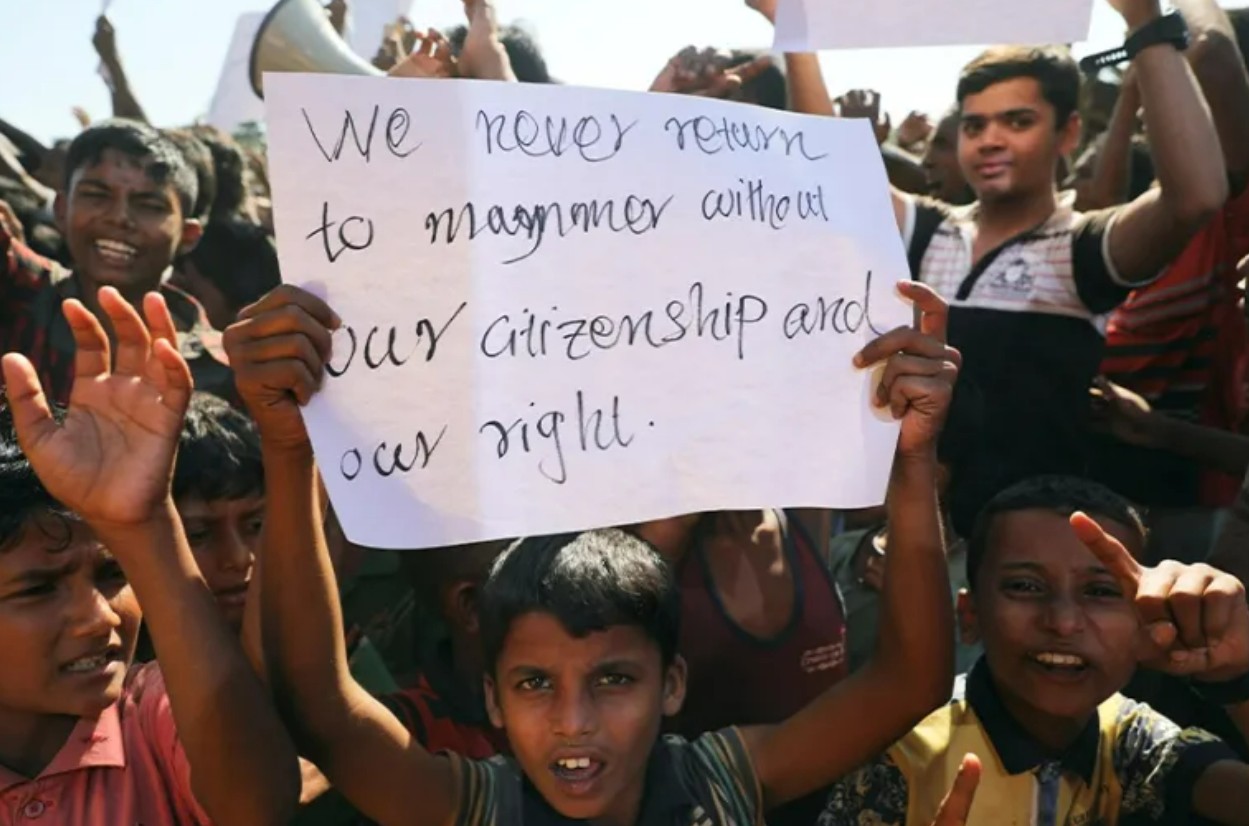
Myanmar is obligated to cease violations of the Genocide Convention, conduct an investigation, ensure the return of the Rohingya, and pay compensation.
This is the first case in the court’s 80-year history in which a state has been held responsible for genocide.
International Reaction: Divided
Reaction to the verdict was split. UN High Commissioner for Human Rights Volker Türk welcomed the decision, calling it a “turning point for justice” and urging Myanmar to immediately comply with the prescribed measures. The European Union warned Myanmar that compliance with the decision “is not optional.”
The US responded cautiously: the State Department said it was studying the decision but urged against “politicizing” the court. China, Myanmar’s main trading partner, urged against “complicating” the situation around the Rohingya and noted that judicial institutions should act “in accordance with the law and with restraint.” Chinese judge Xue Hanqin voted against the ruling on the main point.
What Next: Lack of Enforcement Mechanisms
The ICJ ruling is binding on the parties and final, but the court does not have the authority to enforce it. It can only refer the case to the UN Security Council, which has the right to adopt a resolution. Experts note the low probability that those responsible, including Myanmar’s top military leadership, will hold themselves accountable.
As observers note, the key feature of the situation is the gap between the legal force of the verdict and the absence of mechanisms for its enforcement. Myanmar rejects the decision, citing the lack of unanimity, but the very fact of recognition of genocide at the state level creates a precedent for other cases before the ICJ, including South Africa’s lawsuit against Israel.
For international justice, the immediate effect will be visible primarily in whether the verdict is followed by practical steps in the Security Council — and that is precisely where the balance between legal recognition and real accountability is most sensitive.