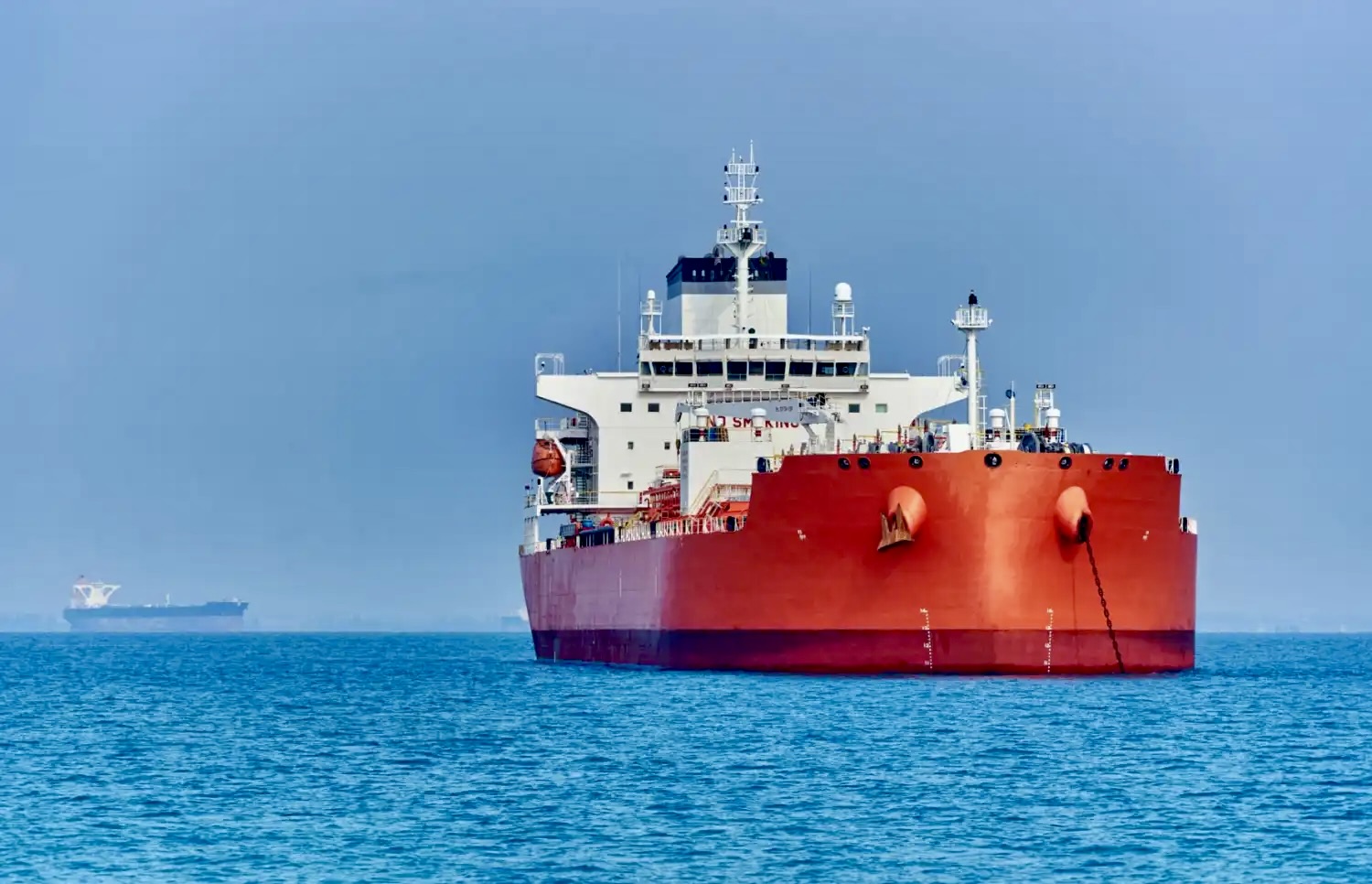
PARIS (Realist English). On May 31, the French Navy, with the support of the United Kingdom and other partners, conducted an operation to intercept the oil tanker “Tagor” in the Atlantic Ocean. The vessel, which is under US, EU and UK sanctions, was intercepted in international waters more than 400 nautical miles (about 740 km) west of Brest.
Operation timeline
The “Tagor” was sailing from Murmansk to the port of Limbe in Cameroon. At the time of interception, the tanker was flying the Cameroonian flag, although just a week earlier it had been observed off the coast of Norway under the Malagasy flag. This is a classic “shadow fleet” technique – changing flags to circumvent sanctions.
According to French authorities, the vessel was “virtually empty”, but its route and the practice of changing jurisdiction raised suspicions. There were 23 crew members on board; their nationalities have not been disclosed.
Systemic fight against the “shadow fleet”
The seizure of the “Tagor” is the fourth such operation by France since September 2025. Earlier, the tankers “Boracay” (September 2025), “Grinch” (January 2026) and “Deyna” (March 2026) were intercepted.
In all cases, the vessels were released after paying a fine of several million euros. In April 2026, the French authorities announced their intention to double fines for such violations, aiming to make the operations economically unviable for the owners.
Russia’s “shadow fleet” consists of hundreds of old tankers with opaque ownership structures. They regularly change flags, turn off automatic identification systems (AIS) and try to deliver oil to world markets in circumvention of sanctions. Nearly 600 such vessels are under EU sanctions.
Reactions
French President Emmanuel Macron, commenting on the operation, said that “it is unacceptable for ships to circumvent international sanctions and finance war.” French authorities stress that they are acting on the basis of the right to verify the legality of a vessel’s flag in international waters.
Moscow reacted sharply. Kremlin spokesman Dmitry Peskov called Paris’s actions “illegal, bordering on international piracy.” The Russian Foreign Ministry characterised the incident as “international terrorism.”
What next?
Despite the diplomatic confrontation, the operation confirms the systemic nature of Western pressure on Russian oil flows. France, acting in coordination with its partners, continues to intercept “shadow fleet” vessels, increasing the financial risks for smugglers. The “Tagor” is expected to be released after paying a fine, but the precedent reinforces the practice of enforcing the sanctions regime.
Russia’s share: from 25% to statistical insignificance
The European Union has almost completely stopped importing Russian oil, while simultaneously facing an unprecedented energy crisis caused by the war in the Middle East. Western sanctions and embargoes have led to a radical reorganisation of global supply chains, where the US, Norway and the Gulf states now play a key role.
In just five years, the structure of EU oil imports has undergone tectonic changes. While in 2021 Russia accounted for 25.8% of all supplies, by 2025 that figure had collapsed to 2.2%. This rapid turnaround was a direct consequence of the EU embargo and the “price cap” imposed by the G7.
The departing giant has been replaced by three main players: the United States, Norway and Kazakhstan.
USA: leadership on a wave of “energy dominance”
The United States has become the largest supplier of oil to the European Union. In March 2026, US exports of petroleum products reached a record 3.11 million barrels per day. Europe has become a key destination for this growing flow; over one month, the volume of shipments increased by almost 27%, making US oil the main beneficiary of Russia’s departure and the Middle East crisis.
Norway: Europe’s “energy lifeline”
Norway, Europe’s largest oil producer, supplies about 30% of the EU’s oil needs, exporting 95% of its crude to the bloc and the UK. Oslo is not only replacing Russian volumes but is also seen as the main guarantor of energy security in the event of further escalation.
Kazakhstan: transit wars and the search for alternatives
Kazakhstan plays an important role on the EU’s southern flank, ranking among the top five suppliers of crude (exports to the EU in January 2026 amounted to €1.23 billion). However, the key delivery route – the “Druzhba” pipeline through Russian territory – regularly becomes a hostage to political games.
In May 2026, transit was blocked due to “technical problems”, forcing Astana to seek alternative routes – via the port of Gdańsk and a mixed route (tankers and the CPC pipeline system). In the first quarter of 2026, Kazakhstan managed to almost double its supplies to Germany compared to the same period last year, to 730,000 tonnes.
Azerbaijan and others: diversification accelerates
Azerbaijan, increasing its exports to Europe (more than 95% of the country’s oil now goes west), is strengthening its positions in the Balkans, particularly in Bulgaria. The top five suppliers to Europe are rounded out by Iraq (€1.4 billion in January 2026) and Libya (€1.35 billion).
Libyan production has recovered to 1.4 million barrels per day, and the country is holding talks with Italy, Germany and Spain on long‑term energy partnerships.
Middle East crisis: a blow to an already fragile market
The situation was dramatically aggravated on February 28, 2026, when the US‑Israeli military operation against Iran began. The closure of the Strait of Hormuz, through which a fifth of the world’s oil and LNG passes, caused a shock to the market comparable to the biggest crises in history.
- Price spike and inflation: Oil prices jumped by more than 50%, and gas by 63%. This led to additional EU fossil fuel import costs of €30–35 billion.
- Supply disruption: The EU traditionally obtains about 7% of its oil from the Gulf region (including Iraq, Kuwait, Saudi Arabia), as well as 30‑40% of its jet fuel needs.
- Acute kerosene shortage: The closure of the strait threatened European air travel. The price of kerosene soared above $200 per barrel, as Middle Eastern supplies (the source of half of European imports) were effectively halted.
Price cap and pressure on Russian oil
Meanwhile, the EU continues its systemic pressure on Russia’s oil sector:
- The price cap on crude oil was lowered from $60 to $47.60 per barrel with regular automatic adjustments. Supplies above this threshold are prohibited from using European insurers and carriers.
- Capping the price of Russian oil is a key tool designed to reduce Moscow’s revenues without completely halting imports.