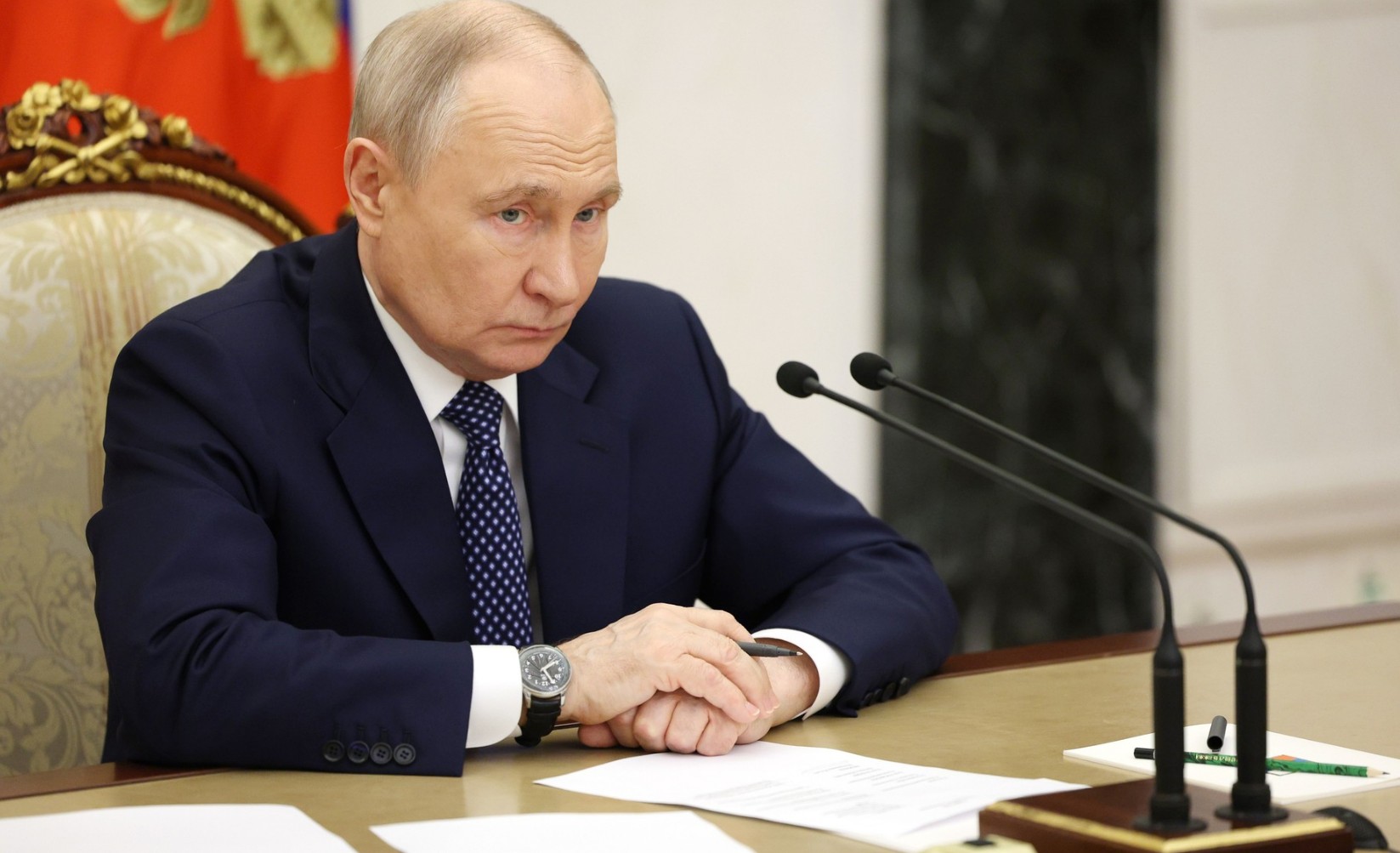
MOSCOW (Realist English). Russian presidential aide Yuri Ushakov, in an interview with journalist Pavel Zarubin for the “Vesti” program, said that Vladimir Putin will answer a call from Vladimir Zelensky if one comes. “I think he will answer, of course. Putin has never refused talks,” TASS quoted him as saying. Ushakov also noted that Zelensky “sends signals through various sources,” and added: “If he wants to talk, if he wants to have a conversation so much — let him come.”
“No one has called yet”: Peskov’s position
Ushakov’s statement clarifies an earlier comment by presidential press secretary Dmitry Peskov on 30 October. At that time, Peskov, answering a question about a possible conversation, said: “No one has called yet,” but confirmed that Putin is “open to dialogue with everyone.”
He also noted that Putin would pick up the phone if French President Emmanuel Macron or German Chancellor Friedrich Merz called him. Thus, the Kremlin made it clear: the initiative must come from the Ukrainian side, and at the moment there has been no such call.
G20, Moscow and rejection of “ultimatums”
Earlier, Vladimir Zelensky said he was ready to meet with Putin on the sidelines of the December G20 summit in Miami if the Russian leader attends the forum. However, the Kremlin responded that “this is impossible” and stressed: the meeting can only take place in Moscow. The Ukrainian side, in turn, rejects any conditions that could be perceived as capitulation and insists on a neutral venue.
Ushakov’s statement is not a breakthrough but a confirmation of the Kremlin’s previous position in a softer formulation. Moscow remains open to contact but shifts responsibility for initiating it to Kyiv and insists on its own venue for a personal meeting.
For Zelensky, such a scenario means he would have to call first, which in the context of the ongoing conflict and mutual distrust is a politically sensitive step. So far, neither side has taken practical steps to organize a conversation, and the issue remains in the realm of declarations of readiness rather than real agreements.